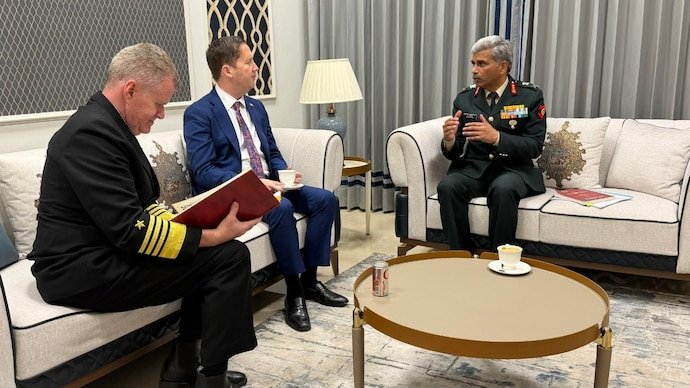
New Delhi/Chandigarh: The high-profile visit of US envoy Sergio Gor and US Indo-Pacific Commander Admiral Samuel J. Paparo to the Indian Army’s Western Command has generated intense political and strategic chatter in India. The optics of senior American officials visiting a command headquartered close to the Pakistan border — especially after Operation Sindoor — have drawn both scrutiny and debate.
Opposition parties have portrayed the visit as an indication of India yielding strategic space to American interests. However, defence experts point out that such visits, though infrequent, are not unprecedented and are typically part of structured military-to-military engagement between New Delhi and Washington.
The larger context is crucial: India and the United States are recalibrating and deepening defence ties following a reset in bilateral relations, including recent trade understandings. Beyond the optics, the visit signals evolving strategic trust between the two democracies.
Why the Western Command Matters
The Indian Army’s Western Command, headquartered in Chandigarh, is one of the country’s most strategically significant formations. It oversees operational responsibility along the Pakistan border — from Akhnoor in Jammu & Kashmir to Fazilka in punjab — and supervises nearly 200 military bases.
Last year, during Operation Sindoor, the Western Command played a pivotal role as India conducted targeted military actions against terror infrastructure and air bases across the border. Against that backdrop, the visit by senior US officials carried layered significance.
The Army confirmed that the US delegation was briefed on the “Western Front perspective,” a reference to the sensitive and often volatile India-Pakistan boundary. Details of the briefing were not made public, consistent with military protocol.
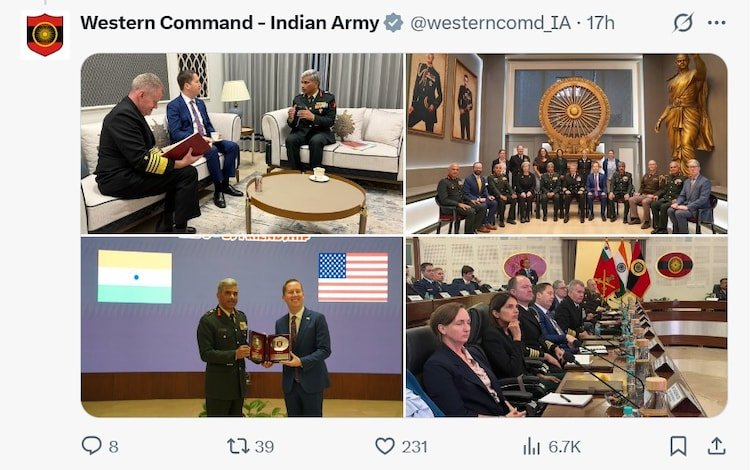
In a statement posted on social media, the Western Command said the delegation was comprehensively briefed on operational preparedness, execution of Operation Sindoor, and the Indian Army’s role in strengthening regional stability.
The visit came shortly after Admiral Paparo publicly praised the “tactical execution” of India’s military operations during Operation Sindoor — remarks that further fueled discussion around the timing of the engagement.
Why the Visit Raised Political Questions
The presence of Sergio Gor — who also serves as the United States’ special envoy to Pakistan and parts of South and Central Asia — added a political dimension to the visit. Images of the delegation interacting with Western Command chief Lt. Gen. Manoj Kumar Katiyar quickly went viral.
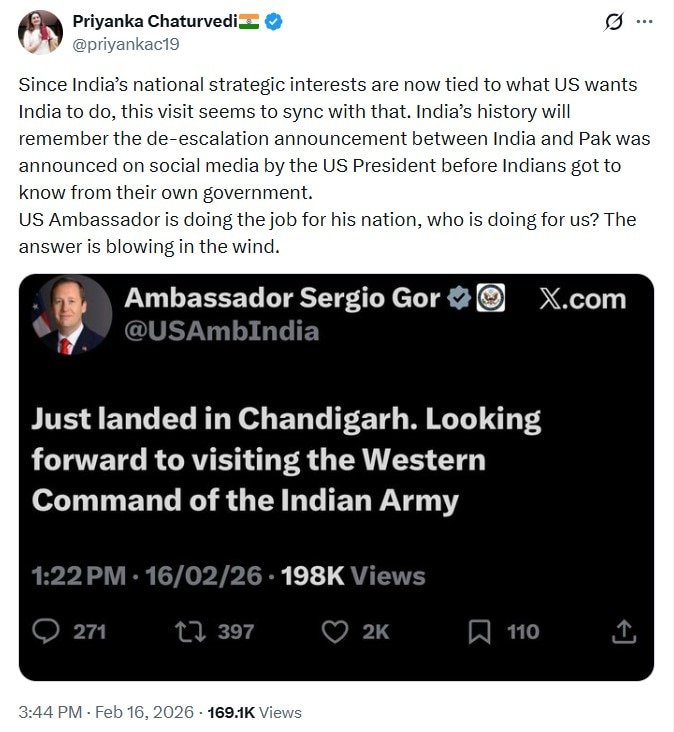
Rajya Sabha MP Priyanka Chaturvedi questioned whether India’s strategic interests were becoming increasingly aligned with American expectations. She cited former US President Donald Trump’s earlier claim of facilitating the India-Pakistan ceasefire — a claim India had firmly rejected, maintaining that direct bilateral talks led to the truce.
The Congress party also raised concerns about access granted to foreign officials in sensitive military zones, drawing parallels to past controversies such as the Pathankot Airbase episode.
However, defence analysts caution against overinterpretation. Military diplomacy often involves reciprocal visits. Foreign ambassadors and defence officials have previously toured Indian command headquarters, just as Indian officials have visited institutions such as the Pentagon and intelligence facilities in the United States.
Beyond Optics: The Strategic Message
At a broader level, the visit underscores the deepening defence partnership between India and the United States. Successive US administrations have increasingly viewed India as a critical counterbalance to china in the Indo-Pacific region.
While there were phases of tension — particularly around Trade Tariffs and shifting diplomatic warmth toward Pakistan during the Trump years — the strategic fundamentals of the relationship appear to have regained momentum.
The United States’ recent National Security Strategy placed renewed emphasis on partnerships in the Indo-Pacific, with India occupying a central role. Admiral Paparo described the US-India defence relationship as being on a “steeply upward trajectory,” while envoy Sergio Gor stated that the defence partnership “continues to grow stronger.”
Washington has also sought to gradually diversify India’s defence procurement profile. Historically, Russia has been India’s largest arms supplier. However, the US has emerged as India’s third-largest defence partner after France, with major acquisitions and joint exercises reinforcing operational interoperability.
What This Means for India’s Strategic Posture
The Western Command visit reflects more than ceremonial diplomacy. It signals confidence-building, transparency, and expanding operational dialogue between the Indian and US militaries. At a time of heightened competition in the Indo-Pacific — particularly amid China’s assertiveness — India’s geographic location and military capability make it indispensable to Washington’s regional calculus.
For India, the engagement offers access to advanced technologies, intelligence-sharing frameworks, and greater strategic leverage without formal alliance commitments.
While political reactions are inevitable in a vibrant democracy, the visit ultimately highlights a larger trend: a steadily expanding India-US military relationship built on shared interests in stability, deterrence, and maritime security.
The stir surrounding the visit may fade with time, but the strategic trajectory it represents — deeper cooperation between two major democracies navigating a shifting Indo-Pacific order — is likely to endure.
For breaking news and live news updates, like us on Facebook or follow us on Twitter and Instagram. Read more on Latest India on thefoxdaily.com.




COMMENTS 0