Buffalo Bills Highmark Stadium has become one of the biggest talking points surrounding the franchise ahead of the 2026 NFL season. The new $2.1 billion venue is designed to provide the Bills with a modern home, but criticism from some fans has emerged even before the regular season begins.
The concerns have focused on several aspects of the stadium experience, including reported obstructed views, sight lines, scoreboard size, pedestrian movement and the effectiveness of the stadium canopy during rainy weather. The Bills organization, however, has defended the design and argued that the criticism represents a very small portion of the people who hold personal seat licenses, commonly known as PSLs.
Bills COO Pete Guelli said the organization had heard from less than 1% of its PSL holders regarding sight-line concerns. He also said the team believes the virtual venue used during the ticket-selling process accurately represented what fans would see from their seats.
The dispute creates an interesting challenge for Buffalo. A $2.1 billion stadium comes with enormous expectations, and fans are naturally going to judge the building not only by its architecture but by what it feels like on game day. The soft opening during the team’s public Red & Blue practice has now provided an early test of whether the stadium delivers on those expectations.
Why are Bills fans criticizing the new Highmark Stadium?
The new Highmark Stadium represents one of the largest infrastructure projects in Buffalo Bills history. With a reported construction cost of $2.1 billion, expectations surrounding the venue are understandably high.
Some fans attending early events have raised concerns about what they believe are flaws in the stadium experience. Sight lines have been among the most frequently discussed issues, with certain seating areas reportedly offering limited or obstructed views.
Other complaints have involved the size of the scoreboards, the movement of fans around the venue and the stadium canopy. The canopy was promoted as covering approximately 65% of the seats, but questions have emerged about how effectively it protects spectators from rain.
These issues matter because modern stadium construction is no longer judged simply by whether the building is structurally impressive. Fans expect technology, comfort, visibility, efficient movement and protection from the elements to work together.
For the Bills, the challenge is particularly important because the stadium is being introduced at a time when the franchise has developed a passionate national following around quarterback Josh Allen and a team that has regularly entered seasons with playoff expectations.
Bills say sight-line complaints involve less than 1% of PSL holders
The organization has directly responded to the criticism rather than allowing the complaints to define the stadium’s early reputation.
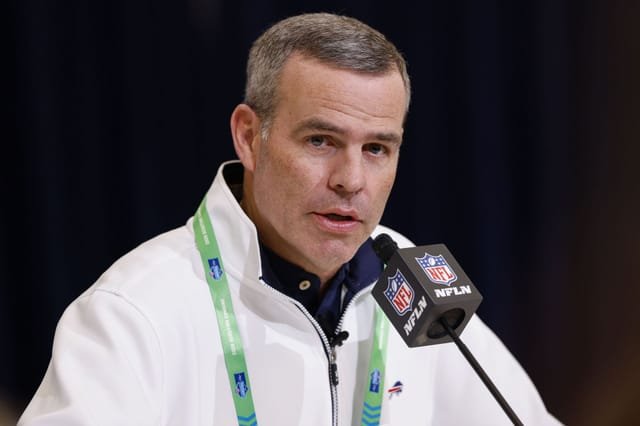
Bills COO Pete Guelli said the team had received sight-line complaints from less than 1% of its PSL holders. He also expressed confidence that the views represented through the team’s virtual venue were accurate representations of what customers would see from their seats.
The distinction between the number of complaints and the total number of ticket holders is important. A highly visible social-media discussion can create the impression that an entire fan base is dissatisfied, even when the complaints come from a relatively small percentage of customers.
At the same time, a small percentage does not automatically mean the problem is insignificant for the people affected.
A fan who has purchased an expensive long-term seating arrangement expects to have a clear view of the field. If the actual experience differs materially from what the customer believed they were purchasing, even a relatively small number of affected seats can become a legitimate customer-service issue.
How the Bills plan to handle seating complaints
The Bills have indicated that they are prepared to evaluate concerns individually.
Guelli explained that the organization would address complaints on a case-by-case basis. This approach recognizes that not every restricted-view seat presents the same problem.
Stadium seating naturally involves different viewing angles, and certain seats can have limitations depending on their location. The question is whether those limitations were adequately communicated before customers purchased their tickets or PSLs.
The Bills maintain that their virtual venue clearly depicted partial-view or limited-view seats.
That argument places significant importance on the accuracy of the digital ticketing experience. Before physically entering a new stadium, fans often rely on virtual seating tools to understand what their view will look like.
If the virtual representation is accurate, the organization has a stronger basis for defending the seating configuration. If customers believe the actual view differs substantially from what was presented, however, the team may face pressure to make adjustments.
Why obstructed views are such a sensitive issue in NFL stadiums
Every large stadium has design limitations. Structural supports, railings, equipment areas and architectural elements can affect visibility from certain seats.
But the tolerance for restricted views is much lower when fans are paying premium prices for an experience marketed as modern and state-of-the-art.
The issue becomes even more important in football because the field is relatively large and plays develop across multiple areas simultaneously. A spectator may need to follow the quarterback, receivers, running backs and defensive movements across a wide playing surface.
A small obstruction that blocks one part of the field can therefore have a larger effect than it might in a sport played on a smaller surface.
For the Bills, identifying and resolving the most problematic locations before the regular season could be an important part of protecting the stadium’s reputation.
The scoreboard controversy adds another layer
Sight lines are not the only complaint surrounding the new Highmark Stadium. Some fans have also criticized the size of the scoreboards.
Large video boards have become a major feature of modern NFL stadiums. They serve multiple purposes, including displaying replays, statistics, advertisements, game information and entertainment content.
That means fans increasingly expect the scoreboard to be visible from a wide range of seating areas.
If spectators perceive the screen as too small relative to the size of the building, the criticism can become part of a larger conversation about whether the stadium’s technology matches its enormous price tag.
However, the usefulness of a scoreboard should not be judged solely by physical dimensions. Placement, resolution, viewing angles and the amount of information displayed can also affect how effective it is.
The regular-season environment will provide a more meaningful test because fans will experience the full combination of live action, replays, statistics and entertainment programming.
Is the Highmark Stadium canopy protecting fans from rain?
Weather protection has become another major talking point surrounding the new stadium.
The Bills have promoted a canopy designed to cover approximately 65% of the seats. However, fans have questioned how effective that protection is when rain is falling at an angle or when wind pushes precipitation into seating areas.
This is particularly relevant in Buffalo, where weather conditions can be a major part of the football experience.
A canopy that covers a large percentage of seats does not necessarily mean every covered seat will remain completely dry during severe weather. Wind direction, rain intensity and the geometry of the structure can all affect how much protection spectators receive.
That distinction could become especially important during actual games. A sunny practice provides only limited information about how the stadium will perform during a windy, rainy autumn or winter afternoon.
Foot traffic and stadium movement could become a bigger test
Another concern raised by fans involves slow foot traffic around the stadium.
Getting spectators into and out of a modern NFL stadium is a logistical challenge involving thousands of people arriving at similar times. Concourses, gates, stairways, elevators, parking areas and pedestrian routes all have to work together.
Problems that appear manageable during a practice can become significantly more serious during a regular-season game when attendance, security procedures and pregame activity are operating at full scale.
The Bills therefore have an opportunity to use early events to identify bottlenecks before the stadium experiences its first major regular-season crowd.
This may ultimately prove just as important as aesthetic features. A stadium can look spectacular while still producing a frustrating experience if fans spend too much time waiting to enter, move between levels or leave the property.
The $2.1 billion price tag raises expectations
The most important context surrounding the criticism is the stadium’s enormous cost.
At $2.1 billion, Highmark Stadium is not simply another venue renovation. It represents a massive financial and civic investment, meaning fans and the broader community are likely to scrutinize its design closely.
Price changes how people evaluate mistakes.
A minor inconvenience at a modestly priced venue may be viewed as normal. The same inconvenience at a multibillion-dollar stadium can become symbolic of a much larger question: did the final product deliver enough value for the investment?
That does not mean every criticism proves the stadium was poorly designed. It means the Bills have a higher standard to meet because the building’s price and expectations are both unusually high.
Highmark Stadium’s early test during Red & Blue practice
The Bills held a soft opening for the new stadium during their public Red & Blue practice on Saturday.
Soft openings can be valuable because they allow organizations to observe how a venue functions before a full-scale competitive event. Staff can identify problems involving traffic, seating, concessions, security and crowd movement while the consequences are easier to manage.
For fans, however, the practice also created the first opportunity to physically compare the stadium with the expectations created during its construction and ticket-selling process.
That is why social-media reactions from early visitors can have an outsized impact. Fans are effectively providing the first public review of the building before the regular season has even begun.
When will the Bills play their first regular-season game at the new stadium?
The Bills are scheduled to play their first regular-season game at the new Highmark Stadium in Week 2 of the 2026 NFL season.
Buffalo is set to face the Detroit Lions in a Thursday Night Football matchup on September 17. The game will provide the first major regular-season test of the stadium, including its seating, crowd movement, weather protection and in-game technology.
The Bills will also host a preseason game against the Carolina Panthers at the new venue before the regular-season opener.
Buffalo is scheduled to play eight regular-season games at home during the 2026 season, giving the organization plenty of opportunities to evaluate how the building performs under different conditions.
What the Bills need to prove during the 2026 season
The early criticism does not necessarily mean the new stadium will be viewed negatively throughout its lifespan. First impressions can change quickly when a new venue settles into normal operation.
The Bills’ biggest priorities should be straightforward.
- Resolve genuine sight-line problems: Fans with legitimate visibility concerns need clear and practical solutions.
- Improve crowd movement: Any bottlenecks identified during early events should be addressed before high-attendance games.
- Evaluate weather protection: The canopy’s performance should be monitored during actual rain and wind conditions.
- Assess the scoreboard experience: The team should determine whether fans across the stadium can comfortably access important game information.
- Communicate with PSL holders: Transparent responses can prevent individual complaints from becoming a broader trust issue.
The organization’s response to complaints could ultimately matter as much as the design itself. Fans are more likely to accept an imperfect feature if they believe the team is listening and willing to make reasonable improvements.
Highmark Stadium vs. fan expectations
| Issue | Fan concern | What will determine the long-term verdict |
|---|---|---|
| Sight lines | Some seats reportedly have limited or obstructed views. | Accuracy of the virtual venue and case-by-case solutions. |
| Scoreboards | Some fans believe the screens are too small. | Visibility, resolution and usability during live games. |
| Canopy | Questions about rain protection despite approximately 65% seat coverage. | Performance during wind and rain. |
| Foot traffic | Concerns about slow movement around the stadium. | Performance during full-capacity games. |
| Overall value | The $2.1 billion cost creates enormous expectations. | Whether the complete game-day experience matches those expectations. |
Could the new stadium help change the Bills’ fortunes?
The Bills are entering the new stadium era with a franchise that has experienced both remarkable recent success and persistent disappointment in its pursuit of a Super Bowl.
Buffalo has developed into a regular contender during the Josh Allen era, but the franchise remains among the NFL teams without a Super Bowl victory.
A new stadium cannot directly change what happens on the field. Championships are decided by roster construction, coaching, player development, health and performance under playoff pressure.
But a modern home can contribute to the overall environment around a franchise. It can improve revenue opportunities, fan engagement, hospitality and organizational infrastructure.
That makes the stadium’s success important beyond whether fans like the architecture. It is now part of the Bills’ long-term business and competitive ecosystem.
The bigger question is whether the criticism lasts
The early complaints surrounding Highmark Stadium should be viewed as an opening chapter rather than a final verdict.
New stadiums often require adjustment periods. Fans have to learn the entrances, seating sections and concourses, while teams have to identify operational problems that are difficult to anticipate fully before thousands of spectators occupy the building.
The Bills’ response suggests that the organization believes the problems are limited, particularly regarding sight lines. The less-than-1% figure cited by Guelli provides the team’s perspective, but the experience of affected fans will remain important.
The strongest test will come during regular-season games, when the stadium is filled with passionate supporters and exposed to the conditions that define a Buffalo football season.
Conclusion: The Bills have a lot riding on Highmark Stadium
Buffalo Bills Highmark Stadium is one of the most significant investments in the franchise’s history, and early criticism has created an unexpected storyline before the regular season has even started.
Fans have raised concerns about sight lines, scoreboards, foot traffic and rain protection, while Bills COO Pete Guelli has pushed back by saying that the organization has heard from less than 1% of PSL holders about sight-line issues.
The disagreement is unlikely to be settled by statements alone. The real test will come when the stadium hosts regular-season football, particularly during games played in the challenging weather conditions associated with Buffalo.
The Bills have already indicated that they are willing to handle legitimate seating concerns on a case-by-case basis. If the organization follows through and addresses genuine problems quickly, early criticism could eventually become little more than the normal growing pains of a new stadium.
If major issues persist, however, the $2.1 billion price tag will make them much harder to ignore.
For now, Highmark Stadium has its first season ahead of it. The Bills will get their first regular-season test against the Detroit Lions on September 17, and that game could reveal far more about the stadium experience than any preseason debate or social-media reaction.
For breaking news and live news updates, like us on Facebook or follow us on Twitter and Instagram. Read more on Latest NFL on thefoxdaily.com.





COMMENTS 0