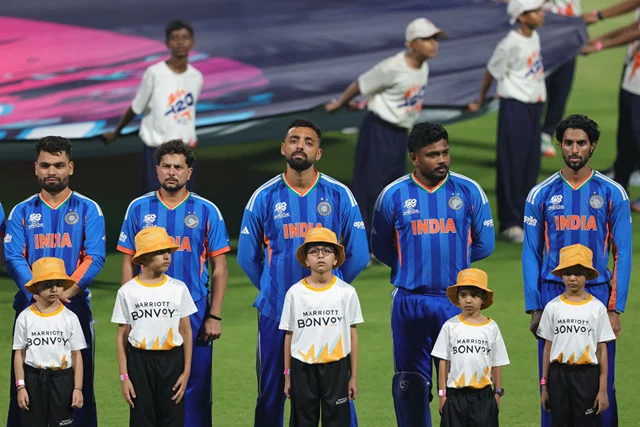
India face a crucial selection dilemma ahead of the first T20I against New Zealand, with Kuldeep Yadav and Varun Chakravarthy competing for a place in the playing XI. The five-match T20I series begins on Thursday, October 22, and the visitors will need to adapt quickly to conditions that traditionally offer greater assistance to fast bowlers than those in the subcontinent.
India’s bowling combination will be particularly important as the team prepares for the opening match at Christchurch’s Hagley Oval. While pace is expected to play a significant role, the presence of Axar Patel provides the team with an established left-arm spin option. That could leave the management with a decision between two specialist wrist-spin alternatives: Kuldeep, known for his variations and attacking approach, and Varun, whose overspin, bounce and mystery-spin variations offer a different challenge.
Both bowlers bring distinct strengths to the Indian attack, but neither enters the series without concerns. Varun Chakravarthy is returning after multiple injury setbacks, while Kuldeep Yadav has struggled to maintain consistent rhythm since returning to India’s T20I setup after a lengthy absence.
With conditions, recent performances and experience outside the subcontinent all likely to influence the decision, India’s selection will depend on which bowler offers the best combination of control, wicket-taking potential and adaptability. Here is a closer look at the key factors that could determine who gets the nod for the IND vs NZ 1st T20I in 2026.
1. Who Is Better Suited to Christchurch and New Zealand Conditions?
New Zealand’s conditions often encourage teams to prioritise fast bowlers. Swing, seam movement and bounce can make life difficult for batters, particularly during the opening overs. However, that does not mean spin bowling becomes ineffective in the country.
Spinners can still play an important role in New Zealand, especially when they adjust their lengths, vary their pace and exploit the dimensions of the ground. Larger boundaries at certain venues can also reward bowlers who force batters to hit against the turn or attempt high-risk shots.
For India, the challenge will be to identify the spinner who can make the greatest impact without compromising the team’s overall bowling balance.
Kuldeep Yadav’s strengths
Kuldeep is an attacking left-arm wrist-spinner whose effectiveness comes from changes in flight, pace and spin. His ability to turn the ball sharply and deceive batters through variations makes him a potential wicket-taking option even when the pitch does not offer substantial assistance.
His conventional wrist-spin approach can be particularly useful against batters who become comfortable against predictable lines and lengths. By changing the angle of delivery and varying the amount of flight, Kuldeep can encourage batters to play attacking shots before they have established their timing.
His previous T20I appearance in New Zealand also provides a small but encouraging reference point. Kuldeep recorded figures of 1-26 in four overs during his only appearance in the country, demonstrating that he can operate effectively in those conditions.
However, one appearance is too small a sample to establish how reliably he would perform across an entire series. India’s management must also consider his recent rhythm and whether he can consistently deliver the control required on a surface expected to assist pace.
Varun Chakravarthy’s strengths
Varun offers India a different kind of spin-bowling option. His mystery-spin variations, overspin and ability to generate bounce can make it difficult for batters to settle into a predictable scoring pattern.
His additional height can help him extract bounce, while his variations allow him to challenge batters without relying entirely on conventional turn. That combination could be useful at Hagley Oval, where the surface is regarded as one of the quicker and bouncier pitches in New Zealand.
The venue’s T20I record also suggests that spin bowling should not be dismissed. Off-break and leg-break bowlers have averaged below 28.00 at Hagley Oval, with their economy rates remaining below 7.75. New Zealand leg-spinner Ish Sodhi is the leading T20I wicket-taker at the venue, with 12 wickets in nine matches at an average of 24.25.
These figures underline the possibility that a well-executed spin attack can still be effective, even at a ground where fast bowlers are expected to feature prominently.
Verdict: Varun has a marginal advantage for the opening match because his bounce, overspin and variations could suit the conditions at Hagley Oval. Kuldeep remains a strong alternative, particularly if India want a more conventional attacking wrist-spinner. The difference between them is relatively small, and the final decision should depend on the surface and Varun’s physical readiness.
2. Record in SENA Countries: Which Spinner Has the Advantage?
Performances in SENA countries South Africa, England, New Zealand and Australia offer another useful way to assess how well Indian spinners adapt to conditions outside the subcontinent.
These environments can require different approaches from those used on slower, spin-friendly surfaces in India. Bowlers may have to rely more heavily on accuracy, changes of pace, bounce and variations in trajectory rather than expecting substantial turn from the pitch.
Both Kuldeep and Varun have demonstrated the ability to perform in these conditions, but their experience and recent records differ.
Kuldeep Yadav’s overseas numbers
Kuldeep’s bowling average in SENA countries stands at 12.50, compared with 20.07 on home soil, according to the supplied statistics. The difference highlights his ability to deliver effective performances away from the subcontinent.
Those numbers strengthen his case for selection. They suggest that his wrist-spin variations can remain dangerous even when the conditions are unfamiliar or do not offer the same assistance he might receive at home.
However, the amount of recent experience available is a concern. Since the end of the 2024 T20 World Cup, Kuldeep has played only one T20I outside the subcontinent. Limited recent exposure to overseas conditions makes it more difficult to assess how quickly he will adapt to New Zealand’s pitches.
His historical record is encouraging, but India must determine whether that success can translate into the current series, particularly after his recent struggles with rhythm.
Varun Chakravarthy’s overseas experience
Varun has had more recent exposure to SENA conditions in T20I cricket. According to the supplied figures, he has averaged 16.2 across nine matches in these countries since returning to the Indian side in 2024.
His performances in South Africa and Australia provide encouraging evidence of his ability to handle different conditions. That experience could be valuable against New Zealand, where he will need to adjust his lengths and pace to prevent batters from exploiting the conditions.
Varun did struggle in England before his injury, however, illustrating that his effectiveness is not guaranteed across every overseas environment. His record also needs to be considered alongside his recent injury setbacks, which have disrupted his momentum.
Nevertheless, his familiarity with bowling in SENA countries in the shortest format gives him a practical advantage when preparing for the New Zealand series.
Verdict: Kuldeep’s impressive overseas average strengthens his case, but Varun’s more recent experience in SENA conditions makes him a compelling option for the first T20I. If India prioritise familiarity with contemporary overseas T20 conditions, Varun has the edge. Kuldeep’s historical numbers, meanwhile, mean he should not be ruled out.
3. Recent Form: Who Is More Likely to Make an Immediate Impact?
Recent form is another important consideration because both spinners have experienced difficulties leading into the series. India’s management must balance their long-term abilities against their current confidence, rhythm and match readiness.
The challenge is particularly significant in T20 cricket, where a few expensive overs can quickly change a match. At the same time, a bowler who takes wickets at important moments can justify selection even if the conditions are not ideal for spin.
Kuldeep’s recent struggles
Kuldeep had a difficult time against New Zealand during the three-match ODI series played in the subcontinent earlier in the year. He averaged 60.67 and conceded runs at an economy rate of 7.28, according to the supplied statistics.
Those figures indicate that New Zealand’s batters were able to handle him relatively well during that series. However, ODI performances do not automatically predict how a bowler will fare in T20 cricket, where the pace of scoring and the tactical demands are different.
Kuldeep subsequently returned to India’s T20I setup during the home series against West Indies. His opportunity was limited, and he was dropped after recording figures of 1-53 in the second match in Ranchi.
The performance raised questions about his current rhythm and consistency. For a spinner competing for one place in a pace-heavy overseas combination, the ability to control the scoring rate will be particularly important.
India will need to assess whether Kuldeep has regained the accuracy and confidence that make him such a dangerous attacking option. If he can consistently hit the right lengths, his variations could still trouble New Zealand’s batters.
Varun’s comeback and fitness concerns
Varun’s form has also dipped in 2026, with multiple injury setbacks interrupting his progress. His return to the Indian side offers an opportunity to rebuild momentum, but the management must ensure that he is ready to handle the demands of international cricket.
His comeback performance against Afghanistan was promising, providing some encouragement after a disrupted period. However, the supplied information does not establish whether he has fully recovered his previous consistency.
Varun was also India’s most expensive bowler in the 2026 T20 World Cup final against New Zealand, conceding runs at an economy rate of 13.00. That performance will be relevant when evaluating his recent record against the same opposition, although one match should not determine the selection decision on its own.
His fitness may ultimately be more important than his past numbers. If he is not fully comfortable with his workload or bowling action after the injuries, India may prefer a more reliable option for the opening match.
Verdict: Neither bowler enters the contest with an overwhelming advantage in recent form. Kuldeep needs to rediscover his rhythm after an expensive T20I outing, while Varun must demonstrate that he can return to his best after his injury interruptions. Varun’s promising comeback and familiarity with overseas conditions give him a slight edge, provided the team is satisfied with his fitness.
4. India’s Playing XI Combination Could Decide the Contest
The decision between Kuldeep and Varun cannot be considered in isolation. India’s overall combination will determine whether the team can accommodate a specialist spinner without weakening its pace attack or reducing its batting depth.
New Zealand’s conditions may encourage India to select additional fast bowlers who can exploit swing and bounce. If the pitch offers substantial assistance to seamers, the management could decide that one specialist spinner is sufficient alongside Axar Patel.
Axar’s left-arm spin gives India a different angle and provides the team with a bowling option capable of controlling the middle overs. His presence reduces the need to select both Kuldeep and Varun, particularly if India want to preserve flexibility elsewhere in the lineup.
Choosing between the two wrist-spin options would then depend on the role India want the specialist spinner to fulfil.
- If India prioritise bounce and variations: Varun Chakravarthy could be the preferred option, especially if the pitch is quick and bouncy.
- If India prioritise attacking wrist-spin: Kuldeep Yadav offers variations in flight and turn that can create wicket-taking opportunities.
- If conditions strongly favour fast bowlers: India could consider leaving both specialist spinners out and rely on their pace options alongside Axar Patel.
- If batting depth becomes a priority: The team may prefer a combination that provides additional batting flexibility rather than selecting another specialist bowler.
The possibility of leaving both bowlers out is particularly important. Selection is not necessarily a straight contest between Kuldeep and Varun if the management believes that the pitch demands a more pace-oriented approach.
India must also consider the risk of choosing a bowler who is not fully fit. Varun’s recent injury history makes that assessment especially relevant, while Kuldeep’s recent performances raise questions about consistency rather than physical readiness in the supplied information.
Final Verdict: Should India Pick Kuldeep Yadav or Varun Chakravarthy?
Considering the venue, overseas experience, recent performances and India’s likely bowling combination, Varun Chakravarthy appears to be the slightly better choice for the first T20I against New Zealand, provided he is fully fit and has regained sufficient rhythm following his injury setbacks.
His ability to generate bounce and use overspin could suit the conditions at Hagley Oval. He also has more recent experience bowling in SENA countries in T20I cricket, which may help him adapt quickly to the demands of the opening match.
However, the advantage is marginal rather than decisive. Kuldeep’s excellent bowling average in SENA countries and his ability to deceive batters through changes in flight and spin make him a strong contender. If Varun is not physically ready or struggles to demonstrate control in training, Kuldeep could be the safer selection.
India’s management should also remain open to a third possibility: selecting neither specialist spinner if the conditions overwhelmingly favour fast bowling. With Axar Patel already providing a left-arm spin option, the team could use the remaining places to strengthen its pace attack and maintain batting depth.
Ultimately, the choice is unlikely to determine the match on its own. Both bowlers have the skills to make a difference, but the best selection will be the one that complements India’s overall strategy and responds to the conditions on the day.
For now, Varun Chakravarthy gets the nod on balance, with fitness and rhythm likely to be the decisive factors. Kuldeep Yadav remains a strong alternative if India decide that his attacking wrist-spin offers the greater threat against New Zealand’s batters.
IND vs NZ 1st T20I: Kuldeep Yadav vs Varun Chakravarthy at a Glance
| Selection Factor | Kuldeep Yadav | Varun Chakravarthy |
|---|---|---|
| Bowling style | Left-arm wrist-spin with variations in flight and turn | Mystery spin with overspin and bounce |
| Suitability for Hagley Oval | Offers an attacking wicket-taking option | Marginal advantage because of bounce and variations |
| SENA T20I experience | Limited recent exposure outside the subcontinent | More recent experience across SENA conditions |
| Recent concerns | Needs to rediscover rhythm and consistency | Injuries and a dip in form |
| Selection outlook | Strong alternative if India prefer conventional wrist-spin | Slightly preferred if fully fit and ready |
Final pick: Varun Chakravarthy, subject to fitness and match readiness. India’s decision should ultimately reflect the Hagley Oval surface, the balance of the playing XI and which spinner is better prepared to execute the team’s plan.
For breaking news and live news updates, like us on Facebook or follow us on Twitter and Instagram. Read more on Latest Cricket on thefoxdaily.com.






COMMENTS 0