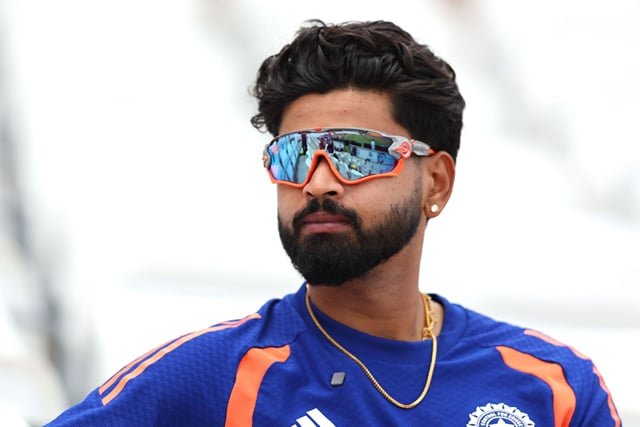
Former India batter Mohammad Kaif has offered a clear selection view ahead of India’s five-match T20I series against the West Indies, beginning on October 6, 2026. Kaif believes captain Shreyas Iyer should consider retaining the combination of Vaibhav Suryavanshi, Abhishek Sharma and Sanju Samson after the trio featured together in India’s convincing Asian Games semi-final win over Sri Lanka.
The Indian side produced a strong performance in the semi-final, defeating Sri Lanka by 124 runs. Abhishek Sharma, Suryavanshi and Samson were all included in the playing XI, while Ishan Kishan provided additional flexibility in the middle order and made a significant contribution.
With Gautam Gambhir set to coach India during the West Indies series, Kaif pointed out that the coaching setup would differ from the Asian Games campaign. However, he believes the captain should still consider what worked on the field rather than automatically changing the combination.
Mohammad Kaif wants Shreyas Iyer to back the successful combination
According to Kaif, the Asian Games semi-final provided India with an opportunity to test an exciting combination of young and experienced batting options. He believes Suryavanshi, Abhishek and Samson can form an effective top order if India decides to continue with the same structure.
Kaif’s argument is particularly centered around Suryavanshi. The former India batter believes the young batter has already shown enough readiness and should not simply be left out when the senior T20I setup returns.
His suggested structure would see Abhishek Sharma and Sanju Samson open the innings, while Vaibhav Suryavanshi would come in at No. 3. This would also maintain a left-right combination at the top, something Kaif considers useful when constructing the batting order.
The recommendation also highlights India’s increasing depth in T20 cricket. Instead of depending on a fixed set of established names, the team now has several players capable of filling different roles across the batting order.
Why Vaibhav Suryavanshi’s inclusion could be significant
Vaibhav Suryavanshi has emerged as one of the most talked-about young batting talents in Indian Cricket. His inclusion alongside established players such as Abhishek Sharma and Sanju Samson demonstrates the range of options available to India’s T20I selectors.
Kaif’s point is not simply about rewarding a young player. It is about maintaining a combination that has already been tested in competitive cricket. The Asian Games semi-final gave India an opportunity to understand how the three batters could fit into the same XI.
Playing Suryavanshi at No. 3 also gives India a natural transition between the opening pair and the middle order. Abhishek can provide an attacking start, Samson can bring experience and flexibility, while Suryavanshi can enter during the powerplay or immediately afterward depending on the match situation.
However, selection will ultimately depend on the team’s tactical requirements, opposition and pitch conditions. A combination that works on one surface does not automatically have to be used in every match.
Ishan Kishan’s performance adds another layer to India’s batting options
One of the most interesting aspects of India’s Asian Games semi-final victory was the flexibility shown in the batting order. Ishan Kishan batted at No. 5 and scored an unbeaten 80, demonstrating that India’s batting resources can be rearranged according to match conditions.
That flexibility could become important during the West Indies T20I series. India have several players who can perform multiple roles, meaning the management can adjust the XI without necessarily weakening the batting unit.
For Kaif, the Asian Games game was evidence that India can accommodate multiple attacking batters while still maintaining a balanced structure.
Kaif also stresses the importance of conditions when selecting the XI
Beyond the specific T20I combination, Kaif also discussed a broader selection principle: India should choose the playing XI according to the conditions.
He pointed to India’s second ODI against the West Indies in Guwahati, where the visitors scored 405/7 on a flat surface. In such conditions, Kaif argued that simply adding more batting depth may not provide the same value as selecting additional specialist bowling options.
His reasoning is based on the difference between pitches that assist batting and surfaces that offer more help to bowlers. On a flat pitch, a team can potentially benefit from having more specialist bowlers capable of controlling the opposition’s scoring rate.
On a difficult or seaming surface, however, additional batting depth can become more valuable because the top order may face greater challenges.
India’s batting depth gives the team selection flexibility
India’s current white-ball setup provides the management with several possible combinations. The presence of established batters alongside emerging players means the team does not necessarily need to follow one fixed template.
The key challenge is therefore not simply finding talented players. It is determining how those players complement one another.
For example, opening with Abhishek Sharma and Sanju Samson provides a left-right combination, while bringing Suryavanshi at No. 3 creates another attacking option. Ishan Kishan can then provide middle-order flexibility, depending on the circumstances of the match.
This type of flexibility can become particularly useful in a five-match T20I series, where the team has opportunities to test different combinations while also maintaining a competitive balance.
Gautam Gambhir’s role could influence the combination
Another important factor will be the change in coaching leadership. The Asian Games campaign involved a different coaching setup, while Gautam Gambhir will be in charge during the West Indies T20I series.
That does not necessarily mean the successful Asian Games combination will disappear. In fact, Kaif’s argument is that the evidence from the semi-final should remain relevant regardless of who occupies the coaching position.
At the same time, the final XI will be influenced by the team’s broader tactical plans, player workload, pitch conditions and the specific requirements of each game.
Shreyas Iyer faces an interesting selection challenge
For Shreyas Iyer, the West Indies series could present an opportunity to establish the team’s preferred T20 structure. As captain, he will have to balance experimentation with the need to field a settled XI.
The presence of several talented batters makes the selection process more complicated but also gives India greater flexibility. Choosing one player can mean leaving another capable option outside the playing XI.
Kaif’s recommendation is therefore centered on giving a clear opportunity to the combination that recently produced a strong result. Whether that exact structure continues against the West Indies will depend on the team’s assessment of conditions and opposition.
What could India’s T20I batting order look like?
If Kaif’s preferred combination is followed, Abhishek Sharma and Sanju Samson could open, with Vaibhav Suryavanshi at No. 3. That would leave India with several options for the middle order, including Ishan Kishan and other established players in the squad.
The advantage of this structure would be the ability to maintain attacking intent throughout the top order while retaining flexibility lower down.
However, India’s management could also choose a different combination based on the conditions. T20 cricket increasingly demands role clarity, and the ideal batting order can change depending on whether the pitch is high-scoring, slow, turning or supportive of seam bowling.
The bigger picture for India’s T20I team
The debate surrounding India’s combination reflects a broader feature of Indian cricket: the growing competition for places. Young players are increasingly pushing for opportunities while experienced players continue to offer proven match-winning ability.
The challenge for the captain and coaching staff is to create a combination where individual talent translates into a balanced team.
Kaif’s comments highlight two important principles. First, players who perform well should receive serious consideration for continued opportunities. Second, selection should remain flexible enough to respond to match conditions.
India’s five-match T20I series against the West Indies will provide an extended opportunity to test those principles. With multiple batting combinations available, the series could offer useful insight into how India want to structure their T20I top order going forward.
Conclusion
Mohammad Kaif’s recommendation puts the spotlight on Vaibhav Suryavanshi, Abhishek Sharma and Sanju Samson ahead of India’s T20I series against the West Indies. His view is based on the combination’s successful appearance in the Asian Games semi-final.
Kaif believes Shreyas Iyer should consider backing the trio, with Abhishek and Samson opening and Suryavanshi batting at No. 3. At the same time, his comments about pitch conditions underline the importance of selecting the XI according to the demands of each match.
With Gautam Gambhir returning to the coaching role for the T20Is and several players competing for places, India’s selection strategy will be one of the major talking points when the series begins on October 6.
For breaking news and live news updates, like us on Facebook or follow us on Twitter and Instagram. Read more on Latest Cricket on thefoxdaily.com.






COMMENTS 0