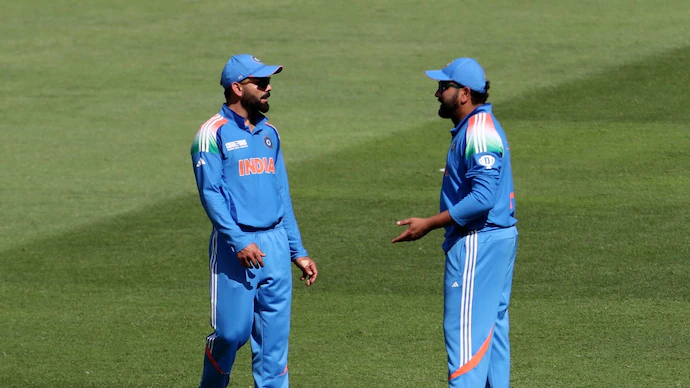
Board of Control for Cricket in India (BCCI) president Mithun Manhas has made it clear that age will not determine whether Rohit Sharma and Virat Kohli feature in India’s squad for the 2027 ODI World Cup. Instead, the two senior batters will be assessed on their fitness, performances and ability to contribute to the team’s success as India prepare for the next edition of the tournament.
Speaking to Sportstar ahead of India’s multi-format tour of New Zealand, Manhas emphasised that players who remain fit and continue delivering match-winning performances should have the opportunity to represent the country, regardless of their age. His comments come amid growing discussions about India’s long-term transition plans and the roles Rohit and Kohli could play in the next World Cup.
The 2027 ODI World Cup is scheduled to take place in South Africa, Zimbabwe and Namibia in October and November. For Rohit and Kohli, the tournament could represent another opportunity to compete for the biggest prize in one-day international cricket after being part of India’s team that lost the final of the previous edition.
Both players have already retired from T20 internationals and Test cricket, making ODI cricket their remaining international format. Their future involvement will therefore depend heavily on their performances in the 50-over game and the selectors’ assessment of India’s requirements ahead of the tournament.
Mithun Manhas Says Fitness and Performance Will Decide Rohit and Kohli’s World Cup Future
Manhas rejected the idea that the age of India’s senior players should automatically influence their selection for the 2027 World Cup. According to the BCCI president, the selection process should focus on a player’s physical condition, current form and ability to win matches for India.
“From my perspective, fitness and performance should be the criteria for selection, definitely not age. If someone is fit to play, performing well and winning games for the country, that should be the only criterion we focus on,” Manhas said.
The statement provides a clear indication of the selection philosophy Manhas supports as India build towards the tournament. Rather than setting an age limit for experienced players, the emphasis will remain on whether they can continue performing at the required international level.
For Rohit and Kohli, that approach leaves the door open. Both have extensive experience in major international tournaments, and their familiarity with high-pressure matches could be valuable if they maintain their form and fitness over the coming months.
However, Manhas’ comments should not be interpreted as a guarantee that either player will be selected. Final decisions will depend on performances, fitness assessments, team balance and the plans of India’s selection committee and team management.
The distinction is important because India must prepare for the World Cup while also ensuring that the team has sufficient depth and a clear succession plan. Giving experienced players opportunities based on merit does not prevent selectors from evaluating younger alternatives or developing options for the future.
How Old Will Rohit Sharma and Virat Kohli Be at the 2027 ODI World Cup?
Age has become a prominent part of the debate surrounding Rohit and Kohli because both players will be approaching significant milestones by the time the 2027 World Cup begins.
- Rohit Sharma: The Indian batter will turn 40 in April 2027.
- Virat Kohli: Kohli will be 38 during the tournament.
Those ages have prompted questions about how long the two senior players can continue competing at the highest level and whether India should accelerate the transition towards younger batters.
However, chronological age alone does not provide a complete picture of an athlete’s readiness. Fitness, recovery, workload management, consistency and the ability to perform under pressure can all influence how effectively an experienced cricketer continues to compete.
Manhas’ comments suggest that the BCCI president does not believe India should rule out Rohit or Kohli simply because they will be older than many of their teammates. Instead, the selection debate should be based on what they contribute on the field.
The upcoming ODI series against New Zealand will consequently attract attention, with both batters likely to be assessed closely as India continue preparations for the global tournament. Their performances will form part of the broader evaluation of the team’s batting combination.
Rohit Sharma’s ODI Form and Kohli’s Consistency Remain Important
Although Manhas has backed a merit-based approach, Rohit and Kohli will still need to justify their places through performances in the 50-over format.
Rohit has faced questions about his ODI future following a difficult period with the bat. Speculation surrounding his retirement intensified when his performances came under scrutiny, but a century at Lord’s helped ease some of those concerns and demonstrated that he remained capable of producing a major innings.
For Rohit, the challenge will be to maintain consistency and demonstrate that he can continue influencing matches against high-quality international bowling attacks. His experience at the top of the order could be particularly useful in a World Cup, where establishing a strong start can shape the course of an innings.
Kohli, meanwhile, has continued to enjoy a prominent role in ODI cricket. His ability to build innings, rotate the strike and accelerate when required makes him an important option in India’s batting lineup.
His experience in pressure situations could also prove valuable during the tournament. Kohli has played in multiple major international competitions and understands the demands of performing when expectations are high.
Nevertheless, past achievements alone cannot guarantee selection. Both players will need to remain productive in the format and demonstrate that they can meet the physical and tactical demands of international cricket as the World Cup approaches.
For India, the ideal outcome would be to enter the tournament with experienced players who are still performing at a high level while ensuring that younger batters are prepared to take on greater responsibility when required.
India’s Transition Plan: How Rohit, Kohli and Jadeja Moved Away From T20Is and Tests
India’s transition away from some of its senior players has already begun across other international formats. During chief selector Ajit Agarkar’s tenure, Rohit Sharma, Virat Kohli and Ravindra Jadeja retired from T20 internationals following India’s successful 2024 T20 World Cup campaign.
Rohit and Kohli subsequently retired from Test cricket in 2025, ending their involvement in the longest format while continuing their ODI careers.
Those decisions marked an important stage in the evolution of India’s international teams. The retirements created opportunities for younger players in T20Is and Tests while allowing the senior batters to focus on the remaining demands of their international careers.
The ODI format presents a different selection challenge because experienced players can continue to provide substantial value through their batting, tactical awareness and understanding of tournament cricket.
India must therefore balance two objectives: making the most of Rohit and Kohli’s experience while ensuring that the next generation is ready to perform at the highest level.
Manhas’ comments indicate that the BCCI does not intend to make the decision solely on the basis of age. Instead, the team’s transition will depend on how players perform and how their contributions fit into India’s broader plans.
That approach could allow the selectors to maintain continuity if the senior players remain productive, while also creating opportunities for younger cricketers when their performances and the team’s requirements justify a change.
How Rohit Sharma and Virat Kohli Could Help Shubman Gill as Captain
Beyond their batting contributions, Manhas believes Rohit and Kohli could play an important role in supporting Shubman Gill’s development as India’s captain.
Gill has experience leading the Gujarat Titans in the Indian Premier League and has also taken on leadership responsibilities for India. Manhas suggested that this background should help Gill manage the pressures associated with captaining the national team at a major tournament.
However, leading India at a World Cup involves challenges that extend beyond tactical decisions during a match. Captains must manage workloads, respond to difficult situations, communicate effectively with teammates and maintain confidence when results do not go according to plan.
The presence of experienced players could help Gill navigate those responsibilities. Rohit and Kohli have played in several major international tournaments and understand how to manage pressure during critical stages of a competition.
“Having Virat, Hardik (Pandya) and Rohit in the side will definitely help him,” Manhas said.
The BCCI president also highlighted the potential contributions of other senior players, including Jasprit Bumrah, who could take responsibility for leading the bowling group.
Manhas explained that leadership does not have to rest entirely on the captain. Different players can take charge of particular areas, allowing the captain to distribute responsibilities and focus on the broader strategy.
“Then there are the likes of (Jasprit) Bumrah, who could take charge as the bowling captain, while someone else could lead the fielding unit. So, it is all about distributing the workload.”
This approach could be particularly useful during a World Cup, when teams face demanding schedules and must make tactical adjustments against different opponents. Experienced players can help the captain assess match situations, communicate plans and maintain discipline during high-pressure moments.
Manhas also described Gill as a level-headed individual and expressed confidence that having senior players around him would be an advantage.
The arrangement would not diminish Gill’s authority. Instead, it would allow him to benefit from the experience of teammates who have handled major international assignments while developing his own leadership style.
Leadership Lessons From MS Dhoni and Sourav Ganguly
Manhas’ comments also reflect a familiar pattern in Indian cricket: younger leaders often benefit from the guidance of experienced players who have previously held leadership positions.
Virat Kohli learned from MS Dhoni during his early years in India’s leadership group, while Dhoni himself had the opportunity to work under Sourav Ganguly. Those relationships demonstrated how experienced teammates can help a captain understand the tactical, emotional and organisational demands of leading an international side.
The same principle could apply to Gill as he prepares for the next ODI World Cup. Rohit and Kohli have experienced the pressure of major tournaments, while Bumrah brings extensive experience in high-level international cricket.
Such support can be especially valuable during difficult matches, when a captain must make quick decisions about bowling changes, field placements and batting strategy.
Senior players can also help maintain perspective when a team experiences setbacks. Their experience allows them to offer practical advice based on previous tournaments, helping younger teammates avoid becoming overwhelmed by expectations.
At the same time, the success of this model will depend on clearly defined roles. Gill will need to establish his own authority while making effective use of the knowledge available within the squad.
If the balance works, India could enter the 2027 World Cup with a leadership structure that combines Gill’s captaincy with the experience of senior batters and established bowlers.
India’s New Zealand Tour Will Put ODI Plans Under the Spotlight
India are scheduled to begin a multi-format tour of New Zealand on October 22, featuring five T20Is, five ODIs and two Test matches. The ODI series is scheduled to take place from November 4 to 15, making it an important opportunity to evaluate the team’s combination and preparations for the 2027 World Cup.
While the T20I and Test matches will serve their own purposes, the ODI fixtures are likely to attract particular attention because of the questions surrounding Rohit and Kohli’s long-term roles.
The series will provide India with an opportunity to assess their batting combinations, evaluate players in overseas conditions and determine how the senior batters fit into the team’s plans.
Performances during the tour could also help clarify the balance between established players and younger options. A strong showing from Rohit or Kohli would strengthen their cases for continued selection, while the emergence of alternatives could give the management more choices as the tournament approaches.
India will also need to consider the wider conditions expected at the 2027 World Cup, which will be held in South Africa, Zimbabwe and Namibia. Preparing for a tournament across multiple host nations requires a squad capable of adapting to different pitches, playing conditions and opposition strategies.
For that reason, selection decisions will involve more than individual statistics. The management must consider how each player contributes to the team’s overall balance, whether the bowling attack has sufficient options and whether the batting lineup can handle different match situations.
The New Zealand ODI series will not determine the final World Cup squad on its own, but it will form part of the assessment process as India build towards the tournament.
Will Rohit Sharma and Virat Kohli Play the 2027 ODI World Cup?
Manhas’ statement offers encouragement to supporters hoping to see Rohit and Kohli represent India at another ODI World Cup. By rejecting age as a standalone selection criterion, the BCCI president has left open the possibility that both players could remain part of India’s plans if they continue performing.
However, their participation is not guaranteed. Fitness, consistency, match-winning contributions and the team’s evolving requirements will all influence the eventual decision.
Rohit’s experience at the top of the order and Kohli’s ability to build innings could make them valuable assets in South Africa, Zimbabwe and Namibia. Their familiarity with high-pressure matches could also help Gill manage the demands of leading India at a global tournament.
The challenge for the selectors will be to assess the senior players objectively while ensuring that India’s transition to the next generation continues at the right pace.
For now, Manhas has made the BCCI’s position clear: age should not automatically end a player’s World Cup ambitions. If Rohit Sharma and Virat Kohli remain fit, perform consistently and continue helping India win matches, their experience could still have a place in the team’s 2027 ODI World Cup campaign.
Key Takeaways
- Age will not be the deciding factor: BCCI president Mithun Manhas says Rohit Sharma and Virat Kohli should be judged on fitness and performance.
- Rohit will be 40 and Kohli 38: Both players will approach the 2027 ODI World Cup as experienced senior members of the squad.
- Senior players could support Gill: Rohit, Kohli and Bumrah could help distribute leadership responsibilities during the tournament.
- New Zealand ODIs will be important: The November series will provide another opportunity to assess India’s combination ahead of the World Cup.
For breaking news and live news updates, like us on Facebook or follow us on Twitter and Instagram. Read more on Latest Cricket on thefoxdaily.com.






COMMENTS 0