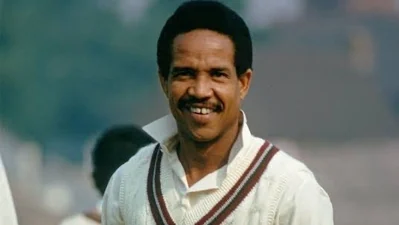
Cricket has lost one of its most iconic ambassadors. Sir Garfield St Aubrun Sobers, universally known as Sir Garry Sobers, passed away just days before his 90th birthday, bringing an end to a life that transformed the sport forever. For generations of cricket followers, Sobers was not merely a great player; he was the standard against which all all-rounders were measured.
In a game that has produced countless legends, only a handful have altered the way cricket is understood. Don Bradman redefined batting excellence. Shane Warne reinvented leg-spin. Sachin Tendulkar became cricket’s global superstar. Yet Sir Garry Sobers occupied a category almost entirely of his own. He was a batter, a fast bowler, a spinner, a captain, an entertainer, and above all, a complete cricketer.
His death closes a remarkable chapter in Cricket history and prompts an important question: Will the sport ever see another player quite like him?
Who Was Sir Garry Sobers?
Born on July 28, 1936, in Barbados, Sobers emerged from the Caribbean at a time when cricket was becoming more than a sport in the region. For many West Indians, cricket represented identity, pride, and a chance to challenge colonial stereotypes on the international stage.
From an early age, Sobers displayed extraordinary athletic gifts. What separated him from other talented youngsters was his versatility. Most players spend entire careers mastering one discipline. Sobers mastered several.
He could dominate attacks with the bat, bowl in multiple styles depending on conditions, field brilliantly, and influence matches in every possible way.
That rare combination would eventually make him one of the most complete athletes ever produced by any sport.
Why Garry Sobers Is Widely Considered Cricket’s Greatest All-Rounder
The phrase “all-rounder” is often used loosely in modern cricket. Many players contribute in two disciplines, but very few excel equally in both.
Sobers did far more than contribute.
He regularly changed the outcome of matches with either bat or ball. His ability to perform multiple roles at elite level gave captains tactical options rarely available in international cricket.
| Category | Sir Garry Sobers |
|---|---|
| Test Matches | 93 |
| Runs | 8,032 |
| Batting Average | 57.78 |
| Centuries | 26 |
| Wickets | 235 |
| Highest Score | 365* |
Even decades later, those numbers remain extraordinary. More importantly, they fail to fully capture his influence because statistics cannot measure versatility, creativity, or intimidation.
Modern cricket celebrates specialists. Sobers succeeded as several specialists rolled into one player.
The Man Who Could Bowl Almost Anything
One of the most remarkable aspects of Sobers’ career was his bowling range.
Most international bowlers dedicate their careers to a single style. Sobers successfully delivered:
- Left-arm fast-medium bowling
- Slow left-arm orthodox spin
- Left-arm wrist spin
- Variation-based attacking bowling depending on conditions
This versatility made him uniquely dangerous. If conditions favored pace, he could exploit them. If pitches began turning, he could become a spin threat. Few players in cricket history have possessed such tactical flexibility.
In today’s highly specialized era, such adaptability would be almost unimaginable.
The Historic 365* That Changed Cricket History
In 1958, Sobers produced one of cricket’s most iconic innings when he scored 365 not out against Pakistan.
At the time, it became the highest individual score in Test cricket history.
The innings announced Sobers as a global superstar and demonstrated that he was capable of much more than being merely an all-rounder. He was among the world’s finest batters.
The record stood for more than 36 years before fellow West Indian Brian Lara surpassed it in 1994.
The symbolism was fitting. One Caribbean legend passing the torch to another.
The First Cricketer to Hit Six Sixes in an Over
Long before T20 cricket turned six-hitting into a spectacle, Sobers achieved something previously considered almost impossible.
Playing county cricket for Nottinghamshire in 1968, he struck six consecutive sixes in a single over against Malcolm Nash.
The feat stunned the cricketing world and became one of the sport’s most celebrated moments.
Today, six sixes in an over remains one of cricket’s rarest achievements, but Sobers was the pioneer who first transformed the possibility into reality.
Beyond Statistics: Sobers’ Impact on West Indies Cricket
To understand Sobers’ significance, one must look beyond runs and wickets.
He represented an emerging Caribbean confidence during a period of profound social and political change.
Throughout the 1950s, 1960s, and 1970s, many former colonies were asserting themselves on the global stage. Cricket became one of the most visible arenas where that confidence could be expressed.
When West Indies defeated traditional powers such as England and Australia, those victories resonated far beyond sport.
Sobers stood at the center of that transformation.
His success challenged outdated assumptions about race, opportunity, and excellence. He demonstrated that greatness could emerge from any corner of the world.
The Bridge Between Two Cricketing Eras
One reason historians continue to rank Sobers among the greatest players ever is that he served as a bridge between cricket’s traditional and modern eras.
He debuted in 1954, when cricket was still heavily influenced by pre-war traditions.
He retired in 1974, having witnessed dramatic changes in athletic preparation, media coverage, and international competition.
His career effectively connected the Bradman generation to the era that eventually produced Viv Richards, Malcolm Marshall, and Brian Lara.
Few players have exerted influence across such a broad historical period.
How Experts Ranked Sobers Among Cricket’s Greatest Players
Debates about cricket’s greatest player rarely produce unanimous answers.
However, Sobers consistently appears near the top of every serious list.
When Wisden released its prestigious ranking of the 100 Greatest Cricketers of the 20th Century, Sobers finished second only to Don Bradman.
That ranking reflected a broad consensus among historians, journalists, former players, and cricket scholars.
Many experts even argue that Sobers’ all-round value makes comparisons with specialist players inherently unfair.
Bradman may have been the greatest batter. Warne may have been the greatest spinner. But Sobers could influence every aspect of a match.
What Modern Cricket Can Learn From Sobers
Today’s game increasingly rewards specialization.
Players focus on specific formats, specific skills, and highly defined roles. While that approach has raised professional standards, it has also made genuine all-rounders increasingly rare.
Sobers reminds cricket of the value of versatility.
He represented a generation of cricketers who viewed the sport holistically. Rather than limiting themselves to one discipline, they embraced every challenge.
Young players studying Sobers’ career can learn an important lesson: adaptability often creates greatness.
The Comparison Every Cricket Fan Discusses: Sobers vs Bradman
No discussion about cricket’s greatest player is complete without mentioning Don Bradman.
Bradman’s batting average of 99.94 remains one of the most extraordinary achievements in sports history.
Yet many observers place Sobers alongside him because of the breadth of his contribution.
| Factor | Don Bradman | Garry Sobers |
|---|---|---|
| Batting | Legendary | Legendary |
| Bowling | Limited role | World-class |
| Fielding | Strong | Exceptional |
| Versatility | Specialist batter | Complete cricketer |
Rather than determining who was better, the comparison highlights why Sobers occupies such a unique position in cricket history.
The Legacy That Will Outlive Generations
Cricket has evolved dramatically since Sobers played his final Test match.
The game now includes T20 leagues, advanced analytics, global broadcasting networks, and year-round competition.
Yet despite all these changes, Sobers’ achievements continue to resonate.
His records inspired future generations. His style influenced countless all-rounders. His success elevated West Indies Cricket and helped shape the sport’s global identity.
Many legends leave statistics behind. Sobers left a blueprint for complete cricketing excellence.
The End of Cricket’s Most Romantic Era
The passing of Sir Garry Sobers symbolizes more than the loss of an individual.
It represents the gradual disappearance of cricket’s most romantic and transformative era—a period when players often relied on instinct rather than technology, when versatility was prized above specialization, and when personalities became larger than the game itself.
Sobers embodied everything that made that generation special. He combined brilliance with charisma, excellence with humility, and talent with imagination.
His story remains one of cricket’s greatest narratives.
Conclusion
Sir Garry Sobers’ death leaves an irreplaceable void in the cricketing world. While future generations will undoubtedly produce exceptional players, finding another cricketer capable of matching his complete skill set appears highly unlikely.
From his record-breaking 365 not out to becoming the first player to hit six sixes in an over, from his extraordinary bowling versatility to his role in elevating West Indies cricket, Sobers redefined what one player could achieve.
His influence extended beyond scorecards and trophies. He inspired nations, challenged perceptions, and expanded the boundaries of cricketing possibility.
As the sport mourns one of its greatest icons, it also celebrates a legacy that will endure for generations. Sir Garry Sobers may no longer be with us, but his place in cricket history remains untouchable.
For many, he was not merely one of the greatest cricketers of all time. He was the complete cricketer—the benchmark against whom all others will forever be judged.
For breaking news and live news updates, like us on Facebook or follow us on Twitter and Instagram. Read more on Latest Sports on thefoxdaily.com.






COMMENTS 0