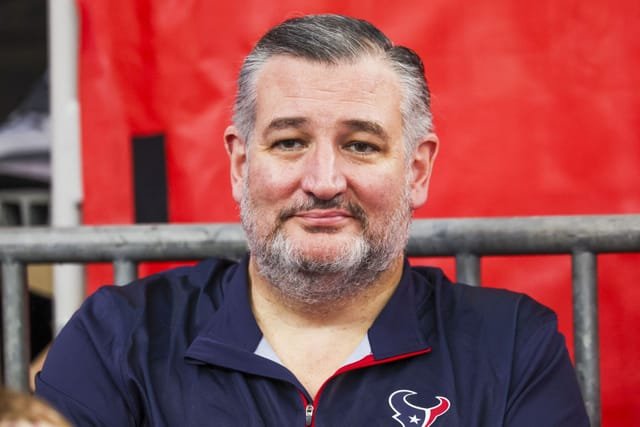
Ted Cruz’s College GameDay appearance became one of the most talked-about moments surrounding the Texas-Ohio State matchup after the Texas senator was met with sustained boos from the Austin crowd while discussing his proposed college sports legislation.
Cruz appeared on ESPN’s College GameDay alongside host Rece Davis on Saturday, using the platform to promote the Protect College Sports Act. The appearance lasted nearly 10 minutes, but the senator struggled to make himself heard as sections of the crowd repeatedly booed and chanted against him.
The reaction quickly moved beyond the stadium atmosphere and into the wider sports conversation. Former NFL defensive tackle Breiden Fehoko criticized the crowd’s response, arguing that Cruz’s political identity had overshadowed what he believed was a legitimate discussion about the future of college athletics.
Fehoko later clarified his position further, separating his personal view of Cruz from his assessment of the senator’s arguments about college sports. His comments added another layer to a politically charged discussion that has increasingly become part of the debate surrounding NIL, the transfer portal and the changing structure of College Football.
Why Ted Cruz Was Booed During College GameDay
Cruz arrived on the College GameDay set in Austin with a specific objective: to promote the Protect College Sports Act, a bill he co-sponsors with Washington Senator Maria Cantwell.
Instead of receiving a neutral reception, Cruz was greeted by loud boos almost immediately. Chants directed at the senator repeatedly interrupted his conversation with Rece Davis, making it difficult for portions of his message to be heard clearly.
The reaction was particularly notable because the appearance took place ahead of one of the biggest games of the college football weekend, with Texas facing Ohio State in Austin. The crowd was primarily focused on the highly anticipated matchup, but Cruz’s political appearance became an attraction of its own.
Rather than abandoning his argument, Cruz continued discussing what he sees as major structural problems facing college sports.
He pointed to recent controversies involving college football programs and player eligibility as examples of why he believes federal legislation is necessary. Cruz argued that the sport has entered a period of uncertainty in which athletes, schools and supporters are struggling to understand the rules governing transfers, NIL compensation and eligibility.
Breiden Fehoko Pushes Back Against the Crowd
Former NFL defensive tackle Breiden Fehoko responded to the incident on X, criticizing the audience for what he viewed as an unwillingness to consider Cruz’s argument.
Fehoko’s first reaction focused on the broader social dynamic he believed the incident represented. In his view, the crowd had allowed its negative opinion of Cruz to prevent people from seriously listening to his position on college sports.
However, Fehoko later made an important distinction. He said that his negative opinion of Cruz did not automatically mean that everything the senator said about college athletics was wrong.
That distinction is central to the controversy. The debate is not simply about whether Cruz is popular with college football fans. It is also about whether the problems he identified require congressional intervention and whether his proposed solutions would improve the current system.
Fehoko’s comments effectively separated the messenger from the message, arguing that criticism of a politician should not prevent discussion of the underlying issue.
Cruz Says College Sports Has Become Too Chaotic
At the center of Cruz’s College GameDay appearance was his criticism of the current college athletics environment.
The senator argued that the sport’s biggest problem is not simply the existence of NIL compensation but the broader level of uncertainty surrounding the modern system.
One of his major concerns is the transfer portal. Cruz pointed to players changing schools multiple times, claiming that some athletes have transferred three, four or even five times.
He argued that repeated movement can create problems for athletes while also making it harder for coaches, programs and fans to establish continuity.
The transfer portal has become one of the defining features of modern college football. Players have greater freedom to change programs than they did under the previous system, while schools have increasingly used the portal as part of roster construction.
Cruz believes that the current framework needs stronger federal rules to provide greater consistency.
What the Protect College Sports Act Would Change
The Protect College Sports Act seeks to establish a federal framework for several issues that currently shape the college sports landscape.
One of its central provisions would protect athletes’ ability to receive compensation connected to their name, image and likeness. The legislation would also introduce additional reporting requirements for NIL agreements.
According to the details presented during Cruz’s appearance, deals worth more than $600 would have to be reported. The legislation would also attempt to prevent arrangements that are structured to avoid fair-market-value requirements.
The bill would therefore seek to create greater transparency around NIL activity rather than simply eliminating athlete compensation.
Transfer limits
Another major element involves the transfer portal. The proposal would limit athletes to one transfer without an eligibility penalty.
The idea is designed to create greater stability for college programs while still allowing athletes an opportunity to change schools without immediately losing eligibility.
Eligibility rules
The proposed legislation would also establish a five-year eligibility framework along with a hard age cutoff of 24.
These provisions would create clearer boundaries around how long athletes could compete and how the eligibility system should operate.
Rules for agents
The bill also includes requirements concerning sports agents. Agents would be required to register with their home states, adding another layer of regulation to the relationship between athletes and representatives.
Together, these proposals show that Cruz’s argument goes beyond NIL payments. His legislation attempts to address compensation, transfers, eligibility and representation within one federal framework.
Cruz Warns About the Financial Future of College Football
During his College GameDay segment, Cruz also made a significant prediction about the financial consequences of the current college sports model.
He warned that the increasing cost of compensating athletes could eventually make it difficult for many schools to remain competitive at the highest level of college football.
According to Cruz, between 40 and 50 schools could potentially be pushed out of competitive football within three to five years if Congress does not intervene.
That prediction is one of the most consequential claims connected to his argument because it frames the issue as more than a disagreement over regulations. Cruz believes the financial pressure created by the evolving compensation system could reshape the competitive structure of college football.
Whether that forecast proves accurate remains uncertain. College athletics is undergoing rapid changes, and schools are adapting their financial strategies, conference relationships and roster-building approaches accordingly.
Why NIL Remains at the Center of College Sports Debate
NIL compensation has fundamentally changed the relationship between college athletes and the institutions they represent.
Before the modern NIL era, athletes faced significant restrictions on earning money from commercial opportunities connected to their identities. The expansion of NIL rights opened new opportunities for athletes to benefit financially from their popularity.
However, the growth of NIL has also created questions about regulation, transparency and competitive balance.
Supporters of stronger rules argue that a national framework could make the system easier to understand. Critics may question whether federal legislation can account for the wide range of circumstances across different sports, schools and conferences.
The Protect College Sports Act attempts to address some of those concerns by combining athlete compensation protections with reporting requirements and restrictions involving transfers and eligibility.
Nick Saban and Deion Sanders Have Backed the Proposal
Cruz’s proposal has received public support from prominent figures within college football.
Alabama coaching legend Nick Saban has backed the legislation, while Colorado head coach Deion Sanders has also publicly supported it.
Sanders went a step further by appearing in a commercial supporting the bill. The advertisement aired immediately after Cruz’s College GameDay segment, connecting the senator’s appearance directly with another major college football personality.
The involvement of Saban and Sanders gives the proposal additional visibility because both figures have substantial influence within the sport.
Their support also highlights how the debate over college athletics has moved beyond politicians and into the coaching community. Coaches and administrators have had to adjust to the transfer portal, NIL opportunities and changing roster rules, making them important voices in discussions about potential reforms.
Donald Trump Has Also Pushed for College Sports Legislation
The proposal has also received support from President Donald Trump, who has encouraged lawmakers to advance legislation addressing college sports.
That backing gives the bill additional political momentum, although support from prominent figures does not guarantee that the legislation will become law.
Cruz said during his appearance that he is confident the bill can secure the 60 votes required in the Senate. However, the legislation still faces an uncertain path as lawmakers would need to reach agreement on the details and secure sufficient support.
The Senate Vote Is Still a Major Hurdle
Even with support from recognizable political and sports figures, passing major federal legislation involving college athletics is not straightforward.
The bill attempts to regulate several highly complicated areas at the same time. NIL agreements, athlete eligibility, transfers, agents and competitive balance all involve different stakeholders with potentially competing interests.
Universities may have different priorities from athletes. Coaches can have different concerns from administrators, while conferences and individual sports may face different challenges.
That makes the bill’s proposed national framework potentially significant but also politically difficult to implement.
Cruz’s confidence about reaching the required vote total will therefore be tested as lawmakers debate the legislation and its individual provisions.
What the College GameDay Moment Says About the Debate
The reaction to Cruz in Austin demonstrates how difficult it can be to separate college football from politics.
College sports has become increasingly connected to major questions about money, labor, education, media rights and athlete freedom. As a result, political leaders have become more involved in discussions that were once primarily handled by universities and athletic conferences.
Cruz’s appearance also showed the challenge politicians face when entering a highly emotional sports environment. The Texas-Ohio State matchup generated enormous attention, and the Austin crowd’s response made the senator himself part of the day’s spectacle.
For Fehoko, however, the important point was that disagreement with Cruz should not automatically dismiss the issues he raised.
That may ultimately be the larger takeaway from the episode. Regardless of political preferences, college football is going through a major transition, and the rules governing NIL and player movement remain unsettled.
What Happens Next for the Protect College Sports Act?
The next major test for the Protect College Sports Act will be its progress in the Senate.
Cruz and his supporters will need to convince enough lawmakers that the proposed federal framework can solve the problems they have identified without creating additional complications for athletes and universities.
The bill’s combination of NIL protections, reporting requirements, transfer restrictions, eligibility rules and agent registration makes it a wide-ranging proposal rather than a narrowly focused NIL bill.
Its future will depend on whether lawmakers can find common ground on those individual provisions.
Final Verdict
Ted Cruz’s College GameDay appearance turned into a political spectacle when the Texas senator was repeatedly booed while promoting the Protect College Sports Act. Former NFL player Breiden Fehoko criticized the crowd’s reaction while acknowledging his own negative opinion of Cruz.
Behind the controversy is a serious debate about the future of college athletics. Cruz argues that NIL, repeated transfers and rising compensation costs have created a system that needs federal regulation. His proposed legislation would introduce new rules covering NIL deals, transfers, eligibility and agents.
With support from figures including Nick Saban, Deion Sanders and President Donald Trump, the proposal has attracted significant attention. But its path through the Senate remains uncertain, and the broader debate over how college sports should be governed is far from settled.
For breaking news and live news updates, like us on Facebook or follow us on Twitter and Instagram. Read more on Latest NFL on thefoxdaily.com.




COMMENTS 0