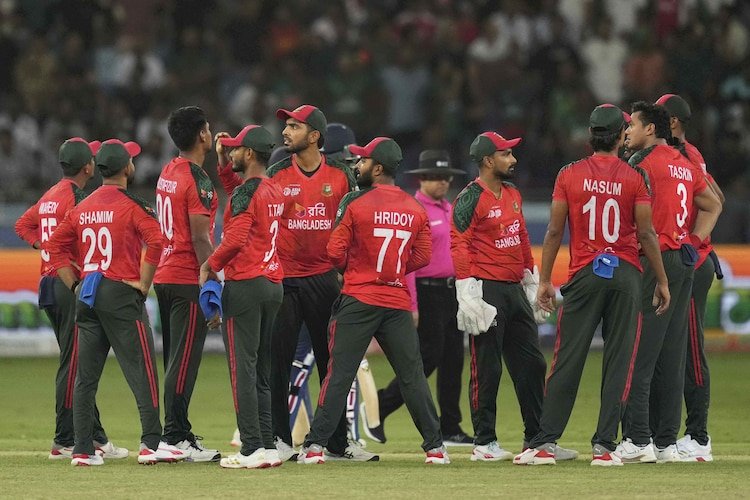
Due to unresolved security concerns, Bangladesh has maintained its decision not to participate in the T20 World Cup in India — a move that could trigger serious sporting, financial, and political consequences.
Bangladeshi Cricket finds itself at a critical crossroads. What was expected to be a transitional phase — the country’s first T20 World Cup campaign without veteran all-rounder Shakib Al Hasan — now threatens to become one of the darkest chapters in its cricketing history. The possibility that Bangladesh may not feature in the tournament at all has created widespread uncertainty across the cricketing ecosystem.
With only weeks remaining before the tournament, the Bangladesh Cricket Board (BCB) has adopted a firm stance following the government’s refusal to allow the team to travel to India due to lingering security concerns. This decision has effectively removed any autonomy from the players, binding them to circumstances beyond the boundary rope.
All-rounder Mahedi Hasan’s recent comments — stating that the government and BCB act as guardians for the players — highlighted a painful truth: off-field forces are overpowering the ambition to compete on cricket’s grandest stage.
The stakes could not be higher. Since achieving Test status in 2000, Bangladesh is still searching for its first ICC trophy. Global tournaments are not optional luxuries; they are fundamental to a nation’s cricketing growth. Even skipping a single World Cup can create ripple effects that last years.
A Financial Shockwave
Perhaps the most immediate impact would be financial. T20 World Cups generate vastly higher global viewership, sponsorship interest, and ICC revenue distributions compared to bilateral series against lower-ranked teams such as Zimbabwe or Ireland.
A senior Bangladeshi cricket writer, speaking anonymously to India Today, warned that the BCB could suffer substantial revenue losses. Sponsor confidence may also erode amid the ongoing uncertainty.
This assessment contrasts with earlier remarks by former BCB director M Najmul Islam, who suggested that players — rather than the board — would feel the financial brunt. However, the long-term implications extend well beyond immediate losses.
Bangladesh is scheduled to co-host the 2031 ODI World Cup with India. Continued diplomatic strain could complicate planning, logistics, and cooperation for that marquee event.
“One of the BCB’s largest income streams comes from ICC events,” the cricket writer noted. “Missing out means losing guaranteed revenue, and there is also the risk of punitive action — such as reduced ICC grants or other restrictions.”
Sponsorship exposure from a World Cup simply cannot be replicated through bilateral series. Concerns over security may also make future tours to India — including those planned later this year — increasingly uncertain.
Risk of ICC Isolation
Failure to participate in the T20 World Cup could seriously jeopardize Bangladesh’s standing within the ICC structure. There is a possibility the team may be forced into qualification pathways as a lower-ranked nation, significantly complicating future tournament access.
Beyond competitive disadvantages, there is a genuine risk of isolation at a time when relations between the BCB and ICC are already strained. Such isolation could stunt the sport’s growth and visibility within Bangladesh.
“Bangladesh would have played at least four or five matches at the World Cup,” the anonymous journalist said. “Missing those fixtures will directly affect player rankings, team momentum, and overall competitiveness.”
Questions surrounding future qualification pathways further threaten the structural stability of Bangladeshi cricket, potentially creating long-term setbacks that extend far beyond a single tournament.
Players Pay the Highest Price
Amid the administrative and political standoff, players stand to lose the most. For several members of the current squad, the T20 World Cup represents a once-in-a-career opportunity.
Vice-captain Saif Hassan and young opener Parvez Hossain Emon, for instance, have never featured in a World Cup. The ongoing uncertainty risks extinguishing years of preparation and ambition.
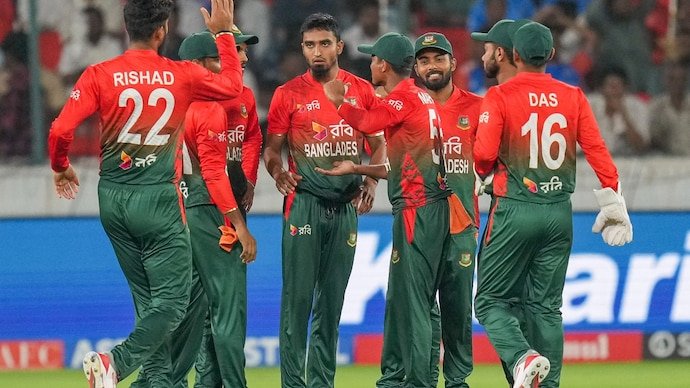
Veteran cricket journalist Shanto Mahmud warned that a boycott could have lasting effects on player confidence, Mental health, and career progression. In a cricketing ecosystem with limited overseas league opportunities, missing a global tournament can be devastating.
“The World Cup is a dream platform,” Mahmud said. “To miss it despite being eligible would be a massive psychological and professional setback.”
Unlike players from wealthier cricketing nations, many Bangladeshi cricketers lack access to multiple international leagues. The World Cup is not just a tournament — it is a gateway to exposure, stability, and growth.
“Younger players would suffer the most,” Mahmud added. “They lose vital international experience, team rankings decline, and momentum is broken in a format where Bangladesh is still trying to establish credibility.”
Has Politics Overtaken Cricket?
Cricket has long been described as a gentleman’s game, ideally insulated from political influence. Yet, in this case, politics appears deeply intertwined with sporting decisions.
Tensions escalated after Mustafizur Rahman was dropped from the Kolkata Knight Riders squad ahead of the 2026 ipl, triggering widespread controversy. Since then, political considerations have increasingly shaped cricketing outcomes.
Relations between Bangladesh and India have deteriorated since the fall of the Sheikh Hasina government, amplifying security fears. According to the BCB, discussions intensified following Mustafizur’s removal, which raised broader concerns about player safety.
“How can a team’s safety be guaranteed if an individual player cannot be protected?” the unnamed journalist asked, citing extremist threats reported in both countries.
Signs of strain have also emerged through scheduling disruptions — including India’s postponed men’s tour of Bangladesh and the delayed women’s tour, which Sri Lanka eventually replaced.
Is There a Double Standard?
Bangladesh’s stance is shaped by historical precedent. Western teams such as Australia, England, and New Zealand have repeatedly canceled tours to Pakistan over security concerns — often with ICC backing.
Australia declined a tour in 2008, New Zealand withdrew hours before a 2021 ODI, and England canceled its 2021 tours entirely. These decisions reignite a critical question: why is Bangladesh scrutinized for citing similar concerns?
“If Western nations are granted concessions over safety, why shouldn’t an Asian nation receive the same consideration?” the anonymous journalist argued.
Why Cricket Must Come First
Cricket in Bangladesh has never been free from controversy. While consistency at the elite level remains elusive, stars like Tamim Iqbal, Mushfiqur Rahim, and Shakib Al Hasan have proven the nation’s potential.
Under former BCB president Najmul Hasan Papon, Bangladesh reached Champions Trophy semifinals, World Cup quarterfinals, and registered historic victories against Australia and England.
However, progress has stalled over the past 18 months. If governance issues and political interference continue to overshadow cricketing priorities, the consequences could be severe — impacting not just results on the field, but the long-term health of the sport itself.
| Impact Area | Potential Consequences |
|---|---|
| Financial | Loss of ICC revenue, sponsor withdrawals, reduced global exposure |
| Players | Missed World Cup opportunities, mental stress, stalled careers |
| ICC Relations | Risk of isolation, future qualification hurdles, reduced grants |
| Long-term Growth | Decline in rankings, weaker talent pipeline, reduced international trust |
For breaking news and live news updates, like us on Facebook or follow us on Twitter and Instagram. Read more on Latest Sports on thefoxdaily.com.






COMMENTS 0