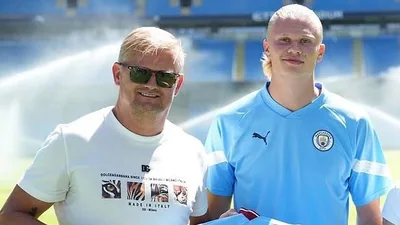
Erling Haaland has emerged as one of the defining stars of the FIFA World Cup 2026. The Norwegian striker has captivated fans with his goals, physical dominance, and ability to deliver in the biggest moments, helping Norway reach the quarter-finals for the first time in decades. As his remarkable World Cup journey continues, many supporters are becoming curious about the family behind the superstar.
One question frequently asked during the tournament is whether Erling Haaland inherited his footballing talent from his father and whether his father also represented Norway on football’s biggest stage.
The answer reveals a fascinating story that spans two generations of Norwegian football and highlights how a family passion for the sport helped create one of the world’s most feared strikers.
Who Are Erling Haaland’s Parents?
Erling Braut Haaland was born into a family deeply connected to sport and football. His parents are Alf-Inge Haaland and Gry Marita Braut.
While Erling has become an international superstar, both parents played important roles in his development. His mother, Gry Marita Braut, was a talented athlete herself, while his father built a successful professional football career that reached both the English Premier League and the Norwegian national team.
The combination of athletic ability, sporting discipline, and football knowledge created an ideal environment for Haaland’s development from a young age.
Today, many football analysts believe that his physical attributes, competitive mentality, and professional approach were influenced significantly by the sporting culture within his family.
Who Is Alf-Inge Haaland?
Alf-Inge Haaland is a former professional footballer who enjoyed a successful career as both a defensive midfielder and defender.
Born in Norway, he established himself as a reliable and versatile player capable of performing multiple roles across the pitch. His professionalism and consistency helped him build a career that eventually took him to England, where he competed at the highest level of club football.
Long before Erling became a global football icon, Alf-Inge had already earned respect throughout the football community for his performances and work ethic.
His career provided valuable insight into the demands of professional football, knowledge that would later prove invaluable in guiding his son’s rise to the top.
Alf-Inge Haaland’s Club Career in England
One of the most important chapters of Alf-Inge’s career came during his time in English football.
Over approximately a decade, he represented several well-known clubs and gained experience in one of the world’s most competitive football environments.
| Club | Country | Position |
|---|---|---|
| Nottingham Forest | England | Midfielder / Defender |
| Leeds United | England | Midfielder / Defender |
| Manchester City | England | Midfielder / Defender |
His time in England exposed him to elite coaching methods, intense competition, and the tactical demands of top-level football. These experiences later helped him mentor Erling during his own development.
Interestingly, Erling would eventually create his own legacy at Manchester City, becoming one of the club’s most prolific goalscorers and turning the Haaland surname into a global football brand.
Did Erling Haaland’s Father Play at the FIFA World Cup?
Yes, Alf-Inge Haaland represented Norway at the FIFA World Cup.
He was selected as part of Norway’s squad for the 1994 FIFA World Cup in the United States, making him one of the relatively small group of Norwegian footballers to appear at football’s most prestigious tournament.
Although Norway’s campaign ended during the group stage, participation alone represented a significant achievement for both the player and the nation.
The appearance also created a unique historical connection because more than three decades later, his son would follow in his footsteps and represent Norway on the same stage.
Norway’s World Cup History
Compared to traditional football powers, Norway has a relatively modest World Cup history. This makes the achievements of both Alf-Inge and Erling Haaland particularly significant.
Norway’s World Cup appearances have been rare, making qualification itself a major accomplishment.
| Year | Result |
|---|---|
| 1938 | Qualified |
| 1994 | Group Stage |
| 1998 | Round of 16 |
| 2026 | Quarter-finals (ongoing tournament) |
The 2026 World Cup has already become one of Norway’s most successful campaigns, and Erling Haaland’s performances are a major reason why.
For Norwegian supporters, seeing a second generation of the Haaland family contributing to World Cup history adds another layer of meaning to the tournament.
How Erling Haaland’s World Cup Differs From His Father’s
Although both father and son have represented Norway at the FIFA World Cup, their experiences have been dramatically different.
Alf-Inge was part of a hardworking Norwegian side that sought to compete against stronger football nations and establish itself internationally.
Erling, meanwhile, has entered the tournament as one of football’s biggest global stars and one of the favorites for the Golden Boot award.
His goals have transformed Norway from underdogs into legitimate contenders.
This contrast demonstrates both the evolution of Norwegian football and the extraordinary level Erling has reached in the modern game.
The Influence of Alf-Inge on Erling’s Development
Behind every elite athlete is often a support system that helps shape their development. For Erling Haaland, his father has played a crucial role.
Alf-Inge understood the realities of professional football better than most parents because he experienced them firsthand.
His guidance helped Erling navigate:
- Youth football development
- Professional training standards
- Career planning decisions
- Transfer opportunities
- Media attention and pressure
- Physical and mental preparation
Having a parent who understands the challenges of elite sport can provide invaluable support, especially during critical stages of a young player’s career.
Football Talent Runs Deep in the Family
While Alf-Inge’s football background receives significant attention, Erling’s athletic abilities may also have been influenced by his mother’s sporting achievements.
The combination of football intelligence from his father and athletic qualities from both parents helped create the foundation for one of football’s most complete forwards.
Modern sports science increasingly highlights the importance of both genetics and environment in athlete development.
In Haaland’s case, he benefited from both.
He inherited physical gifts while also growing up in an environment that valued discipline, competition, and athletic excellence.
How Haaland Became a Global Superstar
Although his father’s influence was important, Erling’s success is ultimately the result of his own extraordinary talent and relentless dedication.
His rise followed a carefully structured path:
- Development in Norway’s youth system
- Breakthrough performances in professional football
- Success in European competitions
- Establishment as one of the world’s top strikers
- Leadership role with Norway’s national team
What separates Haaland from many talented forwards is his remarkable consistency. Whether playing in domestic leagues, European tournaments, or the World Cup, he continues to produce goals at an elite rate.
The Historic Significance of the Haaland Family
Few football families can claim to have produced two generations of FIFA World Cup representatives.
The Haaland family now occupies a special place in Norwegian football history.
Alf-Inge helped represent Norway during an important era of growth in the 1990s.
Erling is now leading a new generation that could potentially achieve even greater success.
This continuity reflects not only family achievement but also the long-term development of football within Norway.
Could Erling Surpass Every Norwegian Football Record?
At just 25 years old, Haaland is already rewriting record books.
His World Cup performances, international goals, and club achievements suggest that many of Norway’s football records may eventually belong to him.
Several milestones appear within reach:
- Most international goals for Norway
- Most World Cup goals by a Norwegian player
- Most major tournament appearances
- Most influential player in Norwegian football history
If Norway continues advancing in the 2026 World Cup, Haaland’s legacy could grow even further.
What Norway’s Current Success Means for Future Generations
One of the most valuable outcomes of Norway’s World Cup run may be its impact on future players.
Young footballers across the country now have a modern example of what is possible.
Just as Erling was inspired by football around him growing up, future generations may be inspired by his achievements.
This is often how football cultures evolve. Success creates belief, belief encourages participation, and participation produces future talent.
Norway’s current World Cup journey could therefore have benefits that extend far beyond the tournament itself.
Conclusion: A Father-Son Legacy Written on Football’s Biggest Stage
Erling Haaland’s rise to global stardom is one of football’s most compelling modern stories, but it is also part of a larger family legacy. His father, Alf-Inge Haaland, represented Norway at the FIFA World Cup in 1994 and built a respected professional career that provided invaluable guidance for his son’s development.
More than three decades later, Erling has taken that legacy to new heights. By leading Norway deep into the FIFA World Cup 2026 and emerging as one of the tournament’s standout stars, he has not only followed in his father’s footsteps but expanded the family’s place in football history.
As Norway continues its quest for World Cup glory, the Haaland name now symbolizes two generations of dedication, achievement, and national pride—proof that football greatness can sometimes run in the family.
For breaking news and live news updates, like us on Facebook or follow us on Twitter and Instagram. Read more on Latest Sports on thefoxdaily.com.






COMMENTS 0