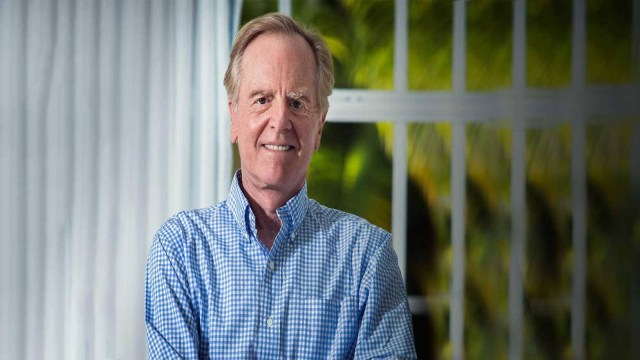
In a striking revelation, former apple CEO John Sculley believes that OpenAI—not google, Microsoft, Nvidia, or Samsung—has emerged as Apple’s first genuine competitor in decades. According to Sculley, the meteoric rise of OpenAI and its transformative artificial intelligence products could pose a challenge to Apple’s long-standing dominance in the tech ecosystem.
Sculley, who led Apple between 1983 and 1993 after a successful tenure at Pepsi, emphasized that artificial intelligence has never been Apple’s core strength. “OpenAI represents a different kind of competition,” he said, noting that Apple’s rivals are already miles ahead in developing and integrating advanced AI systems. “In this new agentic era, we don’t need many apps—smart agents can handle everything,” Sculley remarked during the Zeta Conference in New York. “Apple hasn’t had much success with AI so far.”
His comments resonate with growing industry sentiment. Among the megacap technology leaders, Apple remains the only company yet to fully commit to the AI revolution. Analysts have often criticized Apple for its lack of transparency regarding its artificial intelligence strategy, which has left investors and customers uncertain about its direction. Reports suggest that even the release of the next-generation siri has been delayed until at least next year, signaling the company’s cautious approach.
OpenAI’s Meteoric Rise and Apple’s Growing Challenge
While Apple treads carefully, OpenAI’s ChatGPT has redefined user interaction with AI, drawing more than 800 million weekly visits. The startup’s rapid innovation pace has positioned it as a leader in AI-driven consumer products—an area where Apple once held an unquestioned lead through its ecosystem of hardware and software.
Adding to Apple’s challenges, in May, its former design visionary Jony Ive sold his company, LoveFrom, to OpenAI for a staggering $6.5 billion. OpenAI CEO Sam Altman confirmed that the acquisition marks a push into hardware—a domain long dominated by Apple. This move is widely seen as a direct step toward building integrated AI-powered devices that could rival Apple’s flagship products.
From the App Era to the Agentic Era
Sculley believes the global technology landscape is now entering the agentic AI era, which could spell the end of the traditional “app economy” that Apple helped pioneer. “In the age of apps, we sold tools and products,” he explained. “Now, as we shift to intelligent agents, the model is about subscriptions and continuous engagement—people pay for what they need, when they need it.”
This shift represents a major strategic test for Apple. The company, which built its empire on hardware sales and app-based services, must now redefine its identity in a world increasingly driven by AI automation and intelligent ecosystems. Analysts warn that Apple’s slow adaptation may leave it vulnerable to OpenAI’s growing influence, especially as ChatGPT evolves into what Altman describes as an “everything app.”
Apple’s Pressure Points: Declining iPhone Sales and Rising Competition
Experts have cautioned that Apple’s dependence on the iPhone could become a long-term weakness if it fails to introduce breakthrough innovations in AI. With iPhone sales growth stagnating and consumers holding onto devices for longer periods, Apple’s next wave of success hinges on how it embraces next-generation technologies.
Meanwhile, Meta Platforms is making an aggressive push into smart glasses and wearable AI devices, while Microsoft and Google continue to double down on AI-driven productivity tools and search models. This convergence of competition places Apple in a position where innovation—not legacy—will determine its future relevance.
Tim Cook’s Future and the Next Era of Leadership
Adding to the intrigue are growing rumors that Tim Cook, Apple’s long-serving CEO, may be considering retirement in the near future. Sculley believes that Cook’s successor will face the monumental task of leading Apple from the “app era” into the “agentic era.” “The next leader must reimagine Apple’s role in a world dominated by smart agents,” Sculley said.
Sculley himself is no stranger to transitions. In 2007, he co-founded Zeta Global, a data-driven marketing and technology firm that leveraged big data long before AI became a mainstream concept. Having recently stepped down as vice chairman to assume the honorary title of Vice Chairman Emeritus, Sculley continues to be a respected voice on the evolution of digital innovation.
Can Apple Regain Its AI Edge?
Industry watchers believe that Apple still has time—and massive resources—to catch up. The company’s focus on privacy-centric ai models and on-device intelligence could eventually become a differentiator in a world increasingly wary of data misuse. However, without a clear public strategy or flagship AI product, Apple risks losing mindshare to faster-moving competitors like OpenAI.
As the global tech race accelerates, Sculley’s warning serves as both a reflection and a challenge: even for a trillion-dollar company like Apple, the next true rival may not come from traditional hardware makers but from an AI-first disruptor leading a new wave of intelligent innovation.
Disclaimer: The views expressed by experts and industry veterans in this article are their own and do not represent the editorial stance of the publication. Readers are encouraged to evaluate investment or technology trends with guidance from professional analysts or advisors.
For breaking news and live news updates, like us on Facebook or follow us on Twitter and Instagram. Read more on Latest Technology on thefoxdaily.com.






COMMENTS 0