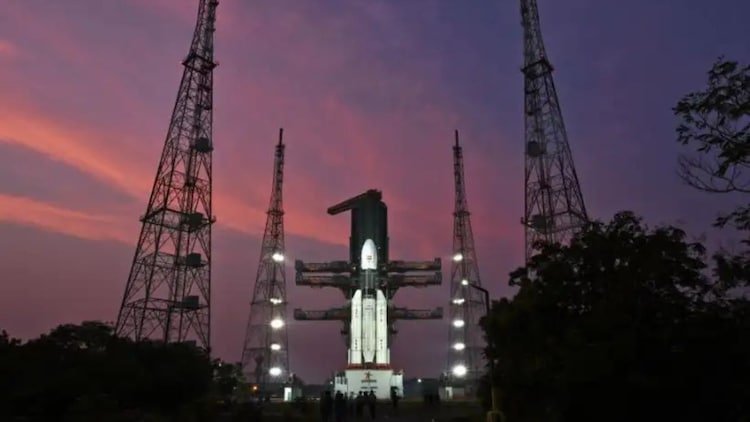
- PSLV-C62: The Strategic Eye in Orbit | January 2026
- February 2026: PSLV-N1 and a Landmark for Indian Industry
- March 2026: Gaganyaan G1 and the Robotic Trailblazer Vyommitra
- TDS-01: The Electric Propulsion Breakthrough | March 2026
- SSLV-L1: The Pocket Rocket Returns | March 2026
- GSLV-F17: Deploying NVS-03 | Mid-2026
- Gaganyaan G2: The Final Dress Rehearsal | Late 2026
As someone who has closely followed India’s space programme for years, it is evident that the Indian space research Organisation (isro) is no longer content with incremental progress. After the historic success of Chandrayaan-3, the space agency has now revealed an ambitious 2026 roadmap that positions India not just as a participant, but as a leader in the global space race.
The launch calendar for 2026 reads like a blueprint for the future of low-cost, high-impact space innovation. From robotic human-spaceflight trials and next-generation satellites to landmark private-sector participation, ISRO is preparing what could be one of the most consequential years in its history.
ISRO Chairman V. Narayanan, speaking after the successful LVM3-M6 mission—the sixth operational flight of the Launch Vehicle Mark-III—outlined a vision that reflects India’s transformation from a regional space player into a global space powerhouse.
The year ahead, he emphasized, will be pivotal for India’s long-term ambitions, particularly with the Gaganyaan human spaceflight programme and the rapid rise of private launch providers such as Skyroot Aerospace and others.
Narayanan underscored that Gaganyaan represents a defining leap for the nation. Its success, he said, will place India firmly among the elite group of countries capable of independent human spaceflight.
PSLV-C62: The Strategic Eye in Orbit | January 2026
The year is set to begin with the PSLV-C62 mission, scheduled for early January 2026. The launch will carry EOS-N1, a sophisticated hyperspectral imaging satellite capable of capturing detailed spectral information far beyond conventional RGB imaging.
EOS-N1 will play a critical role in disaster management, environmental monitoring, and strategic border surveillance by detecting chemical and material signatures from space. Alongside the primary payload, eighteen smaller international satellites will also be deployed, reinforcing ISRO’s growing stature as a reliable and cost-effective global launch partner.
February 2026: PSLV-N1 and a Landmark for Indian Industry
The PSLV-N1 mission will mark a historic milestone for India’s space ecosystem. For the first time, a PSLV rocket will be entirely manufactured by Indian industry partners—Hindustan Aeronautics Limited (HAL) and Larsen & Toubro (L&T).
This mission represents a major step towards the privatization and commercialization of launch services. Its primary payload, EOS-10 / Oceansat-3A, will deliver critical oceanographic data supporting climate research, maritime operations, and India’s fishing economy.
Co-passengers are expected to include the India–Mauritius Joint Satellite (IMJS) and possibly Dhruva Space’s LEAP-2, further highlighting the collaborative nature of the mission.
March 2026: Gaganyaan G1 and the Robotic Trailblazer Vyommitra
The most anticipated mission of the year is undoubtedly Gaganyaan G1, scheduled for March 2026. This unmanned mission will carry Vyommitra, a female humanoid robot, into space aboard a human-rated LVM3 rocket.
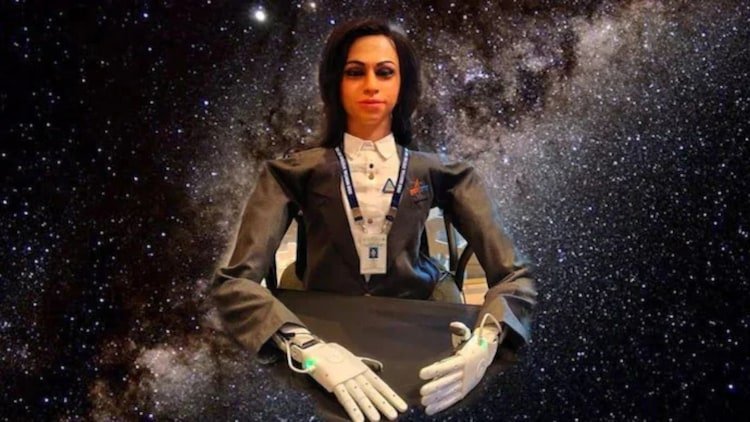
Vyommitra will play a crucial role in validating life-support systems, crew module performance, re-entry dynamics, and sea recovery operations. This mission is a critical safety rehearsal designed to ensure that Indian astronauts can be safely sustained during future human missions into the thermosphere.
TDS-01: The Electric Propulsion Breakthrough | March 2026
Also slated for March is the launch of the TDS-01 technology demonstrator, a mission that could quietly revolutionize satellite engineering.
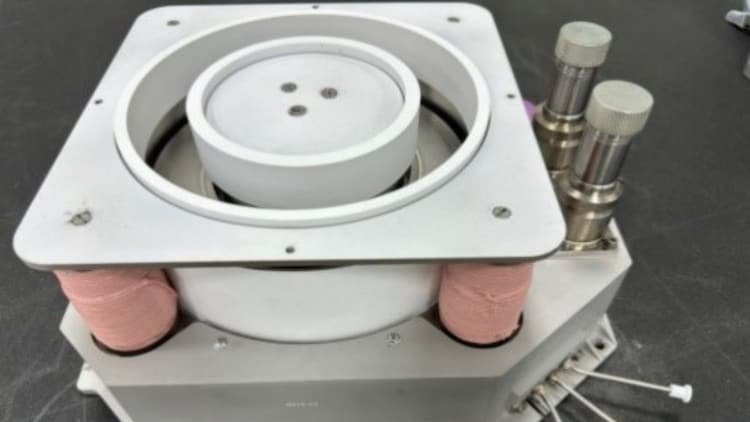
By testing a high-thrust electric propulsion system, ISRO aims to reduce satellite fuel mass by up to 90 percent. The transition from chemical to electric propulsion promises lighter spacecraft, lower launch costs, extended mission lifespans, and greater operational flexibility.
SSLV-L1: The Pocket Rocket Returns | March 2026
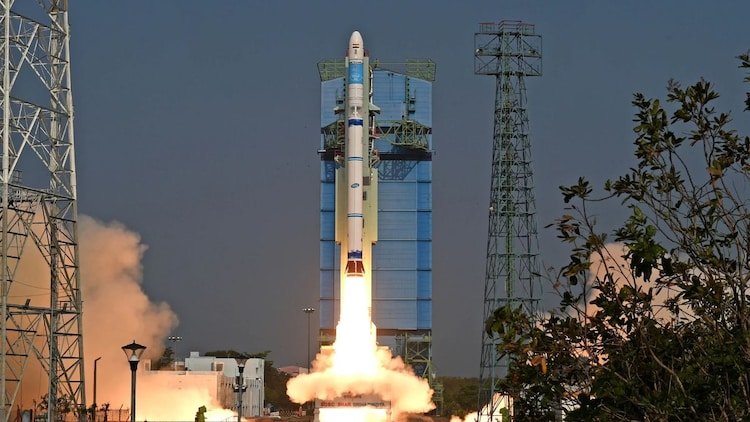
The Small Satellite Launch Vehicle (SSLV-L1) is expected to make its return before the end of March 2026, potentially serving a commercial or advanced technology demonstration role.
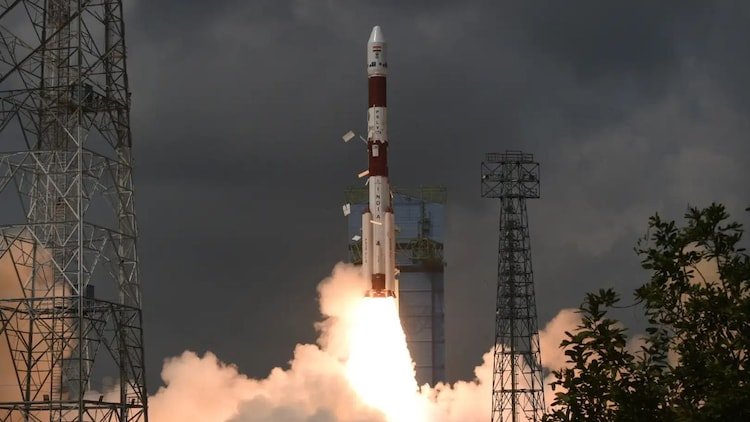
The SSLV programme is central to ISRO’s push into rapid, responsive, and private-sector-driven small satellite launches. While the maiden SSLV-D1 flight in August 2022 demonstrated strong performance across its three solid stages, vibration-induced sensor anomalies during separation affected payload deployment.
As a result, EOS-02 and AzaadiSAT were placed into an unstable orbit and subsequently degraded. Lessons from that mission are now expected to strengthen the SSLV-L1 flight.
GSLV-F17: Deploying NVS-03 | Mid-2026
By mid-2026, ISRO plans to launch the GSLV-F17 mission, which will deploy the NVS-03 satellite.
NVS-03 will serve as a crucial strategic asset for navigation and Earth observation, strengthening India’s regional positioning and surveillance capabilities.
Gaganyaan G2: The Final Dress Rehearsal | Late 2026
The year will conclude with the Gaganyaan G2 mission, the second unmanned orbital test flight. Scheduled for late 2026, this mission will act as the final rehearsal before India’s first crewed spaceflight in 2027.
Every automated system—ranging from launch to orbital operations and recovery—will be scrutinized to perfection. Successful completion will confirm India’s readiness to join the exclusive league of nations capable of sustained human spaceflight.
Significantly, 2026 also marks a structural shift in India’s space ecosystem. Private companies are now assuming a growing share of manufacturing, launch, and innovation. ISRO, rather than being the sole operator, is evolving into a global hub that enables, regulates, and accelerates space technology.
In essence, 2026 is not just another year on ISRO’s calendar—it is a defining chapter in India’s journey from space ambition to space leadership.
For breaking news and live news updates, like us on Facebook or follow us on Twitter and Instagram. Read more on Latest Technology on thefoxdaily.com.




COMMENTS 0