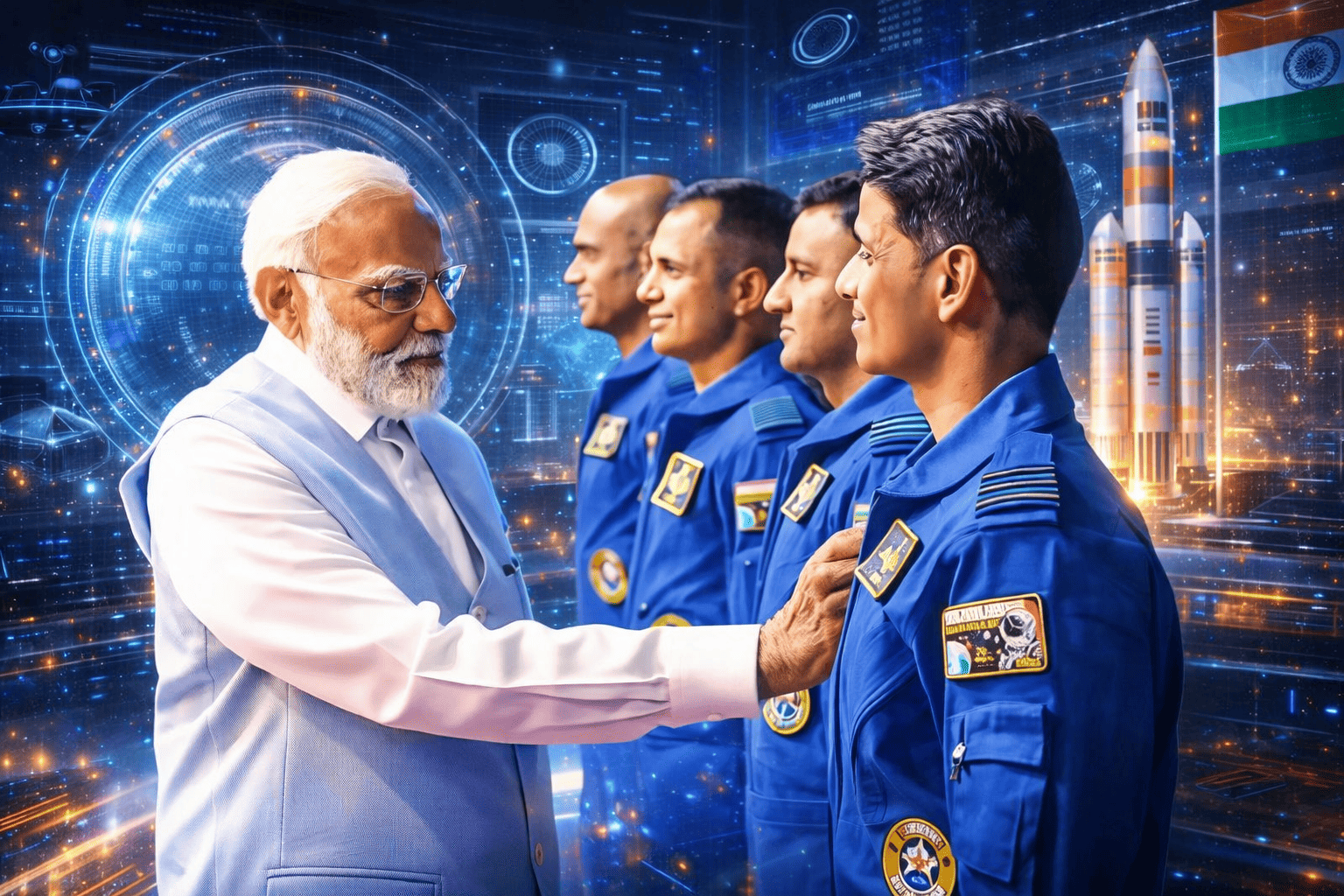
The year 2026 is shaping up to be a historic milestone for human spaceflight, as two of the world’s leading space agencies—the United States’ nasa and India’s Indian space research Organisation (isro)—prepare for missions that will redefine humanity’s presence beyond Earth. While the goals of NASA’s Artemis-II and India’s Gaganyaan programme differ in scope and destination, together they mark a decisive shift toward a new, multipolar era in space exploration.
On one front, the United States is preparing to return humans to deep space for the first time in more than half a century. On the other, India is laying the foundation for an entirely indigenous human spaceflight capability. These parallel efforts signal not competition, but a broader expansion of access to space and a renewed global commitment to human exploration.
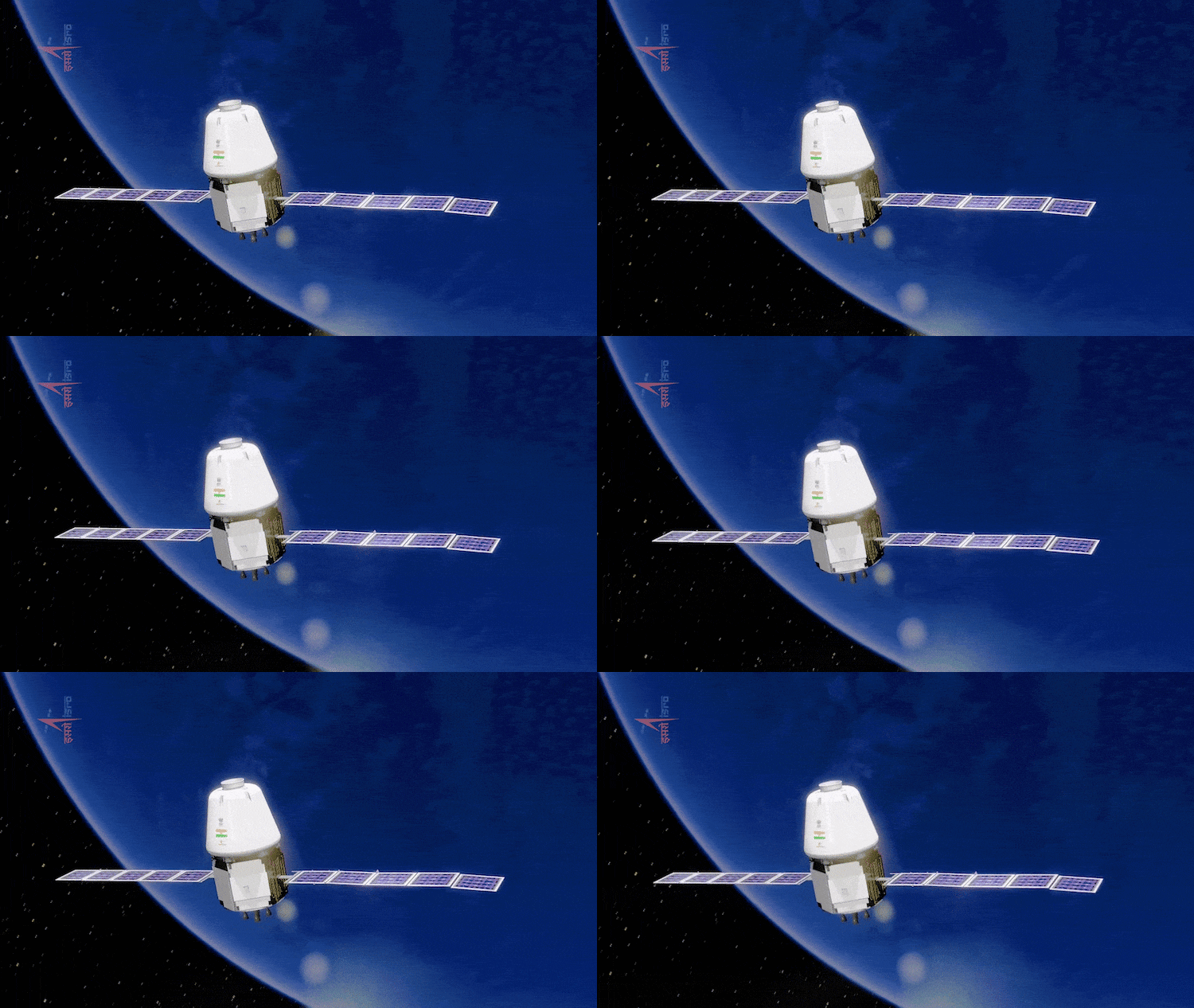
Around March 2026, ISRO plans to conduct its first unmanned orbital test under the Gaganyaan programme, known as the G1 mission. This crucial test flight will represent India’s most advanced step yet toward sending astronauts—known as Gaganyatris—into orbit aboard a domestically developed spacecraft.
The G1 mission will be launched atop the human-rated LVM3 rocket, ISRO’s most powerful launch vehicle. At the heart of the mission will be Vyommitra, a humanoid robot specifically designed to simulate key astronaut functions. Vyommitra will monitor life-support systems, execute mission procedures, and provide vital data on crew-module performance during its stay in low Earth orbit.
Operating at an altitude of approximately 300 to 400 kilometres above Earth, the spacecraft will rigorously test critical technologies such as environmental control and life-support systems, crew-module re-entry dynamics, parachute-based splashdown recovery, and mission control coordination. These systems must perform flawlessly before ISRO commits to a crewed mission later in the decade.
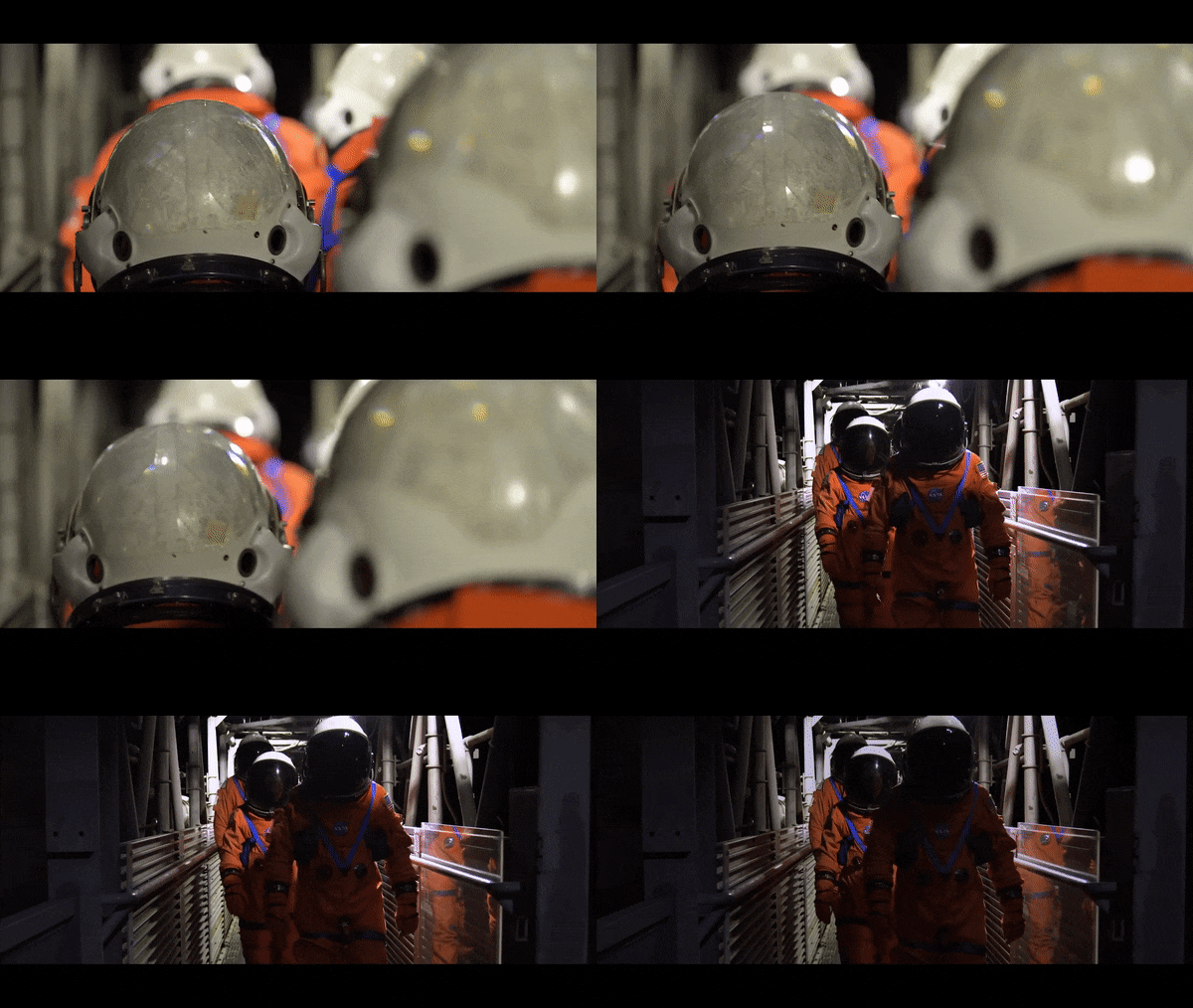
Why Gaganyaan Is a Turning Point for India
For India, Gaganyaan is far more than a single mission—it is a declaration of technological self-reliance. Unlike earlier human spaceflight efforts by other nations that depended heavily on international collaboration, Gaganyaan is designed as a largely indigenous programme, from launch vehicle and spacecraft to ground systems and astronaut training.
If the G1 and subsequent test missions succeed, India will join a select group of nations with the capability to independently launch, sustain, and safely return humans from space. This achievement would significantly reduce dependence on foreign partners and open new possibilities, including an Indian space station, expanded scientific research in orbit, and potential commercial crew services.
Beyond national prestige, the programme is expected to stimulate India’s broader aerospace ecosystem, driving innovation in materials science, robotics, medicine, and advanced manufacturing.
NASA’s Artemis-II: Humanity’s Return to Deep Space
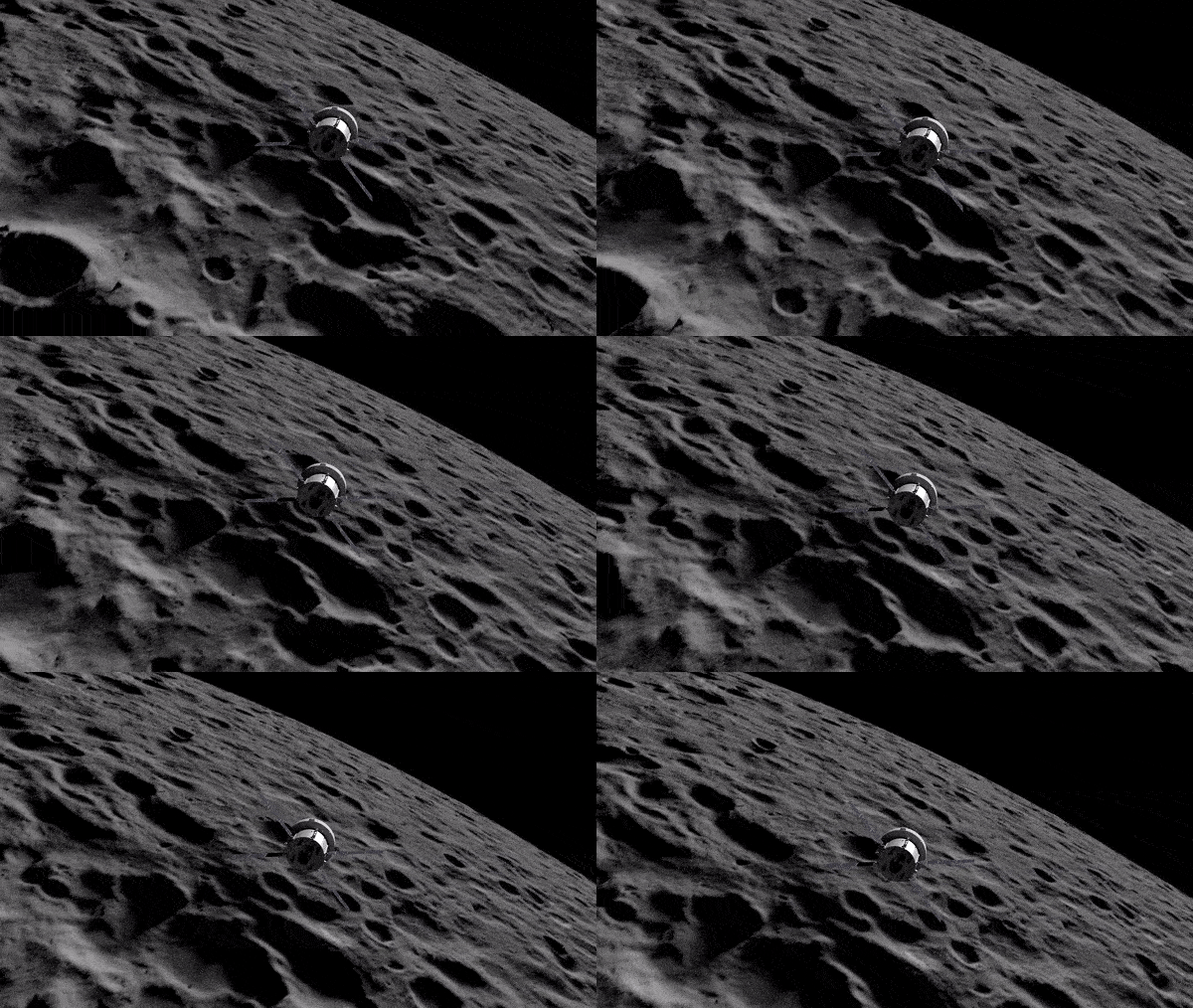
While India focuses on mastering low Earth orbit, NASA is preparing to push human exploration far beyond it. Artemis-II, currently scheduled to launch no earlier than February 5, 2026, will send four astronauts on a roughly ten-day journey around the Moon.
This mission will be the first crewed flight beyond low Earth orbit since Apollo 17 in 1972, marking a historic return to deep-space human exploration. The astronauts will travel aboard NASA’s Orion spacecraft, launched by the powerful Space Launch System (SLS) rocket.
Artemis-II is a critical test flight designed to validate Orion’s life-support systems, deep-space communications, navigation capabilities, and radiation protection under real mission conditions. Unlike previous uncrewed Artemis missions, this flight will carry astronauts, making it a definitive proving ground for future lunar landings.
During the mission, the crew will venture at least 5,000 nautical miles beyond the Moon—farther than any human has ever traveled. This unprecedented distance will test both human endurance and spacecraft systems in the harsh environment of deep space.
The Broader Impact of Artemis-II
Artemis-II is not an isolated mission; it is a cornerstone of NASA’s long-term strategy to establish a sustained human presence on and around the Moon. The data gathered will directly inform Artemis-III and subsequent missions, which aim to land astronauts on the lunar surface and eventually build lunar infrastructure.
In the longer term, Artemis is viewed as a stepping stone to Mars. Technologies tested during Artemis-II—such as deep-space navigation, long-duration life support, and radiation management—are essential for future interplanetary missions.
A New, Multipolar Era in Human Spaceflight
Together, Gaganyaan and Artemis-II highlight a fundamental shift in the global space landscape. The United States is returning to deep space with international partners, while India is expanding independent access to low Earth orbit. This dual momentum reflects a move away from a single-nation dominance toward a more distributed, multipolar model of human space exploration.
Advancements made through these missions are expected to shape the future of spaceflight throughout the 2030s. Improvements in crew safety, spacecraft design, mission operations, and international collaboration will influence everything from national space stations and commercial spaceflight to humanity’s long-term ambitions beyond Earth.
As 2026 approaches, Artemis-II and Gaganyaan stand as powerful symbols of a renewed human drive to explore—one reaching back to the Moon and beyond, the other laying the groundwork for a new spacefaring nation. Together, they mark the beginning of a transformative chapter in the story of space exploration.
For breaking news and live news updates, like us on Facebook or follow us on Twitter and Instagram. Read more on Latest Technology on thefoxdaily.com.






COMMENTS 0