After a powerful 7.5-magnitude earthquake struck northern japan on Monday, authorities have released a rare and heightened alert warning that a potential “megaquake” could impact Japan’s northern coastline within the coming week. The advisory, which has drawn widespread attention, aims to prepare citizens for the unlikely but dangerous possibility of a larger seismic event.
The quake, which occurred late at night at 11:15 p.m., was centered 54 kilometers off the Pacific coast of Aomori Prefecture. According to the Japan Meteorological Agency (JMA), this shallow and forceful tremor has temporarily increased the likelihood of another earthquake of equal or higher magnitude in the region. The agency notes that while the advisory reflects an elevated risk, the probability remains extremely low overall.
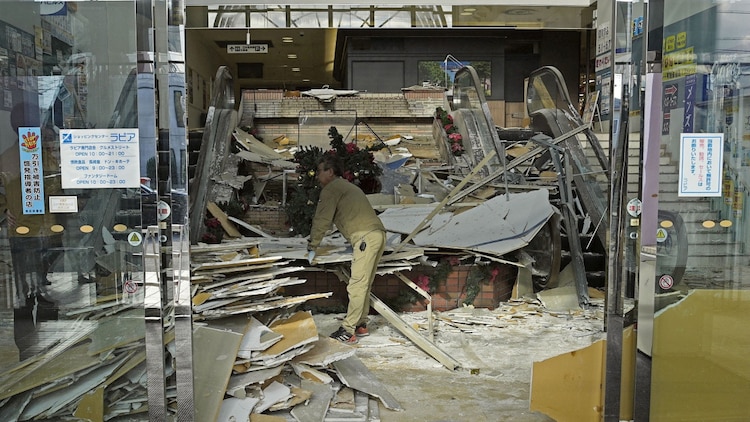
The announcement is Japan’s first-ever “megaquake” advisory for this part of the country. On December 9, 2025, scenes from Hachinohe in Aomori Prefecture showed workers clearing debris and assessing the damage caused by the tremor, underscoring the severity of the region’s seismic vulnerability. (Image: Reuters)
The Significance Behind Japan’s Warning
The magnitude 7.5 earthquake that struck off the Pacific coast of Aomori in northern Honshu originated at a depth of around 54 kilometers. The tremor triggered minor Tsunami waves measuring between 60 and 70 centimeters and injured approximately 30–33 people. It also prompted the evacuation of nearly 90,000 residents as officials feared the possibility of aftershocks and secondary hazards.
The shaking was felt as far as Tokyo—about 550 kilometers to the south—where the tremors were intense enough to crack road surfaces and damage multiple buildings. The widespread impact highlights how even moderate-distance seismic events can affect major population centers in Japan.
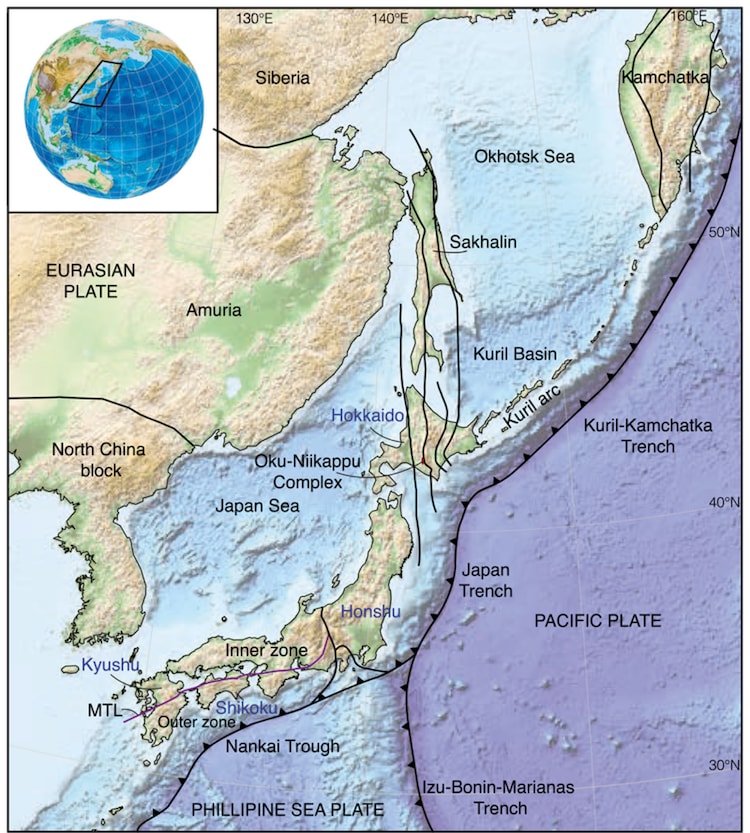
Under revised guidelines introduced in 2022, the JMA issues a “megaquake advisory” when a magnitude 7 or greater earthquake occurs in or near known source zones of large seismic events along the Japan and Kuril (Chishima) Trenches. In its latest advisory, the agency stated that the probability of a magnitude 8 or larger earthquake over the next week is “relatively higher than normal.” This marks the first time such a warning has been issued specifically for the Hokkaido–Sanriku region. Despite the alert, officials emphasize the probability is still just around 1%. (Image: Research Gate)
Why Scientists Are On Edge
Japan lies directly along one of the most volatile tectonic boundaries in the world—where the Pacific Plate subducts beneath the North American and Okhotsk plates along the Japan and Kuril Trenches. Massive amounts of geological stress accumulate here, which occasionally release in the form of destructive megathrust earthquakes.
The 2011 Tohoku earthquake—one of the strongest ever recorded at magnitude 9.0—originated along the same trench system. That event generated a catastrophic tsunami that claimed nearly 20,000 lives and crippled the Fukushima Daiichi nuclear power plant, leaving a lasting imprint on global disaster preparedness policies.
The concern today is that Monday’s magnitude 7.5 quake may not be an isolated event. Scientists are evaluating whether it could be a precursor, or foreshock, indicating a larger stress adjustment in the trench system. As a precaution, authorities are urging local municipalities and households to review evacuation routes, check emergency supplies, and stay prepared to act immediately if stronger shaking or a larger tsunami warning is issued.
Should India Be Worried About Japan’s Megaquake Alert?
A potential megaquake off northern Japan would primarily threaten regions around the northwest Pacific—including Japan, Russia’s Far East, and parts of Alaska’s Aleutian Islands. These areas lie in the direct path of seismic energy produced by major Japan Trench events.
By contrast, scientific modeling of far-field tsunamis shows that energy from Japan Trench megathrusts is funneled into the Pacific basin, not toward the Indian Ocean. India’s coastal regions are more vulnerable to seismic activity originating from the Sunda (Java) Trench in Sumatra—one of the world’s most active subduction zones.
India’s deadliest tsunami in 2004 was triggered by the magnitude 9.1 Sumatra earthquake, which occurred in the Indian Ocean, not the Pacific. For India, the key tsunami-generating sources remain the Sunda Trench and select seismic zones in the Arabian Sea, according to Indian geoscientists.
Therefore, Japan’s megaquake advisory does not signal any increased seismic or tsunami threat to India in the immediate future. However, the situation serves as a reminder of the shared geological risks across tectonically active regions and underscores the importance of strong early warning systems, public awareness, and disaster preparedness on a global scale.
For breaking news and live news updates, like us on Facebook or follow us on Twitter and Instagram. Read more on Latest Technology on thefoxdaily.com.






COMMENTS 0