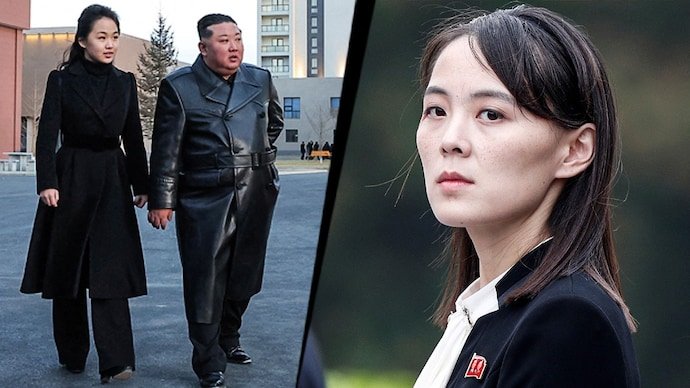
Fresh intelligence assessments from South Korea have reignited global debate over the future leadership of North Korea. According to briefings shared by Seoul’s National Intelligence Service (NIS), leader Kim Jong-un may be positioning his teenage daughter, Kim Ju-ae, as his eventual successor — a move that could reshape the political trajectory of the reclusive state.
The reported development has sparked speculation among regional experts and intelligence observers, many of whom caution that such a decision could trigger a succession struggle within the ruling Kim family. At the center of that potential conflict stands Kim’s influential sister, Kim Yo-jong, widely regarded as the second most powerful figure in North Korea.
A Growing Public Profile Raises Questions
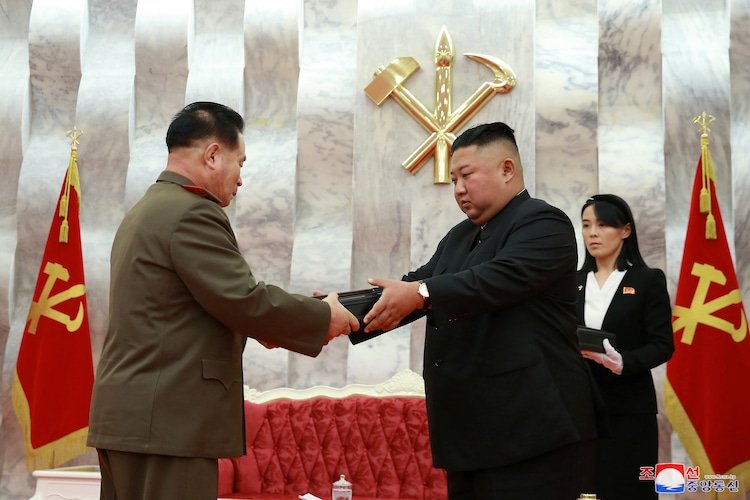
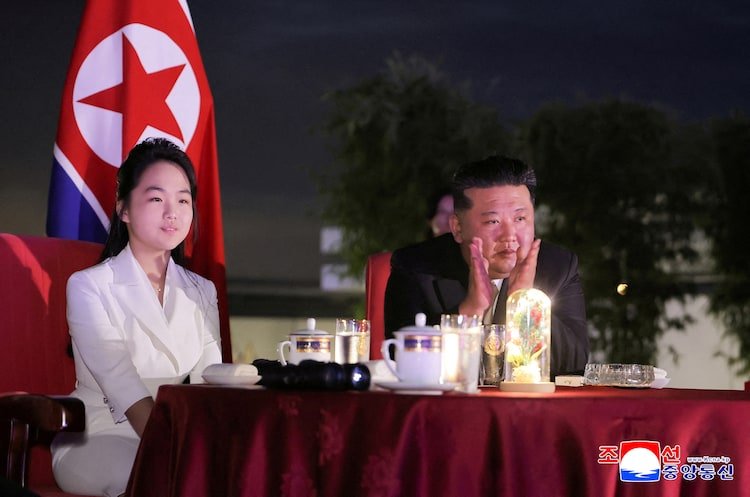
Over the past two years, Kim Ju-ae’s public appearances have increased significantly. State media outlets have repeatedly referred to her as the “beloved daughter” and “dear daughter,” language that analysts believe carries symbolic weight in a regime where messaging is tightly controlled.
South Korean lawmakers, citing closed-door briefings from the NIS, revealed that intelligence officials believe Kim Jong-un has “entered the stage of nominating her as successor.” While such claims cannot be independently verified due to North Korea’s opacity, the frequency and prominence of Ju-ae’s appearances have fueled serious discussion among policy experts.
According to reports, Ju-ae’s role has evolved beyond ceremonial participation. Lawmakers stated that intelligence assessments suggest she has “expressed opinions on certain measures,” an unusual detail considering the highly centralized nature of North Korea’s decision-making structure.
The Aunt Factor: Kim Yo-jong’s Influence
However, any succession plan involving Kim Ju-ae would likely face internal resistance. Kim Yo-jong, the 38-year-old sister of Kim Jong-un, has steadily expanded her political footprint over the past decade. She is believed to wield significant authority within the Workers’ Party and maintain close ties to the military establishment.
Rah Jong-yil, former South Korean ambassador to the United Kingdom and a former deputy director of Seoul’s intelligence service, told The Telegraph that the path to succession may not be smooth. “It depends on the timing,” he reportedly noted, adding that if Kim Yo-jong perceives an opportunity to claim leadership, she could act decisively.
Observers emphasize that North Korea’s political Culture does not easily accommodate competing centers of power. If both aunt and niece are seen as viable successors, the potential for rivalry cannot be dismissed.
The Secrecy Surrounding the Kim Family
Reliable information about the Kim family remains scarce. North Korea is among the world’s most closed and tightly controlled states, with minimal transparency and limited external access. Since the COVID-19 pandemic, the country has become even more isolated, with borders largely sealed and many diplomatic missions and international organizations having withdrawn.
Western observers believe Kim Ju-ae may be the middle child among Kim Jong-un’s three children, but such claims remain unverified. She is the only child to have been publicly acknowledged by state media, further intensifying speculation about her political role.
From Mystery to Public Appearances
The world first learned of Kim Ju-ae’s existence in 2013, when former American basketball player Dennis Rodman visited Pyongyang. In an interview with The Guardian, Rodman stated that he held “their baby Ju Ae” during the visit.
For nearly a decade afterward, she remained out of sight. That changed dramatically in 2022 when she appeared alongside her father at the launch of an intercontinental ballistic missile (ICBM). Images broadcast by state media showed Kim Jong-un holding her hand in front of the missile — a powerful visual widely interpreted as symbolic messaging about dynastic continuity.
Since then, Ju-ae has attended multiple high-profile events, including military parades in Pyongyang featuring advanced missile displays. Each appearance has reinforced speculation that she may be gradually introduced as part of a long-term succession narrative.
Regional Implications and Intelligence Monitoring
South Korea’s intelligence agencies continue to closely monitor developments in Pyongyang. Lawmakers have indicated that an upcoming major political gathering — the first of its kind in five years — could offer further clues. Analysts will be watching whether Ju-ae attends, how she is positioned during official ceremonies, and whether she receives formal titles.
In North Korea’s political system, symbolism and hierarchy at public events often signal shifts in power. Even subtle changes in protocol can carry significant meaning.
International Optics or Genuine Succession Plan?
Not all experts are convinced that Kim Ju-ae’s prominence signals an imminent transfer of power. Some argue that her appearances may serve as strategic messaging aimed at reinforcing dynastic stability rather than announcing a formal successor.
Given the opaque decision-making structure of the regime, it remains unclear how successors are formally selected. The secrecy could be intentional, allowing potential heirs — including Ju-ae’s siblings — to remain shielded from scrutiny or political vulnerability.
A History of Ruthless Power Consolidation
North Korea’s past transitions of power have demonstrated that succession can be fraught with tension. When Kim Jong-un assumed leadership in December 2011 following the death of his father, Kim Jong-il, he moved swiftly to consolidate authority.
His uncle, Jang Song-thaek, once considered a powerful figure within the regime, was arrested on charges of treason and executed in 2013. Similarly, Kim’s half-brother, Kim Jong-nam — long viewed by some analysts as a potential rival — was assassinated in 2017 at Kuala Lumpur International Airport using the VX nerve agent.
These episodes underscore the high stakes surrounding leadership in North Korea. Any formal move to designate Kim Ju-ae as successor could alter internal power dynamics and potentially reignite tensions within the ruling elite.
The Road Ahead for the Kim Dynasty
The Kim family has governed North Korea for three generations, making succession questions central not only to domestic Politics but also to regional stability in East Asia. While intelligence assessments suggest Kim Ju-ae may be gradually prepared for a future leadership role, the presence of Kim Yo-jong as a powerful and politically experienced figure complicates the equation.
Whether this situation evolves into a quiet transition or a more visible power contest remains uncertain. What is clear, however, is that every public appearance, every ceremonial gesture, and every carefully crafted state media headline will continue to be scrutinized by analysts worldwide.
In a nation where information is scarce and symbolism is Paramount, even the smallest signal can carry profound implications for the future of the Korean Peninsula.
For breaking news and live news updates, like us on Facebook or follow us on Twitter and Instagram. Read more on Latest World on thefoxdaily.com.



COMMENTS 0