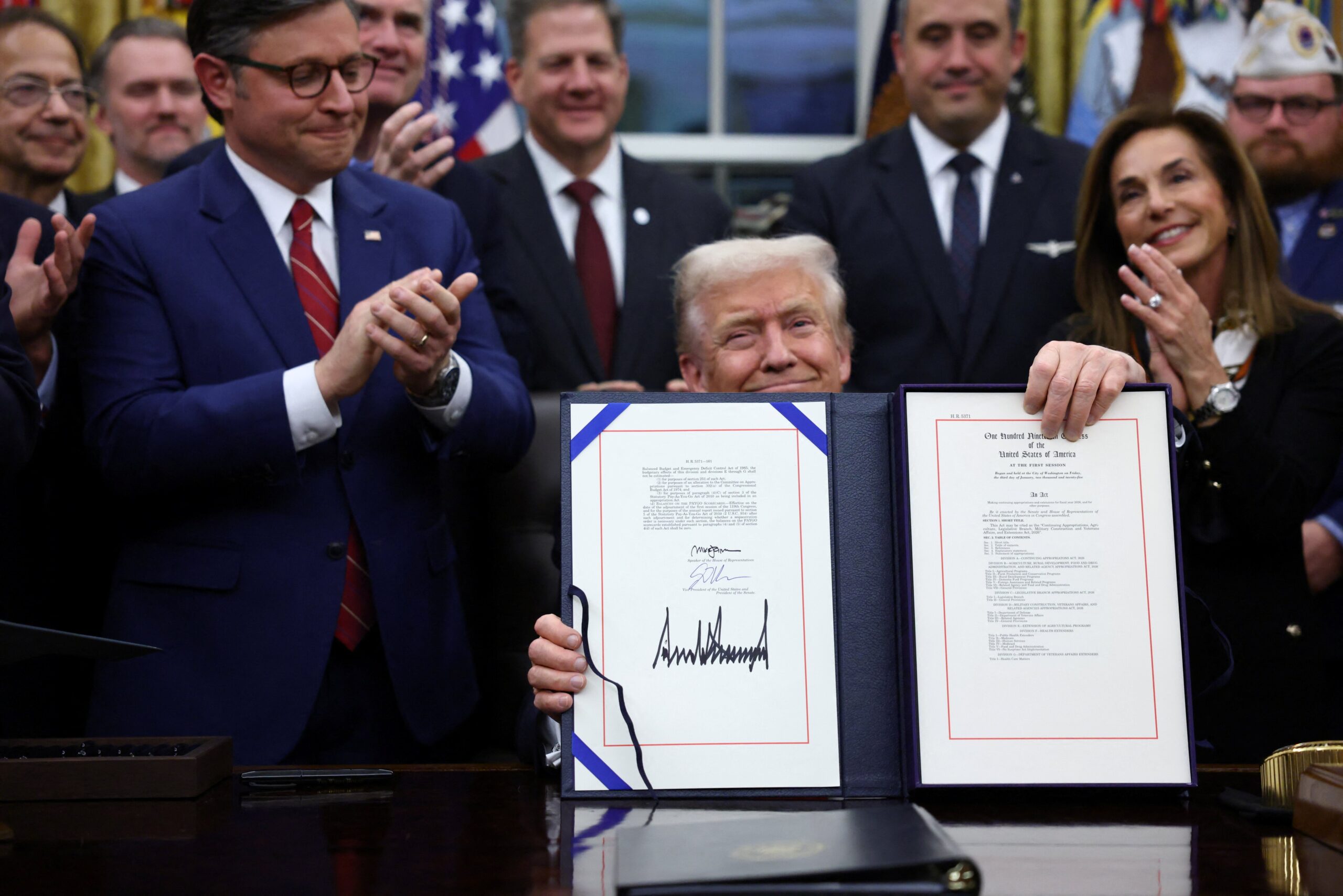
washington, November 13, 2025: U.S. President Donald Trump has signed a long-awaited funding package, officially bringing an end to the 43-day government shutdown — the longest in American history. The prolonged standoff had caused severe disruptions to air travel, delayed federal food assistance programs, and left hundreds of thousands of government workers without pay.
The bill passed the Republican-controlled House of Representatives on Wednesday by a narrow margin of 222–209. House Democrats opposed the measure, angered that their Senate counterparts failed to secure a guaranteed extension for federal healthcare subsidies. President Trump signed the bill just hours after the vote, allowing government operations to resume immediately.
However, Trump was quick to shift blame to Democrats for the drawn-out crisis, calling the shutdown a “lesson” for voters ahead of the 2026 midterm elections. “I would like to remind the American people to remember this — remember what they have done to our nation when we approach midterms,” Trump said during a press briefing at the White House.
How the Shutdown Deal Came Together
The agreement was brokered earlier this week between a coalition of moderate Democrats, Republican leadership, and White House negotiators. The Senate voted 60–40 to move the bill forward before sending it to the House for final approval.
The new funding legislation ensures that federal agencies remain open through January 30, 2026, effectively halting any plans to cut federal workforce numbers or initiate layoffs. In addition, the bill mandates that furloughed federal employees — including air traffic controllers, Border Patrol agents, and members of the armed forces — receive full back pay.
Federal offices are expected to reopen as early as Thursday morning, allowing employees to return to work after weeks of unpaid leave.
| Key Shutdown Statistics | Impact Summary |
|---|---|
| Duration | 43 days (Longest in U.S. history) |
| Federal Workers Affected | ~800,000 furloughed |
| Economic Loss | Estimated $24 billion |
| Funding Restored Until | January 30, 2026 |
| Key Dispute | Extension of healthcare subsidies |
Economic and Fiscal Implications
Economists estimate that the shutdown’s impact on the economy has been severe, with delayed federal contracts and reduced productivity costing billions. The newly passed funding extension is expected to add approximately $1.8 trillion annually to the existing $38 trillion national debt.
“It feels like I just experienced an episode of Seinfeld,” joked Republican Representative David Schweikert of Arizona. “We spent forty days arguing, and I still don’t know what the plotline was.” He added, “I thought this would last 48 hours — people would vent and we’d get back to work.”
Democrats Vow to Continue Fight Over Health Subsidies
While the shutdown has ended, the political battle over healthcare subsidies remains unresolved. Eight Democratic senators broke ranks to vote in favor of the compromise bill after realizing that Republicans would not budge on funding the Affordable Care Act (ACA) subsidies.
House Minority Leader Hakeem Jeffries said before the final vote, “The battle is far from over. We’re only beginning.” His Senate counterpart, Chuck Schumer, echoed that sentiment, stating he could not “in good faith” support a measure that ignored healthcare priorities. “We have sounded the alarm on healthcare,” Schumer said, vowing to “continue the fight.”
Healthcare Subsidies: The Core Dispute
At the heart of the 43-day standoff was President Trump’s push to replace ACA subsidies with direct payments to individuals. The subsidies have been credited with doubling ACA enrollment to more than 24 million since 2021. Republicans argue the system disproportionately benefits insurance companies, while Democrats insist it is vital for low-income families.
Just a day before the Senate vote, Trump posted on Truth Social calling the subsidies “a windfall for Health Insurance companies and a disaster for the American people,” reaffirming his stance that the funds should “go directly to individuals.”
Shutdown Ends, But Political Fault Lines Deepen
As government employees prepare to return to work and public services resume, analysts say the 43-day shutdown has only deepened partisan divisions in Washington. With the 2026 midterm elections approaching, both parties are expected to use the crisis as ammunition in their campaigns — Republicans emphasizing fiscal responsibility, and Democrats highlighting healthcare access and workers’ welfare.
For now, the reopening of the U.S. government marks a momentary relief — but the political storm surrounding America’s budget, debt, and healthcare system is far from over.
For breaking news and live news updates, like us on Facebook or follow us on Twitter and Instagram. Read more on Latest World on thefoxdaily.com.





COMMENTS 0