As tensions escalate in the ongoing conflict involving Iran, the United States, and Israel, analysts and global media are increasingly asking a critical question: will Yemen’s Houthi movement join the war? The concern is not merely military — it is economic. If the Houthis enter the conflict and attempt to block the Bab el-Mandeb Strait, the world could face an unprecedented disruption to global trade and energy supply.
The question has been echoed across international headlines: “Will the Houthis join the Iran war?” and “Why is the Yemeni front still quiet?” These concerns come as Iran continues to retaliate against joint US-Israeli military strikes.
The Yemen-based Houthi movement, which has long been supported by Tehran, recently issued a warning stating that its fighters have their “fingers on the trigger” and are ready to respond if the conflict widens. Such statements have raised fears that another vital maritime route — the Bab el-Mandeb Strait — could soon face disruption.
If both the Strait of Hormuz and the Bab el-Mandeb were simultaneously blocked, it could severely choke global shipping lanes, triggering massive economic consequences worldwide.
Why the Bab el-Mandeb Strait Matters for Global Trade
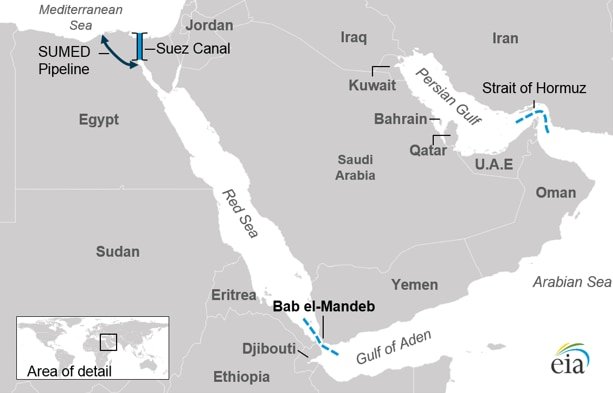
The Bab el-Mandeb Strait is a narrow but strategically vital maritime passage located at the southern entrance of the Red Sea. It connects the Red Sea with the Gulf of Aden and ultimately the Indian Ocean, serving as a critical gateway for ships traveling between Asia and Europe through the Suez Canal.
Much like the Strait of Hormuz, Bab el-Mandeb is considered one of the world’s most important shipping chokepoints. Any disruption there could affect oil shipments, liquefied natural gas (LNG) transport, and container shipping routes that support global supply chains.
| Maritime Route | Location | Importance |
|---|---|---|
| Strait of Hormuz | Between Iran and Oman | Handles nearly 20% of global oil shipments |
| Bab el-Mandeb Strait | Between Yemen and Djibouti/Eritrea | Key gateway connecting the Red Sea to the Indian Ocean |
| Suez Canal Route | Egypt | Main shipping corridor linking Asia and Europe |
| Cape of Good Hope | Southern Africa | Alternative route when Red Sea passages are unsafe |
The Bab el-Mandeb Strait is roughly 29 kilometres wide at its narrowest point, making it particularly vulnerable to blockades or attacks on commercial vessels.
According to Global energy data, the route carries approximately 8.8 million barrels of oil per day, along with significant volumes of LNG and container cargo. Around 12 percent of global trade moves through this corridor.
Houthis Signal Possible Entry Into the Conflict
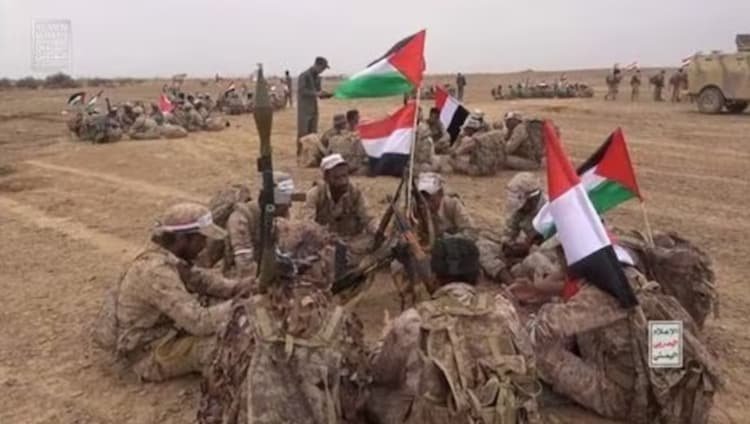
The warning from the Houthis came about two weeks after the joint Israeli-American campaign against Iran intensified. Houthi leader Abdul Malik al-Houthi stated that his forces are prepared to intervene if the situation escalates further.
The group has also warned that it may target shipping routes if regional countries — particularly Saudi Arabia — join the conflict against Iran.
Military analysts believe that if the Houthis decide to act, the Bab el-Mandeb Strait would likely be their primary target because of its strategic and economic importance.
Iran’s semi-official Fars News Agency has also hinted that the strait could become part of the broader conflict if “resistance groups” expand operations against US-aligned forces.
Houthis’ Past Attacks on Shipping
The threats from the Houthis are not being dismissed as mere rhetoric. The group has previously targeted ships and attempted to disrupt maritime traffic in the Red Sea.
After the outbreak of the Israel-Hamas war in 2023, the Houthis launched numerous missile and drone attacks on commercial vessels and Israeli-linked ships in the Red Sea region.
According to estimates from international media outlets such as the BBC and Reuters, more than 100 commercial ships were attacked during that period.
These attacks forced many global shipping companies to reroute vessels away from the Red Sea, choosing longer routes around Africa instead.
| Houthi Military Capabilities | Description |
|---|---|
| Anti-Ship Missiles | Used to target vessels passing through the Red Sea |
| Attack Drones | Long-range drones capable of striking ships and infrastructure |
| Fast Attack Boats | Small vessels used in swarm tactics against commercial ships |
| Naval Mines | Potential threat to major shipping lanes |
Western officials believe that the Houthis receive intelligence, technology, and weapons support from Iran, including surveillance data used to target ships.
Shipping Companies Already Taking Precautions
Even before the latest threats were issued, shipping companies had begun preparing for potential disruptions in the Red Sea.
Danish shipping giant Maersk announced that it had temporarily paused some voyages through the Bab el-Mandeb Strait due to security concerns in the region.
The company cited the deteriorating security situation caused by the escalating Middle East conflict as the primary reason for suspending certain routes.
If the situation worsens, more shipping firms could divert vessels around the Cape of Good Hope — a significantly longer route that increases travel time and fuel costs.
What Happens if the Bab el-Mandeb Is Closed?
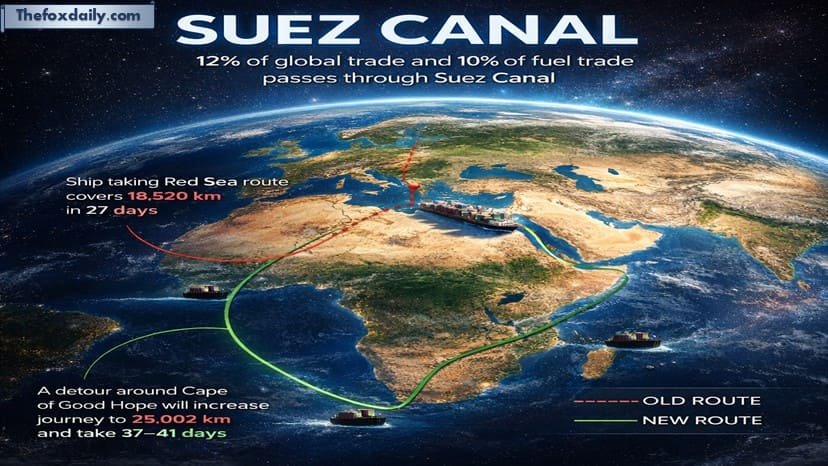
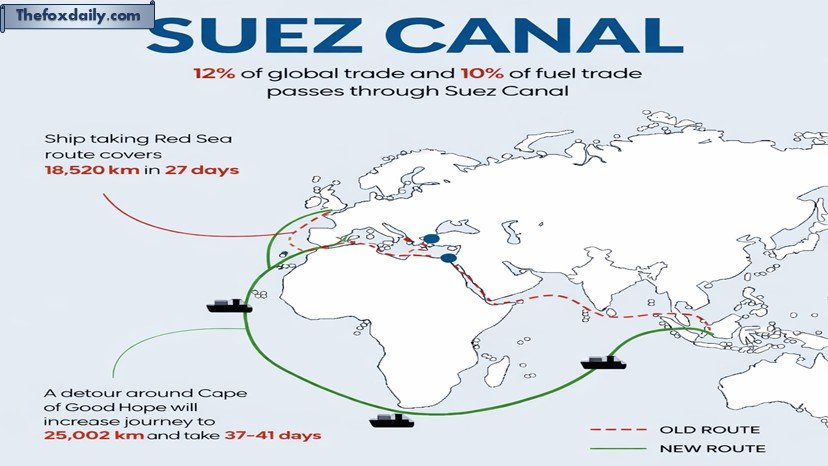
If the Houthis succeed in blocking the Bab el-Mandeb Strait, the impact on global trade could be severe. Ships traveling between Asia and Europe would have to bypass the Red Sea and the Suez Canal entirely.
Instead, vessels would be forced to sail around the southern tip of Africa via the Cape of Good Hope.
This detour could add 10 to 15 additional days to a typical shipping journey and significantly increase transportation costs.
Higher shipping costs would likely affect a wide range of industries, including electronics, food supplies, automobiles, and consumer goods moving between Asia and Europe.
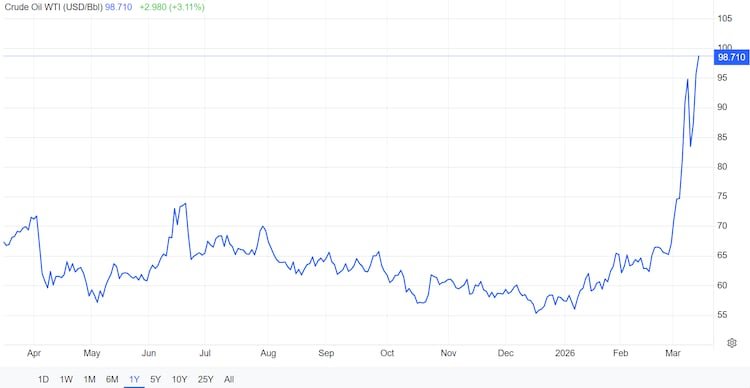
Energy markets would also feel the pressure. Oil prices have already surged sharply due to the Strait of Hormuz disruption, rising nearly 40 percent in just two weeks as global supply concerns intensified.
If Bab el-Mandeb also becomes unsafe for shipping, energy analysts warn that crude oil prices could climb even further.
Iran’s Wider Regional Strategy
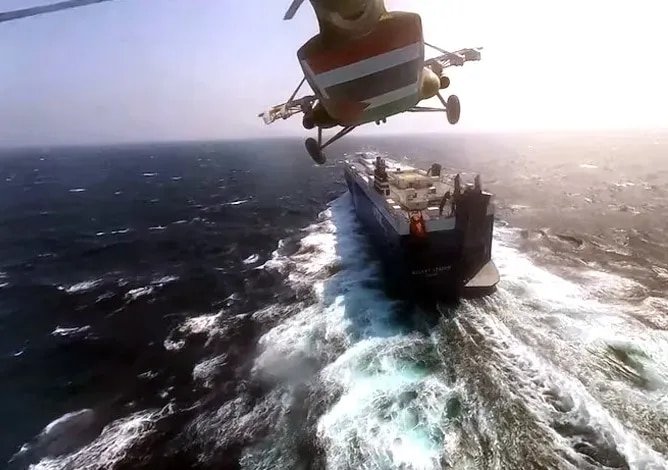
Experts believe the Houthis may play a role in Iran’s broader regional strategy, sometimes referred to as the “Axis of Resistance.”
This informal alliance includes armed groups across the Middle East, such as Hezbollah in Lebanon, Hamas in Gaza, militias in Iraq, and the Houthi movement in Yemen.
While Hezbollah and Hamas have suffered heavy losses in recent conflicts with Israel, analysts say the Houthis remain relatively well-positioned geographically to threaten maritime trade routes.
Strategic analyst Youssef Cherif has suggested that Iran could be pursuing a multi-stage strategy to expand pressure on its opponents.
In this scenario, the Strait of Hormuz disruption represents the first stage, followed by increased tensions in Lebanon, and potentially a Houthi blockade of Bab el-Mandeb.
Risk of a Wider Regional Conflict
The war has already expanded beyond the immediate battlefield, with tensions spreading across the Gulf, the Red Sea, and parts of the Horn of Africa.
Israel has also strengthened its strategic presence in the Red Sea region. Reports indicate that Israel has been exploring the possibility of establishing a military base near Berbera in Somaliland to monitor Houthi activity and secure shipping routes.
Such developments could further widen the geographical scope of the conflict.
If both the Strait of Hormuz and Bab el-Mandeb were blocked at the same time, analysts warn the world could face one of the most severe maritime disruptions in modern history.
With the Iran war entering its third week and regional actors signaling readiness to escalate, what once seemed like a remote possibility is now being openly discussed by policymakers, economists, and military strategists around the world.
For breaking news and live news updates, like us on Facebook or follow us on Twitter and Instagram. Read more on Latest World on thefoxdaily.com.






COMMENTS 0