- The Faravahar and the Power of Symbolism
- Echoes of Ancient Empires
- Identity as Both Unity and Dissent
- The Islamic Republic and Persian Nationalism
- Wartime Messaging Through Ancient Imagery
- A Narrative of Resilience and Continuity
- Global Perception and Strategic Messaging
- Conclusion: Lessons from the Past, Power for the Present
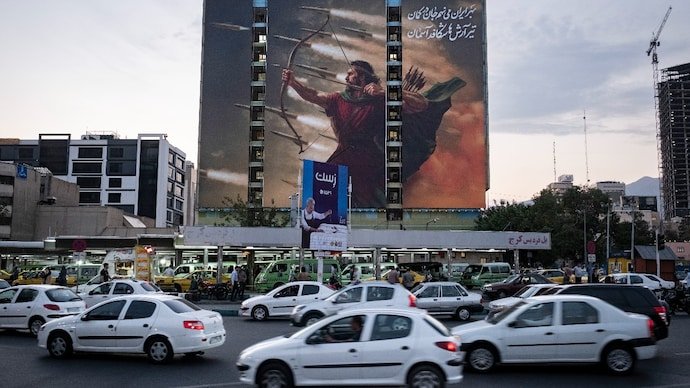
As tensions escalate between Iran, the United States, and Israel, a powerful cultural undercurrent is becoming increasingly visible inside Iran. Images of ancient Persian warriors, mythological heroes, and pre-Islamic empires are resurfacing across the country—on billboards, in media, and in public discourse—fueling a sense of unity and resilience.
Far from being a sudden revival, this Persian identity has always existed alongside Iran’s Islamic character. In times of crisis, however, it emerges more prominently, reinforcing national pride and collective strength.
The Faravahar and the Power of Symbolism
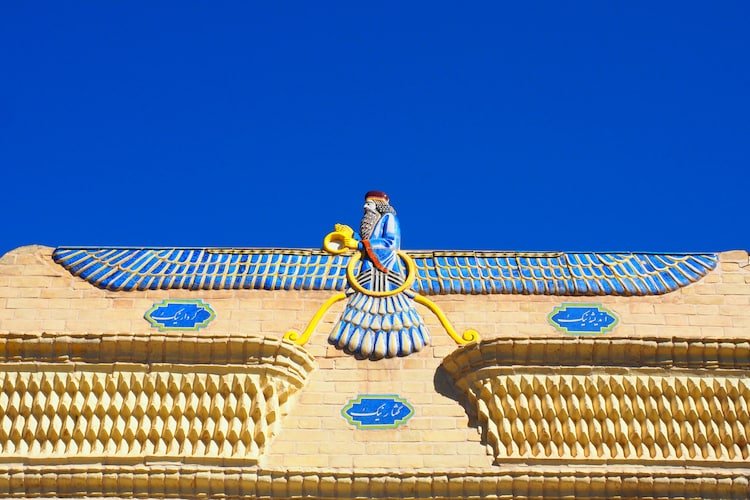
One of the most striking symbols of this cultural continuity is the Faravahar—a Zoroastrian emblem representing a guardian spirit. While such imagery might be considered inappropriate in many parts of the Islamic world, in Iran it remains widely accepted and even embraced.
Despite over 90% of Iranians identifying as Shia Muslims, the Faravahar is commonly sold, worn, and displayed. This reflects the layered identity of the nation, where ancient Persian traditions coexist with Islamic beliefs.
In the current geopolitical climate, these symbols are once again taking center stage, reinforcing a narrative of endurance rooted in thousands of years of History.
Echoes of Ancient Empires
Iran’s connection to its pre-Islamic past runs deep. Long before the Arab conquest, the region was home to powerful Zoroastrian empires such as the Achaemenid and Sasanian dynasties.
Founded by Cyrus the Great, the Achaemenid Empire became one of the largest empires in history, setting administrative and cultural standards that influenced civilizations across continents. Even after the spread of Islam, these historical roots were never fully erased.
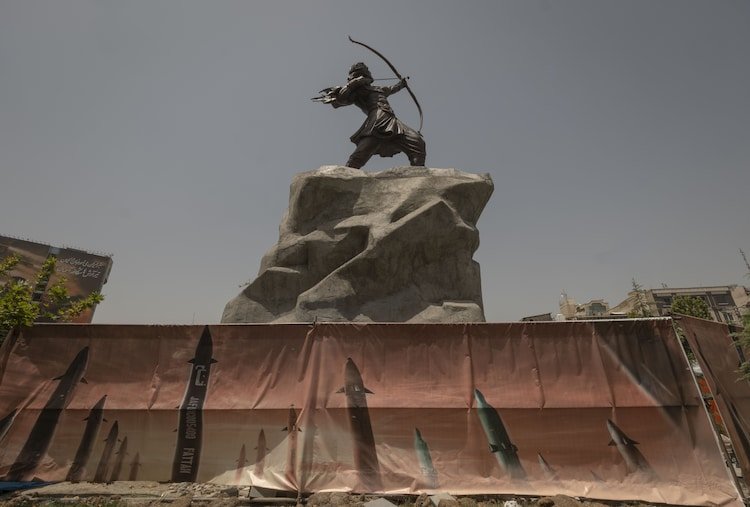
Today, imagery of Achaemenid soldiers, ancient rulers, and legendary figures like Arash the Archer and Rostam frequently appears in public spaces—serving as reminders of Iran’s enduring legacy.
| Symbol / Figure | Origin | Meaning in Modern Iran |
|---|---|---|
| Faravahar | Zoroastrianism | Spiritual identity, continuity, cultural pride |
| Arash the Archer | Persian mythology | Self-sacrifice, patriotism, defense of borders |
| Rostam | Shahnameh epic | Heroism, strength, resistance |
| Achaemenid Soldiers | Ancient Persian Empire | Military power, historical greatness |
| Shapur I | Sasanian Empire | Victory over foreign powers, national pride |
Identity as Both Unity and Dissent
Iran’s Persian heritage has historically served a dual purpose—it unites the population while also acting as a subtle form of resistance. For centuries, Iranians have used their distinct cultural identity to differentiate themselves from the Arab world.
During the rule of the Pahlavi dynasty (1925–1979), ancient Persian empires were heavily emphasized to legitimize authority. Even after the Islamic Revolution of 1979, symbols like the Lion and Sun flag and references to pre-Islamic history continued to appear during protests.
In recent demonstrations, especially following major political developments, chants supporting the return of monarchy and references to Iran’s imperial past have resurfaced—highlighting the complex relationship between identity, Politics, and power.
The Islamic Republic and Persian Nationalism
Interestingly, Iran’s current Shia clerical leadership has not rejected Persian identity. Instead, it has increasingly incorporated elements of nationalism into its narrative, particularly during times of external threat.
Iran remains distinct from many of its neighbors by preserving Persian (Farsi) as its official language and celebrating Nowruz—the Persian New Year rooted in Zoroastrian tradition.
One notable example of this fusion occurred when Iran’s leadership promoted the patriotic song “Ey Iran” during a major religious observance. The song, often considered an unofficial National Anthem, celebrates Iran’s history, resilience, and cultural identity without direct religious references.
This blending of nationalism and religion reflects a strategic effort to strengthen unity during periods of crisis.
Wartime Messaging Through Ancient Imagery
In recent months, the Iranian government has amplified the use of pre-Islamic imagery in public campaigns. Billboards depicting ancient warriors, mythological heroes, and historic victories have become increasingly common.
One prominent campaign featured imagery inspired by the Sasanian king Shapur I’s victory over the Roman emperor Valerian—an event symbolizing one of the rare instances of a Roman ruler being captured in battle.
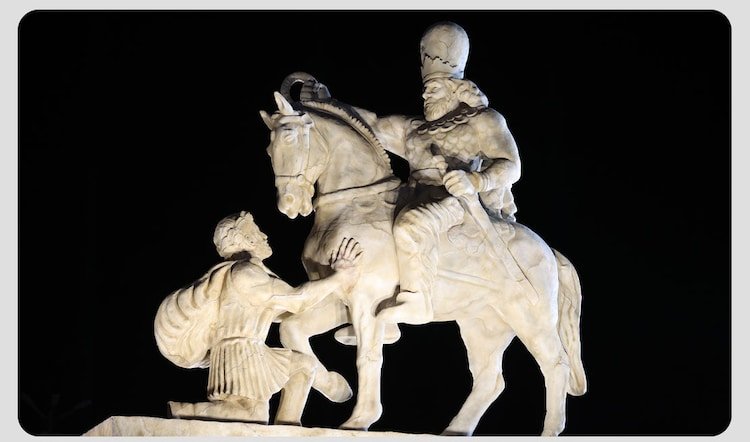
Modern adaptations of these historical scenes have been used to send strong geopolitical messages. In some cases, contemporary figures have been symbolically portrayed within these ancient narratives, reinforcing the idea of Iran’s enduring strength against foreign adversaries.
A Narrative of Resilience and Continuity
While some observers argue that Iran is “reviving” its Persian identity, a closer look suggests that it has never truly disappeared. Instead, it exists as a parallel identity—sometimes overshadowed, but always present.
During times of war or external pressure, this identity becomes more visible, offering a source of psychological strength and national cohesion.
The emphasis on ancient warriors and heroes is not just about history—it is about storytelling. It frames the current conflict as part of a larger, centuries-old narrative of resistance and survival.
Global Perception and Strategic Messaging
This cultural positioning has also influenced how Iran is perceived globally. References to its ancient civilization, intellectual legacy, and strategic depth contribute to a more nuanced image beyond immediate political tensions.
The use of historical symbolism allows Iran to project both strength and continuity, reinforcing its position not just as a modern الدولة but as a civilization with deep historical roots.
Conclusion: Lessons from the Past, Power for the Present
In the face of modern conflict, Iran is drawing strength from its ancient past. Pre-Islamic Persian warriors, symbols, and empires provide more than just cultural pride—they offer a framework for resilience, unity, and strategic messaging.
Whether on the battlefield or in the realm of perception, these historical narratives continue to shape how Iran sees itself—and how it confronts its adversaries.
In many ways, the legacy of Persian warriors lives on, guiding a nation that continues to navigate complex challenges with a deep sense of identity and purpose.
For breaking news and live news updates, like us on Facebook or follow us on Twitter and Instagram. Read more on Latest World on thefoxdaily.com.






COMMENTS 0