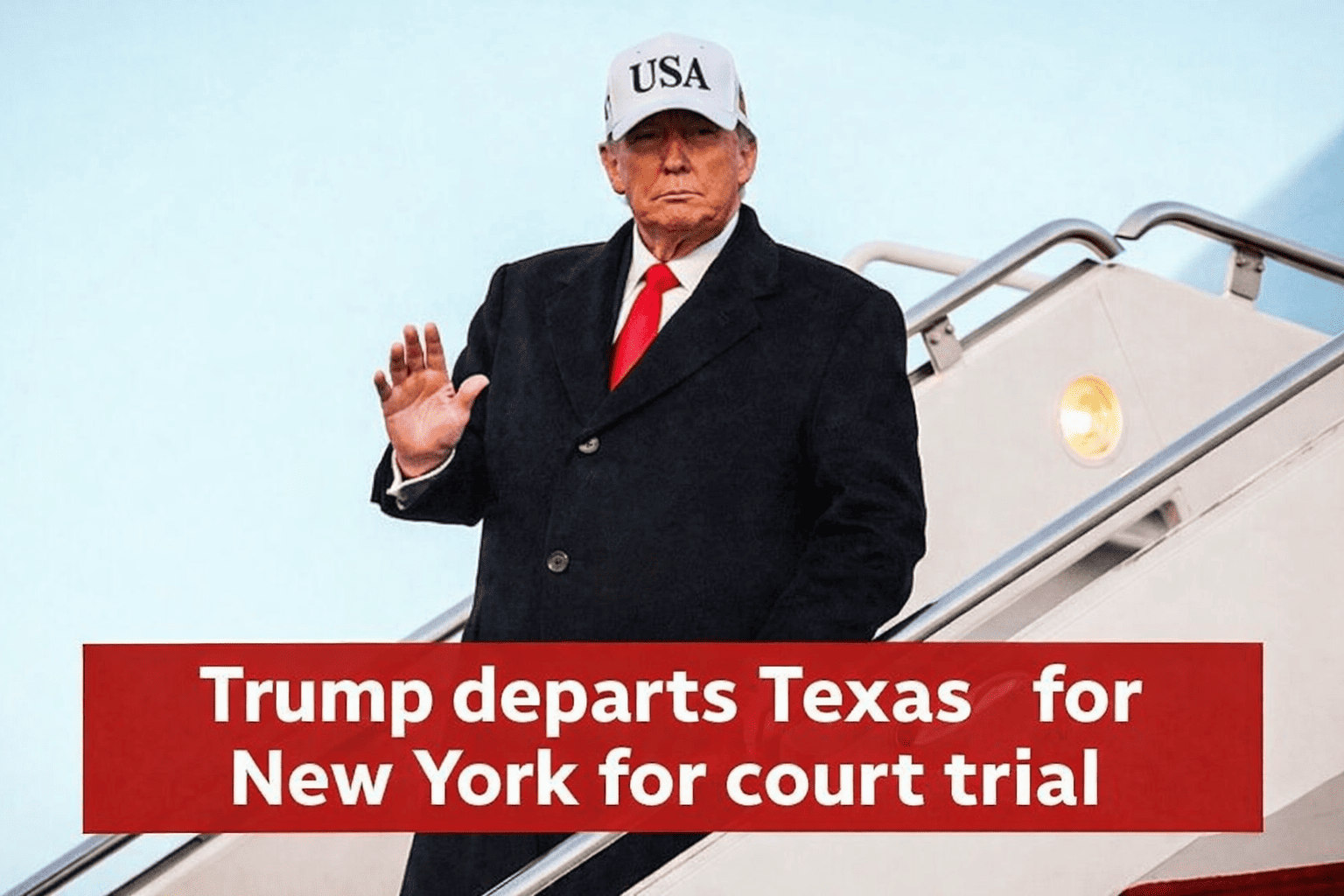
US President Donald Trump has once again sent shockwaves through the international system by reiterating his threat to forcibly acquire Greenland, an autonomous Danish territory, shortly after the controversial US special operations action that removed Venezuelan President Nicolás Maduro.
“If we don’t do it the easy way, we’re going to do it the hard way,” Trump warned—language that has alarmed allies and adversaries alike. The remark, delivered with confidence after events in Venezuela, reflects what many analysts now call the “Donroe Doctrine”—Trump’s modern reinterpretation of the 19th-century Monroe Doctrine, centred on unilateral power and territorial dominance.
In response, Denmark’s foreign minister and Greenland’s leadership are set to hold high-stakes talks in Washington, DC, with US Vice President JD Vance and Secretary of State Marco Rubio. The meeting represents yet another attempt to de-escalate tensions with an increasingly uncompromising White House.
Greenland has repeatedly stated that it is not for sale. Danish officials have gone further, warning that any US military action against Greenland would effectively destroy the US-led NATO alliance—of which Denmark is a founding member.
On the eve of the talks, Greenland Prime Minister Jens-Frederik Nielsen made his country’s position unmistakably clear. “If forced to choose,” he said, “Greenlanders would choose Denmark over the United States.” The statement underscores the grim reality facing Copenhagen and Nuuk: meaningful concessions from the Trump administration appear unlikely.
Why Does Trump Want Greenland?
When Trump first floated the idea of purchasing Greenland during his first term in 2019, it was widely dismissed as political theatre. Yet six years later, the proposal has transformed into a concrete strategic objective.
Greenland—the world’s largest island—is roughly six times the size of Germany and nearly two-thirds the size of India. To Trump, a former real estate magnate, its vast scale translates into immense economic and geopolitical opportunity.
During his second term, Trump has repeatedly highlighted Greenland’s untapped oil and gas reserves, as well as its rich deposits of critical minerals. The island is believed to hold significant quantities of rare-earth elements such as cobalt, graphite and lithium—resources essential for electric vehicles, renewable energy and advanced defence technologies.
Trump has argued that controlling these resources would sharply reduce US dependence on china, which currently dominates global rare-earth supply chains.
Strategic Interests Beyond Economics
In recent months, Trump has increasingly framed Greenland not just as an economic asset, but as a strategic necessity.
According to the White House, American control over Greenland would limit Chinese and Russian influence in the Arctic—an area Trump considers critical to US national security—and enable Washington to significantly expand its military footprint in the region.
Greenland’s geographic position between North America and the Arctic makes it ideal for missile early-warning systems and monitoring key shipping routes. However, Denmark and Greenland have consistently argued that US ownership is not required to achieve these objectives.
The United States already operates the only military base on the island—Pituffik Space Base (formerly Thule Air Base)—which has been in continuous use since World War II. The base plays a vital role in missile detection and space surveillance.
Under existing treaties, there is nothing preventing Washington from expanding its military presence. In fact, the US has announced plans to modernise Pituffik as part of the ambitious “Golden Dome” missile defence project, which includes space-based interception capabilities.
Denmark and Greenland have also welcomed US investment in exploring Greenland’s mineral wealth—further undermining the argument that outright ownership is necessary.
Greenlanders Reject Becoming American
Trump has attempted to win over Greenland’s population with promises of prosperity and security.
“We will keep you safe, we will make you rich,” Trump told congress last year. “Together, we will take Greenland to heights like you have never thought possible.”
According to US officials, proposals have even included offering up to $100,000 per Greenland resident.
Yet these overtures have been met with anger and defiance. Reports from Nuuk, Greenland’s capital, describe a city openly hostile to the idea of US annexation. “Greenland is not for sale” T-shirts are widely sold, symbolising local resistance.
After centuries of Danish colonial rule, many Inuit Greenlanders remain deeply sceptical of external powers. Elderly residents recall traumatic episodes from the 20th century, including the forced relocation of children for “re-education” and the widespread use of compulsory contraceptive devices on women.
There is also fear that US annexation would end access to free healthcare and higher education—cornerstones of Greenland’s welfare system. The promise of one-time cash payments, critics note, would vanish quickly, while the costs of America’s private healthcare system would remain.
Trump’s Quest for a Place in History
The United States has a long history of territorial expansion through purchase—from Alaska, bought from Russia, to Louisiana from France, and Florida and the Philippines from Spain.
Trump is the first US president in nearly eight decades to attempt such an acquisition. In 1946, President Harry Truman offered Denmark $100 million in Gold for Greenland—an offer that was firmly rejected.
If Trump succeeds, Greenland would become the largest territory ever acquired by the United States.
According to Peter Baker and Susan Glasser, authors of The Divider: Trump in the White House, 2017–2021, acquiring Greenland could secure Trump a place in US history comparable to William Seward’s purchase of Alaska.
A Direct Threat to NATO
Trump’s stance has deeply unsettled NATO allies across Europe—not just Denmark.
Under Article 5 of the NATO treaty, an attack on one member is considered an attack on all. Any US military action against Greenland would therefore represent a flagrant violation of the alliance’s core principle.
Such a move would also expose NATO to global ridicule at a time when it is actively supporting Ukraine against Russian aggression. European members have been vocal critics of Moscow at international forums, including the United Nations.
Yet many of these same governments have refrained from condemning Trump’s unilateral actions—first in Venezuela and now over Greenland—largely because they remain dependent on US security guarantees.
Eight decades after World War II, Europe has still not achieved strategic self-sufficiency in defence. Instead of confronting Washington, leaders have largely limited themselves to urging Trump to reconsider.
Trump and International Law
Trump’s approach reflects a broader disdain for international norms.
In a recent interview with The New York Times, he suggested that his own moral judgement—not international law—was the only constraint on his power.
The statement reinforced concerns that treaties, alliances and global institutions hold little weight in Trump’s worldview.
Implications for India
Although geographically distant from Greenland, India has growing strategic interests in the Arctic.
India established its first Arctic research station in Svalbard, Norway, in 2008 and holds observer status in the Arctic Council. However, the region remains dominated by the US, Russia, China and NATO members.
During Russian President Vladimir putin’s recent visit to India, New Delhi and Moscow signed a security agreement allowing mutual access to naval facilities—including Russian bases in the Arctic.
A US takeover of Greenland would significantly expand Washington’s Arctic presence, potentially complicating India’s ambitions and its strategic understanding with Russia.
At the same time, stronger ties with the Trump administration could create new opportunities. US Ambassador-designate Sergio Gor recently stated that India would receive a formal invitation to join Pax Silica, a US-led initiative aimed at securing semiconductor and artificial intelligence supply chains.
Such cooperation could extend to critical minerals and resource exploration in Greenland—provided New Delhi navigates the shifting geopolitical landscape carefully.
(Naresh Kaushik, former editor with the Associated Press and BBC, contributed analysis. Views expressed are personal.)
For breaking news and live news updates, like us on Facebook or follow us on Twitter and Instagram. Read more on Latest World on thefoxdaily.com.



COMMENTS 0