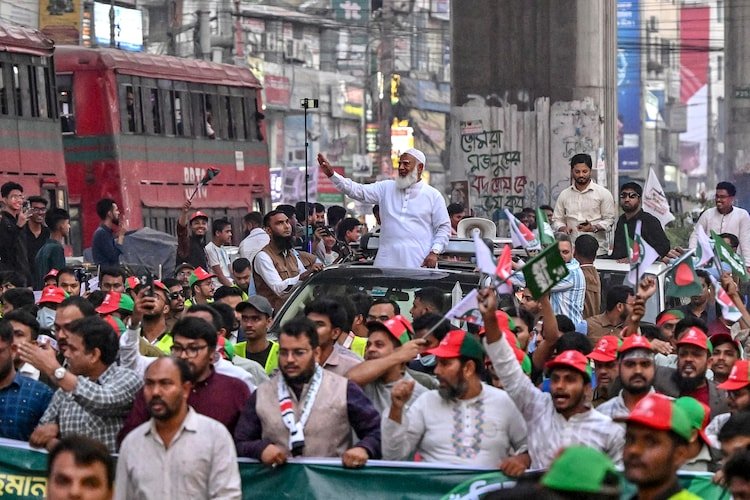
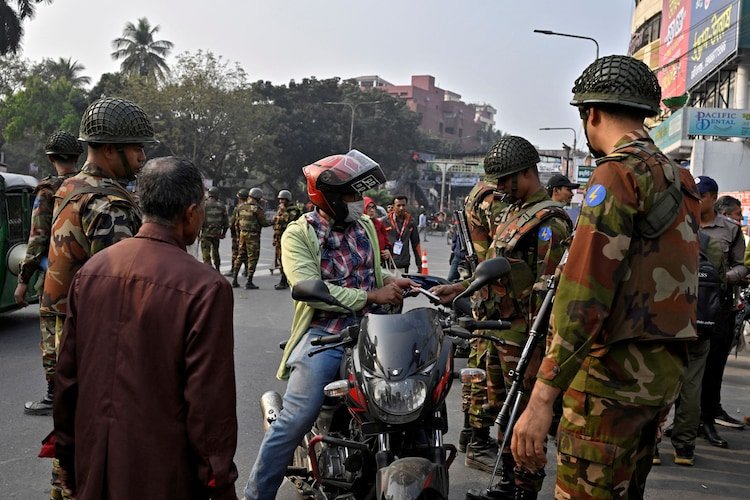
Bangladesh goes to the polls on Thursday in what is widely regarded as one of the most consequential elections in its recent history — not just for Dhaka, but for New Delhi as well. For India, which shares its longest land border with Bangladesh, the vote carries deep strategic, economic, and security implications.
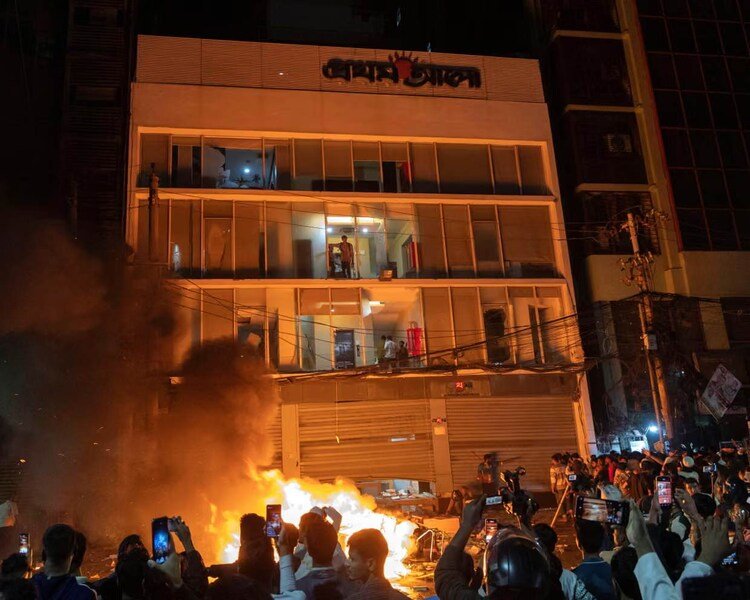
The election follows a turbulent 18-month period marked by the collapse of Sheikh Hasina’s Awami League government after a violent student-led uprising and the subsequent installation of Nobel laureate Muhammad Yunus as head of an interim administration. Since then, India-Bangladesh relations have plummeted to their lowest point in decades, while china and Pakistan have expanded their footprint in Dhaka.
Against this volatile backdrop, the electoral outcome could redefine South Asia’s power matrix and determine whether Bangladesh returns to political stability or enters another prolonged phase of uncertainty.
Changing Political Landscape on the Streets
Observers note a visible shift in Bangladesh’s political mood compared to the atmosphere before the 2024 elections. Sheikh Hasina’s Awami League — long seen as India’s most reliable partner in Dhaka — is effectively sidelined. Its iconic ‘boat’ symbol is absent from campaign posters.
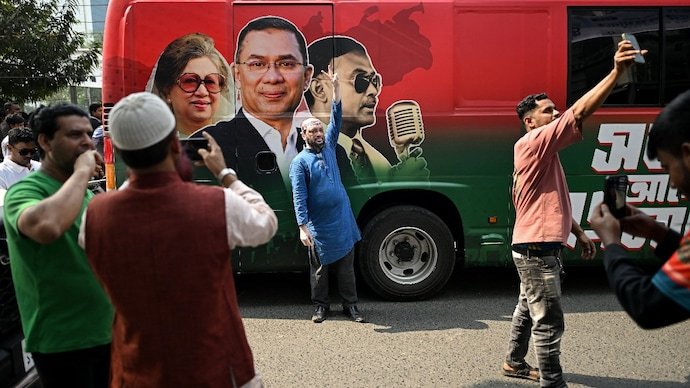
Instead, the streets are dominated by the ‘sheaf of paddy’ symbol of the Bangladesh Nationalist Party (BNP) and the ‘scales’ of Jamaat-e-Islami. The BNP, now led by Tarique Rahman following the death of Khaleda Zia in December, has emerged as the principal challenger.
When Will Results Be Known? Who Are the Key Players?
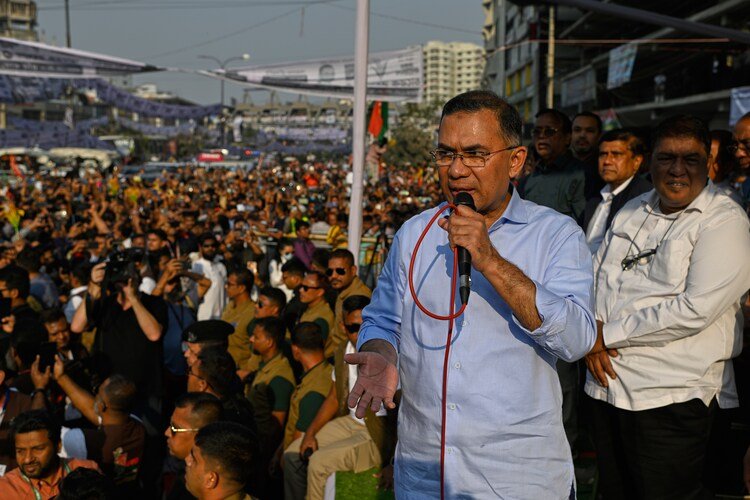
For the first time in nearly three decades, neither Sheikh Hasina nor Khaleda Zia appears on the ballot. Hasina remains in India, while Zia’s passing has left leadership of the BNP in the hands of her son, Tarique Rahman, who returned to active politics after 17 years in exile.
Many analysts believe Tarique Rahman is the frontrunner for the prime minister’s post if the BNP secures a majority. Surveys suggest the BNP has moved toward a liberal-centrist space vacated by the Awami League, positioning itself as a stabilising alternative.
However, Jamaat-e-Islami — once banned during the Hasina era — has re-emerged as a formidable force. It has aligned with the student-led National Citizen Party (NCP) and nine other parties, tightening the electoral contest.
To form government, a party or coalition must secure 151 of the 300 seats in the Jatiya Sangsad. An additional 50 reserved seats for women are allocated proportionately after results are declared. Final results are expected by Friday, February 13, although delays are possible due to a simultaneous referendum on the July 2025 Charter, drafted under the Yunus administration to propose constitutional reforms.
Why These Elections Matter Deeply for India
Bangladesh is not just another neighbour for India. It shares borders with five Indian states — West Bengal, Assam, Meghalaya, Tripura, and Mizoram — making it central to India’s internal security architecture.
Under Sheikh Hasina, Dhaka cooperated closely with New Delhi on counterterrorism and took firm action against anti-India insurgent groups operating in the northeast. By contrast, during the BNP’s 2001–2006 tenure, relations deteriorated amid border tensions and instability.
Strategically, Bangladesh has also served as a counterweight to China and Pakistan in the Bay of Bengal region. However, under interim leader Muhammad Yunus, Dhaka has expanded engagement with Beijing and Islamabad, complicating India’s strategic calculus.
Economically, Bangladesh depends significantly on India for transit and trade. India remains its largest trading partner in Asia. Yet bilateral trade has suffered. Indian exports to Bangladesh have fallen by more than 5% amid reciprocal trade restrictions.
New Delhi has suspended key transshipment facilities that allowed Bangladeshi exports to pass through Indian ports, affecting nearly 42% of Bangladesh’s exports to India. Bangladesh, in turn, imposed restrictions on Indian yarn imports via land routes. Ready-made garment imports from Bangladesh have also faced constraints.
Diplomatic ties have also cooled. India has scaled back routine visa services for Bangladeshi nationals, once among the largest groups of medical tourists to India. Dhaka responded by suspending visa operations at missions in New Delhi, Agartala, and Siliguri.
India’s Strategic Outreach to BNP and Jamaat
Recognising shifting political realities, New Delhi has initiated calibrated outreach efforts. External Affairs Minister S Jaishankar visited Dhaka last month to attend Khaleda Zia’s funeral and delivered a letter from Prime Minister Narendra Modi to Tarique Rahman.
India has also engaged Jamaat-e-Islami leaders — a notable shift given the party’s past positions. Indian officials reportedly met Jamaat representatives four times over the past year, and Jamaat leaders were invited to Republic Day celebrations at the Indian High Commission.
Significantly, Jamaat’s latest election manifesto emphasises maintaining “friendly and cooperative” relations with India. Pakistan is conspicuously absent from its foreign policy messaging. For the first time, Jamaat has fielded a Hindu candidate from Khulna, signalling an attempt to broaden its appeal.
How Relations Reached a Low Point
Tensions escalated under Yunus, who publicly criticised India for providing refuge to Sheikh Hasina despite demands for extradition. Anti-India sentiment, particularly among younger Bangladeshis, intensified amid perceptions of Indian interference — allegations New Delhi has consistently denied.
Longstanding disputes over border killings and water-sharing arrangements further aggravated ties. Yunus’s decision to make Beijing his first official visit in 2025 broke diplomatic precedent and was closely watched in Delhi.
China has since accelerated infrastructure projects in Bangladesh, including redevelopment of the Lalmonirhat airbase near India’s strategically sensitive Siliguri Corridor, modernisation of Mongla Port, and cooperation on the Teesta River project. A defence agreement for a drone facility near India’s northeastern border has heightened concerns.
Growing Bangladesh-Pakistan Engagement
Equally significant has been Dhaka’s renewed engagement with Islamabad. Direct flights between the two countries resumed after 14 years, and maritime links between Karachi and Chittagong were established.
Defence cooperation discussions reportedly include Bangladesh considering procurement of JF-17 fighter jets — jointly produced by China and Pakistan.
Domestically, extremist rhetoric and sporadic violence have further strained relations. Incidents targeting Indian missions and attacks on minorities, including Bangladesh’s Hindu community, drew international concern.
What Lies Ahead for India?
Strategically, New Delhi would have preferred an Awami League return to power. However, political realities suggest that a BNP-led government is more plausible. Jamaat’s moderated stance may also open limited space for engagement.
A key unresolved issue remains Sheikh Hasina’s status in India and potential extradition demands — a matter likely to shape early diplomatic exchanges regardless of who forms government.
Geopolitical analysts argue that Bangladesh’s immediate need is stability. Months of unrest have disrupted key sectors, especially the garment industry, a pillar of the country’s economy. A decisive electoral mandate could restore investor confidence and regional predictability.
For India, the objective will be pragmatic engagement. Whether under BNP or a coalition arrangement, New Delhi’s priority will remain Border Security, economic connectivity, and preventing strategic encirclement by adversarial powers.
As Bangladesh votes amid uncertainty, the results will not merely determine its next government — they will influence the strategic future of the eastern subcontinent.
For breaking news and live news updates, like us on Facebook or follow us on Twitter and Instagram. Read more on Latest World on thefoxdaily.com.





COMMENTS 0