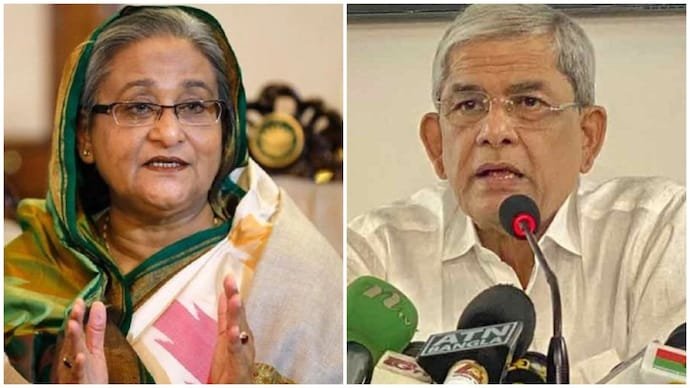
- Mirza Fakhrul Islam Alamgir Signals Legal Route for Extradition, Stresses Diplomatic Stability
- Background: Hasina’s Departure and Legal Proceedings
- BNP’s Position on Legal and Diplomatic Channels
- Political Context: Post-Uprising Landscape
- Diplomatic Calculus Between Delhi and Dhaka
- Balancing Justice and Regional Stability
Mirza Fakhrul Islam Alamgir Signals Legal Route for Extradition, Stresses Diplomatic Stability
Senior Bangladesh Nationalist Party (BNP) leader Mirza Fakhrul Islam Alamgir has expressed confidence that India will consider extraditing former Prime Minister Sheikh Hasina in accordance with established legal procedures, while emphasizing that the matter should not disrupt relations between New Delhi and Dhaka.
In a recent interaction, Fakhrul indicated that any decision regarding Hasina’s return would proceed strictly under international law and existing bilateral frameworks. He underscored that Bangladesh has already made a formal request for her repatriation and that further steps would depend on the legal mechanisms currently in place.
“It will proceed in accordance with the existing international regulations. Bangladesh has already sought her repatriation from India. That is clear,” he stated, reiterating the party’s position.
Background: Hasina’s Departure and Legal Proceedings
Sheikh Hasina has been residing in New Delhi since August 2024, after stepping down amid a massive political uprising that forced her departure from Bangladesh. The unrest marked one of the most significant political upheavals in the country’s recent history.
In November 2025, a special tribunal in Bangladesh sentenced her to death in absentia in connection with alleged crimes against humanity linked to the 2024 crackdown. The verdict intensified calls within sections of Bangladesh’s political establishment for her extradition.
The legal and diplomatic complexity of the issue stems from the existence of an extradition treaty between India and Bangladesh, which outlines the procedures and conditions under which individuals may be repatriated.
BNP’s Position on Legal and Diplomatic Channels
When asked whether the BNP would formally seek Hasina’s extradition if it consolidates power, Fakhrul reaffirmed that any such move would align with established legal frameworks. He acknowledged the bilateral extradition treaty and indicated that the party would pursue the matter within that structure.
“Yes, we want her to return if we so desire,” he remarked, while stopping short of detailing specific diplomatic steps.
Importantly, Fakhrul dismissed suggestions that the extradition issue could strain bilateral ties. According to him, relations between India and Bangladesh are broader than any single political dispute and are unlikely to be derailed by the matter.
“The relationship between India and Bangladesh will not be hampered by it. Everything will depend on developments at that time. Time is the best healer,” he observed, signaling a measured approach rather than confrontation.
Political Context: Post-Uprising Landscape
The remarks come in the wake of a decisive BNP victory in the first parliamentary elections held after the 2024 uprising. The political environment in Bangladesh has shifted significantly since the interim administration led by Nobel laureate Muhammad Yunus assumed temporary authority.
In 2025, the Awami League’s activities were suspended following investigations into its alleged role during the unrest, effectively disqualifying the party from participating in the elections. The evolving political realignment has reshaped the domestic discourse surrounding accountability and justice.
Fakhrul, a close associate of BNP acting chairman Tariq Rahman and one of the party’s most senior leaders, has long served as a central figure within the organization, particularly during Rahman’s prolonged stay in the United Kingdom.
Diplomatic Calculus Between Delhi and Dhaka
Another senior BNP leader, Salahuddin Ahmed, recently echoed Fakhrul’s position, stating that the party would continue to pursue Hasina’s return through diplomatic and legal channels. He emphasized that the issue should be handled by the respective foreign ministries of India and Bangladesh.
From a diplomatic standpoint, the extradition question intersects with broader strategic ties between the two neighbors, including trade, security cooperation, water-sharing agreements, and regional connectivity initiatives.
India has not publicly outlined a definitive position on the extradition request. Fakhrul, however, expressed optimism despite the absence of a formal declaration from New Delhi. “Yes, we have hope,” he said when asked whether India might eventually comply.
Balancing Justice and Regional Stability
The unfolding situation presents a delicate balance for both governments. For Bangladesh’s new political leadership, pursuing legal accountability aligns with domestic political commitments. For India, any decision will likely involve careful consideration of treaty obligations, judicial review standards, and regional stability.
As Delhi and Dhaka navigate this sensitive issue, both sides appear keen to prevent it from overshadowing the broader trajectory of bilateral cooperation. Whether the matter advances swiftly or becomes entangled in prolonged legal deliberations, it is poised to remain a significant focal point in South Asian diplomacy.
For breaking news and live news updates, like us on Facebook or follow us on Twitter and Instagram. Read more on Latest World on thefoxdaily.com.






COMMENTS 0