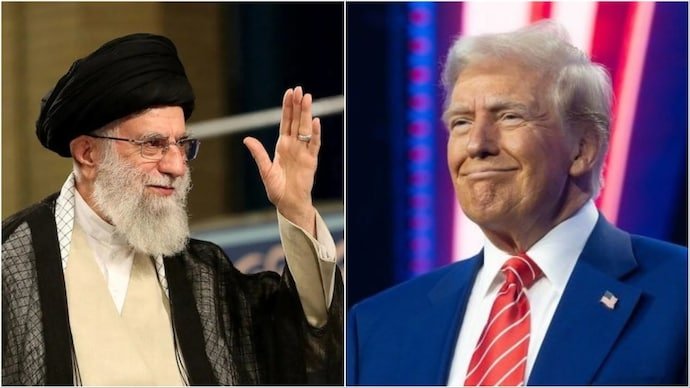
After what his critics describe as a show of force in Venezuela, Donald Trump appears eager to extend his pressure campaign. Having overseen a covert military operation that culminated in the capture of Venezuelan President Nicolás Maduro, Trump has now set his sights on two long-standing adversaries of the United States: Cuba and Iran.
The message emerging from Washington is stark and unmistakable. Resistance to American demands, Trump has made clear, could invite severe consequences. In public statements and strategic posturing, the former president has signalled that regime change remains firmly on the table for governments that challenge US influence.
There is a discernible pattern to this approach. Trump has openly predicted that Cuba is “failing” and has threatened to further choke off financial flows and oil supplies to Havana. Simultaneously, a formidable US naval presence — described by Trump himself as a “beautiful armada” — has been positioned near Iran, alongside tightened sanctions and expanded military deployments across West Asia.
These moves have prompted intense debate in global capitals. The central question is whether Cuba and Iran can realistically withstand the sustained pressure of a US administration that equates momentum with inevitability.
Cuba Under Renewed Pressure
Cuba finds itself once again in Washington’s crosshairs. With Venezuela no longer able to provide subsidised oil and financial support, Havana faces mounting economic stress. Trump’s return to hardline policies has seen Cuba reinstated on the US list of state sponsors of terrorism, remittances restricted, and Cuban military-linked entities targeted by sanctions.
Reports from Washington suggest that elements within Trump’s circle believe economic suffocation could destabilise the Cuban government within a short time frame. From this perspective, regime change is viewed not as a distant goal but as an achievable outcome.
Yet Cuba’s strategic importance has long unsettled American planners. Located just 90 miles from Florida, the island has historically been perceived as a geopolitical flashpoint. Today, china’s investments in Cuban infrastructure and Russia’s intelligence presence have revived US anxieties about rival powers operating in America’s immediate neighbourhood.
Beyond security concerns, Cuba represents a significant economic opportunity. Its nickel reserves, offshore oil potential, and tourism sector are all attractive to US businesses — benefits that many in Washington believe could be unlocked after political change.
The Nuclear Shadow Over Iran
If Cuba poses a regional challenge, Iran represents a far greater strategic risk. The Middle East has seen a visible surge in US military assets, including fighter aircraft, aircraft carriers, and advanced air defence systems. Trump has openly linked this buildup to domestic unrest in Iran, urging demonstrators to challenge state institutions.
Notably, Saudi Arabia — one of Washington’s closest regional partners — has drawn a clear red line, declaring it would not allow its airspace to be used for attacks on Iran. Tehran, for its part, has warned that any neighbouring country facilitating such actions would be treated as hostile.
Iran’s importance to global energy markets adds another layer of complexity. Roughly 20 to 30 percent of the world’s seaborne oil passes through the Strait of Hormuz, a chokepoint Iran effectively controls. With nearly 10 percent of global oil reserves, Iran’s stability is deeply intertwined with international energy security.
The Resistance Playbook
In a conventional military confrontation, Cuba would struggle to match US capabilities. However, Havana’s defence doctrine — known as the “War of All the People” — is designed around endurance rather than outright victory. Cuba maintains approximately 50,000 active troops and more than a million paramilitary reserves, supported by decentralised command structures, harbour mining strategies, and asymmetric naval tactics.
History reinforces this approach. The CIA-backed Bay of Pigs invasion in 1961 collapsed within days. Fidel Castro survived decades of economic blockades, assassination attempts, and geopolitical isolation, embedding resistance deeply into Cuba’s national identity.
Iran presents an even more formidable deterrent. It possesses hundreds of thousands of troops, an arsenal of over 3,000 ballistic missiles, and the capability to strike US bases across the Gulf. Swarms of drones and missiles could overwhelm regional defences, dramatically escalating the cost of intervention.
The Cost of Overreach
Trump has consistently argued that speed and decisiveness can reshape history — swift victories, rapid collapses, and televised triumphs. Yet history is also filled with powerful nations that underestimated the resilience of their adversaries.
While neither Cuba nor Iran could defeat the United States militarily, both possess the means to inflict sustained pain, delay operations, fracture alliances, and exhaust political will. In many cases, that has proven sufficient to blunt even the ambitions of superpowers.
Trump may aspire to total dominance, but the costs of pursuing regime change in both Cuba and Iran could be prohibitive. Body bags, volatile energy prices, and mounting international criticism remain powerful constraints.
As the world watches closely, the question is no longer whether Washington can apply pressure, but whether that pressure will usher in a new era of American dominance — or provoke the kind of resistance that has historically humbled even the strongest powers.
For breaking news and live news updates, like us on Facebook or follow us on Twitter and Instagram. Read more on Latest World on thefoxdaily.com.



COMMENTS 0