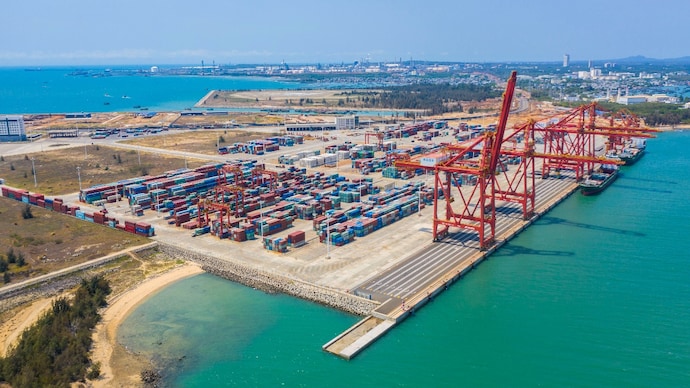
China has long been known for experimenting with unconventional approaches to technology and trade. At a time when several countries, including the United States, are tightening their markets through tariffs and trade restrictions, Beijing has taken a strikingly different path. This month, China launched island-wide special customs operations in Hainan, where around 74 percent of goods are now eligible for zero tariffs.
The move is effectively equivalent to turning an entire island into a duty-free colony with its own regulatory and legal framework. Strategically located in the South China Sea, Hainan is almost as large as Taiwan and approximately fifty times bigger than Singapore, underscoring the sheer scale of China’s initiative.
The decision to convert the entire island into a free-trade colony comes against the backdrop of tightening global trade conditions, particularly those initiated by former US President Donald Trump, which later prompted similar measures by the European Union.
According to Hong Kong-based Asia Times, China’s duty-free island could offer some of the most competitive deals amid the current surge in global trade restrictions, with reports suggesting that products such as iPhones could be priced nearly $100 cheaper.
Hainan was previously known mainly as a tourist destination famous for its beaches and resorts. However, Beijing’s decision to establish a free-trade zone (FTZ) has effectively separated the island economically from the rest of the country. With nearly 75 percent of imports entering the island duty-free, Hainan is now positioned to become one of the most attractive gateways to the Chinese market.
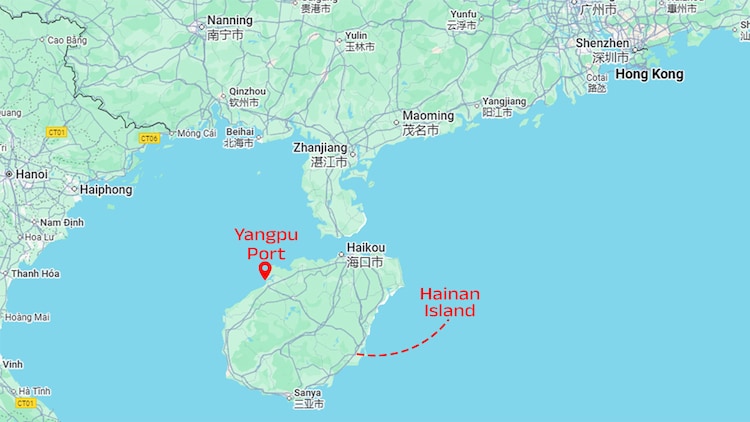
Asia Times reported that Hainan will operate as a single Free Trade Port (FTP) with its own customs, taxation, and regulatory systems, setting it apart from China’s other 22 free-trade zones. Most existing FTZs focus on upgrading specific local industries and are limited to designated urban areas.
The announcement was made last Thursday by China’s state news agency, which described Hainan as “the world’s largest FTP by area, allowing freer entry of overseas goods, expanded zero-tariff coverage, and more business-friendly measures.”
China watchers have described the development as “the biggest news from China this year,” highlighting its potential global impact.
International companies have already begun ramping up investments in Hainan. According to the Hong Kong-based Bastille Post, Siemens Energy established operations in Hainan and commenced construction of a gas turbine assembly plant and service centre in the Yangpu Economic Development Zone on the very first day of the new customs regime.
Over the past five years, Hainan has attracted more than $14.6 billion in foreign investment, growing at an average annual rate of 14.6 percent. During this period, more than 8,000 foreign-funded enterprises have set up operations across the island. Since 2020, investors from 176 countries and regions have entered the Hainan market.
Hainan’s Promotion Through Lower Income and Goods Taxes
Hainan’s new customs framework simplifies trade and significantly reduces costs. First, the share of tariff-exempt goods has increased sharply from 21 percent to approximately 74 percent across all tariff categories. This includes most industrial equipment and essential raw materials, potentially reducing importers’ tax burdens by nearly 20 percent, according to Asia Times.
Secondly, goods that derive at least 30 percent of their value from processing activities in Hainan are eligible for duty-free entry into mainland China under the 30 percent local value rule. This policy signals Beijing’s intention to encourage genuine manufacturing and supply-chain activity on the island, rather than simple transshipment.
Qualifying companies—those registered and operating substantively in Hainan—are subject to a corporate tax rate of just 15 percent, compared with 25 percent on the mainland and 16.5 percent in Hong Kong. According to Asia Times, eligible sectors range from food processing and modern agriculture to rural tourism, desalination, and even rocket launches.
Workers in Hainan are also among the biggest beneficiaries of the policy shift. Skilled professionals listed in Hainan’s official talent catalogue face a personal income tax rate of only 15 percent, significantly lower than the mainland’s top rate of 45 percent.
In addition, customs procedures will be streamlined, licensing requirements for mechanical and electrical products will be removed, administrative hurdles that typically slow production will be eliminated, and cross-border trade processes will be accelerated.
China’s Bold Strategy Amid Falling Foreign Direct Investment
The move boosted market confidence, with strong capital inflows pushing stock markets in China and Hong Kong higher on Monday.
Chinese Vice Premier He Lifeng urged local officials to leverage the Hainan Free Trade Port as a gateway for China’s new phase of global openness, according to Reuters. He made the remarks during a speech at the port.
He Lifeng, a senior economic policymaker and member of the Politburo, described the initiative as a “major strategic decision” taken by the Communist Party with a comprehensive view of both domestic and international conditions.
Beijing has positioned this move as a key objective for 2026, with expectations that it could help reverse the more than 10 percent decline in foreign direct investment recorded during the first three quarters of 2025.
Earlier this month, Chinese officials reiterated their commitment to maintaining a “proactive” fiscal policy in 2026, with analysts predicting a growth target of around 5 percent.
Against this backdrop, Hainan stands out as China’s most ambitious experiment in trade liberalisation in the twenty-first century.
For breaking news and live news updates, like us on Facebook or follow us on Twitter and Instagram. Read more on Latest World on thefoxdaily.com.






COMMENTS 0