- Why Ports Hold Unmatched Strategic Value
- Kingston: China’s Strategic Gateway to the Caribbean
- Manzanillo and Veracruz: China’s Deepening Footprint in Mexico
- Technology, Surveillance, and Dual-Use Concerns
- Chancay: China’s $3 Billion Mega-Port in Peru
- Washington’s Growing Dilemma
- A Hemisphere at a Strategic Crossroads
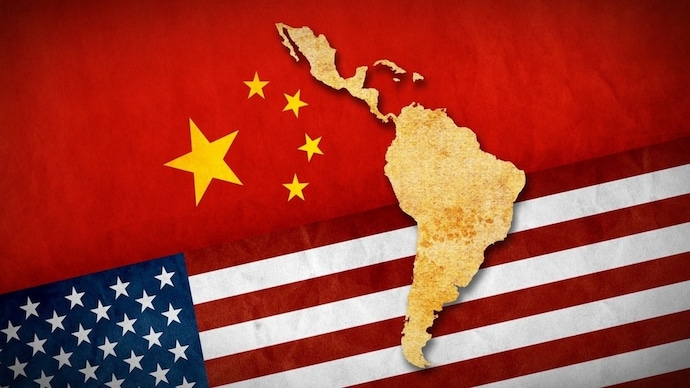
For generations, the United States viewed Latin America and the Caribbean as its uncontested sphere of influence. Rooted in doctrines such as the Monroe Doctrine and reinforced through decades of political, economic, and military partnerships, Washington positioned itself as the region’s dominant strategic actor. Yet over the last fifteen years, china has quietly transformed this balance-reshaping the maritime landscape through a meticulously crafted port strategy. Through long-term concession agreements, aggressive infrastructure investments, and state-backed corporate operations, Beijing has established a chain of maritime footholds stretching from Mexico to Argentina.
What once appeared as isolated infrastructure deals has evolved into a coordinated strategic play. China’s presence today includes port modernization projects, logistics partnerships, heavy-equipment installations, and technology-driven surveillance systems across the hemisphere. The cumulative effect is unmistakable: a slow but steady expansion of Chinese commercial, technological, and geopolitical influence across Washington’s traditional strategic backyard.
A comprehensive study by the Centre for Strategic and International Studies (CSIS) documented thirty-seven Chinese-linked port projects across Latin America and the Caribbean. Ten of these involve direct ownership or operational authority by Chinese firms-three located near zones of critical strategic value to the United States. The remaining projects encompass construction, modernization, port-expansion works, data infrastructure, crane systems, and surveillance technologies. While individually varied, together they point to a cohesive geopolitical strategy aimed at reshaping global maritime architecture and expanding Beijing’s leverage in the Western Hemisphere.
Why Ports Hold Unmatched Strategic Value
Ports are far more than docking points for vessels. They are command centers of the global economy-where goods, intelligence, and logistical patterns converge. Nearly 90% of the world’s trade moves through maritime routes. Every digital manifest, cargo scan, transshipment, and naval operation leaves a trace within port systems. The power to operate, influence, or even monitor these systems grants unprecedented visibility into global supply chains and security movements.
Latin America sits in a pivotal position within this global network. Its dual-ocean access, proximity to the Panama Canal, and export-heavy economies make its maritime corridors essential to global commerce. Brazilian soybeans, Peruvian copper, Venezuelan crude, and Mexican manufactured goods flow through ports that increasingly rely on Chinese technology or investment. Rising volumes of Chinese products destined for the us also move through these routes, tightening Beijing’s economic grip.
Influence over such infrastructure provides China with more than access to markets-it reshapes trade dependencies and enhances Beijing’s ability to redirect commercial flows in ways that strengthen its strategic interests while diluting longstanding US dominance.
Kingston: China’s Strategic Gateway to the Caribbean
One of the clearest illustrations of this shift is the port of Kingston in Jamaica. Operated by a Chinese state-owned enterprise, Kingston sits along a major maritime artery linking the Panama Canal with the eastern United States. It is among the busiest container ports in the Caribbean and lies less than 200 miles from the US Naval Station at Guantanamo Bay.
For Beijing, Kingston serves dual purposes. Commercially, it tightens China’s logistical control over Caribbean shipping lanes. Strategically, it grants visibility into naval movements and maritime patterns in a region Washington has traditionally monitored with great scrutiny. China’s influence is further reinforced through Jamaica’s broader economic ties, including Chinese-backed highway construction, long-term toll concessions, and multi-billion-dollar infrastructure programs.
Manzanillo and Veracruz: China’s Deepening Footprint in Mexico
CSIS highlights two key Mexican ports-Manzanillo on the Pacific coast and Veracruz on the Gulf of Mexico-as locations where Chinese involvement carries heightened risk. Both operate terminals managed by CK Hutchison, a Hong Kong–based company whose autonomy has diminished under Beijing’s increasing control.
Manzanillo, one of Mexico’s busiest ports, handles vast volumes of cargo destined for or originating from the United States. A disruption there could cost the US economy nearly $130 million per day. The port also hosts Mexico’s Pacific Naval Force, giving China indirect visibility into sensitive security operations.
Veracruz, though smaller in cargo volume, holds equal strategic importance. It has welcomed US naval ships-including the USS Gravely during missions in the Gulf of Mexico. When Chinese-linked companies supply cranes, scanning equipment, or surveillance systems to such facilities, the risk of embedded intelligence-gathering capabilities becomes significantly harder to ignore.
Technology, Surveillance, and Dual-Use Concerns
Beyond ownership and port operations, Chinese influence increasingly comes through technology. Firms such as Nuctech and ZPMC provide scanners, automated cranes, and logistical systems that handle sensitive trade data. Huawei and ZTE have installed surveillance networks-including hundreds of cameras at Panama’s Colón Container Terminal.
These systems collect extensive data on cargo flows, personnel movement, and logistics patterns. Even when operated locally, many rely on remote monitoring, software updates, and cloud-based analytics from China. Under Beijing’s 2017 National Intelligence Law-which obligates all Chinese companies to support government intelligence work-such technologies present undeniable dual-use risks.
Chancay: China’s $3 Billion Mega-Port in Peru
China’s most ambitious Latin American port project is the deep-water mega-port at Chancay, Peru. Backed primarily by COSCO Shipping, the project exceeds $3 billion in investment, making it one of the costliest Belt and Road Initiative undertakings in the region.
Built to handle the world’s largest container vessels, Chancay will create a direct maritime corridor between Asia and South America-bypassing the Panama Canal for certain routes. The port integrates 5G systems, automated cranes, and biometric security technologies, positioning it as a next-generation logistics hub.
For Peru, Chancay promises modernization, employment, and economic expansion. For China, it delivers a strategic anchor in the South American Pacific, offering long-term commercial leverage and, potentially, future military utility. Analysts frequently cite China’s foothold in Djibouti-which began as a commercial port before evolving into a military base-as a blueprint worth watching.
Washington’s Growing Dilemma
The United States now finds itself confronting an unexpected maritime chessboard. While China spent years extending loans, building infrastructure, and filling economic voids, Washington under-invested in regional development and failed to match Beijing’s pace or scale.
Now the US faces two urgent tasks. First, it must convince regional partners that American engagement will be durable, economically beneficial, and strategically reliable. Second, it must adapt to a reality where China holds direct or indirect leverage over ports vital to US trade routes, naval mobility, and National Security operations.
A Hemisphere at a Strategic Crossroads
China’s port expansion across Latin America is not a coincidental outcome of commercial ambition-it is a deliberate geopolitical strategy. These ports, technologies, and infrastructure assets form a network of influence that reshapes regional dynamics and strengthens Beijing’s global reach.
As China builds surveillance-linked systems, deep-water hubs, and dual-use infrastructure just beyond America’s borders, Washington must respond to a rapidly changing balance of power. The US-China rivalry is no longer unfolding in distant waters-it is now anchored in the ports, coastlines, and maritime corridors of the Western Hemisphere.
The competition is active, immediate, and shaping the future of hemispheric security for the decades ahead.
For breaking news and live news updates, like us on Facebook or follow us on Twitter and Instagram. Read more on Latest World on thefoxdaily.com.






COMMENTS 0