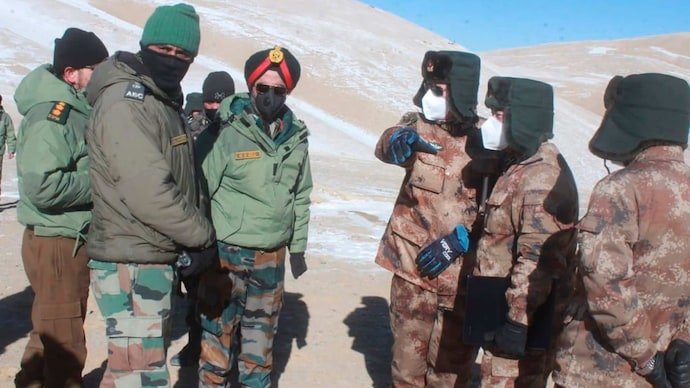
In a revelation that has reignited global debate on nuclear transparency and regional security, the United States has accused china of conducting a covert nuclear test in June 2020, at a time when tensions between New Delhi and Beijing were at their peak following the violent Galwan Valley clash. The disclosure was made public for the first time during a United Nations disarmament conference in Geneva.
US Under Secretary of State Thomas DiNanno raised the allegation on Friday, stating that Washington possesses intelligence indicating China carried out clandestine nuclear testing while the world remained focused on the COVID-19 pandemic. The accusation assumes greater significance as it coincides with former US President Donald Trump’s push to include China in future nuclear arms control treaties, particularly after the expiration of the latest US-Russia nuclear arms agreement on February 5.
According to DiNanno, China allegedly carried out a covert nuclear test on June 22, 2020—barely a week after Indian and Chinese troops engaged in brutal hand-to-hand combat in the Galwan Valley as part of the prolonged eastern Ladakh border standoff. The clash marked the deadliest confrontation between the two Asian giants in decades.
Twenty Indian soldiers lost their lives in the Galwan encounter, which involved melee combat as the use of firearms is prohibited under existing bilateral agreements. While international assessments suggest China may have suffered higher casualties, Beijing did not officially disclose its losses. The prolonged military standoff eventually concluded only in 2024, after diplomatic negotiations led to disengagement agreements.
US Reaction to the Alleged China Nuclear Test
The United States claims that the alleged nuclear test was most likely conducted at the Lop Nur nuclear testing site in China’s Xinjiang province—an area that shares proximity with India. DiNanno stated that China used a sophisticated technique known as “decoupling” to evade detection by international seismic monitoring systems.
For clarity, decoupling is a method designed to reduce seismic signals generated by underground nuclear explosions. By detonating a device within a large subterranean cavity, the resulting seismic waves are significantly weakened, making detection by global monitoring agencies far more difficult. This technique has long been associated with attempts to conceal nuclear tests.
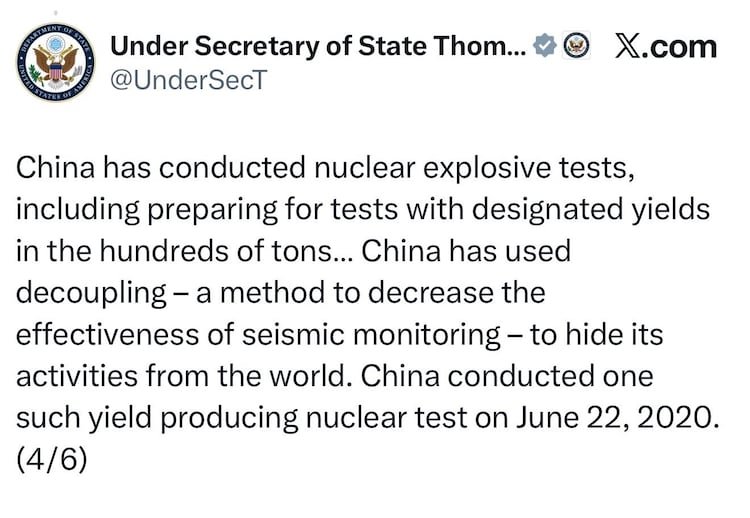
In a series of posts on X (formerly Twitter), DiNanno asserted that the US administration is aware of China’s preparations for nuclear tests with yields in the range of hundreds of tons. He claimed that decoupling was deliberately employed to hide such activities from the international community.
“China has tested nuclear explosives, including planning for tests with specified yields in the hundreds of tons. Decoupling has been employed to conceal these actions. On June 22, 2020, China carried out one such yield-producing nuclear test,” DiNanno stated.
The renewed focus on the 2020 events has also resonated in India’s domestic political discourse. Leader of the Opposition Rahul Gandhi has repeatedly accused the Modi government of mishandling the India-China border crisis, an issue that has featured prominently during recent parliamentary budget debates.
Why the Timing of the Alleged Test Matters
While the United States has not explicitly linked the alleged nuclear test to the Galwan clash, the timing is considered highly significant. In June 2020, military tensions along the Line of Actual Control (LAC) were escalating rapidly, with aggressive troop movements and heightened risk of a wider conflict between two nuclear-armed neighbors.
The possibility of a covert nuclear test during such a volatile period has raised concerns about regional stability and crisis escalation. Analysts argue that even the perception of such actions can undermine confidence-building mechanisms and increase mistrust between rival powers.
However, a section of geopolitical experts offers an alternative explanation. They point out that conducting a nuclear test requires months of preparation, suggesting that the alleged test may not have been directly triggered by the Galwan confrontation. Instead, they argue that the intense international focus on the border crisis may have provided strategic cover for China to carry out such an operation without drawing immediate attention.
China is a signatory to the Comprehensive Nuclear-Test-Ban Treaty (CTBT), which prohibits explosive nuclear testing. However, like the United States, Beijing has not ratified the treaty, leaving it outside the treaty’s legally binding framework despite its stated commitments.
Why the US Is Concerned About China’s Nuclear Expansion
China’s rapidly expanding nuclear arsenal has become a growing source of concern for Washington. Current estimates suggest that Beijing possesses approximately 600 nuclear warheads, with projections indicating further expansion in the coming years.
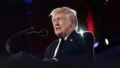
In November last year, Donald Trump authorized the US military to resume preparations for nuclear weapons testing, citing alleged testing activities by China and Russia. “China’s testing, Russia’s testing—but they don’t talk about it,” Trump said in an interview, underscoring his administration’s frustration.
Trump has since argued that China must be included in any future nuclear arms control agreement with Russia. The now-expired Strategic Arms Reduction Treaty (START) had played a key role in limiting US and Russian nuclear stockpiles and stabilizing the post–Cold War security environment. Its expiration has fueled fears of a renewed global arms race.
China, however, has pushed back strongly against the allegations. Shen Jian, China’s ambassador for nuclear disarmament, neither confirmed nor directly denied DiNanno’s claims but insisted that Beijing has always handled nuclear issues with extreme caution, according to Reuters.
“China notes that the US continues to exaggerate the so-called nuclear threat posed by China. China firmly opposes these false accusations,” Jian said, countering that Washington itself bears responsibility for escalating the global arms race.
Separately, the Comprehensive Nuclear-Test-Ban Treaty Organization (CTBTO), which operates a global monitoring system, stated that its instruments did not detect any nuclear test activity in China during the period in question.
As geopolitical rivalries intensify and arms control frameworks weaken, the allegations surrounding a possible 2020 Chinese nuclear test underscore the urgent need for transparency, dialogue, and renewed commitment to global non-proliferation norms.
For breaking news and live news updates, like us on Facebook or follow us on Twitter and Instagram. Read more on Latest World on thefoxdaily.com.


COMMENTS 0