- Trump’s Claim: War “Already Won”
- Hegseth’s Position: Aggressive Military Doctrine
- A Rare Public Rift in Wartime Leadership
- “Bomb First, Talk Later” Strategy Under Scrutiny
- Casualties and Costs Continue to Rise
- Negotiations Still Ongoing
- The “Gift” and Strategic Ambiguity
- A War Without a Clear Ending
- Conclusion
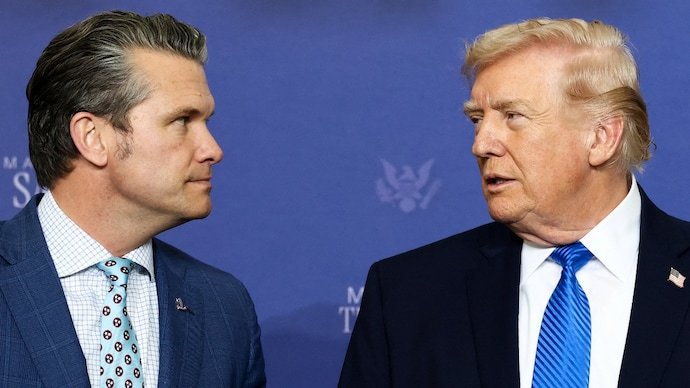
US President Donald Trump has once again stirred debate over the handling of the Iran war—this time by seemingly placing responsibility on his own Defense Secretary, Pete Hegseth, for resisting a peaceful resolution.
Speaking from the Oval Office, Trump suggested that Hegseth was among the few officials who were “quite disappointed” by the prospect of a ceasefire with Iran. The comment has raised eyebrows, hinting at a deeper divide within the administration at a critical moment in the conflict.
Trump’s Claim: War “Already Won”
Trump has repeatedly asserted that the United States has effectively “won” the war against Iran. However, his latest remarks appear to contradict that confidence.
By stating that key military leaders were not eager to end the conflict, Trump has introduced uncertainty into the narrative. If victory has already been achieved, why the hesitation within his own war team to pursue peace?
This contradiction highlights a growing disconnect between political messaging and military strategy.
Hegseth’s Position: Aggressive Military Doctrine
Pete Hegseth’s own statements reinforce the perception that the Pentagon favors a more aggressive approach.
He has openly praised a strategy centered on overwhelming force, emphasizing that the US military should “destroy the enemy as viciously as possible” before considering negotiations.
In one of his most striking remarks, Hegseth stated that the US would effectively “negotiate with bombs,” signaling a doctrine where military dominance precedes diplomacy.
| Leader | Position on War | Key Messaging |
|---|---|---|
| Donald Trump | Claims war is “won” | Open to ceasefire and negotiations |
| Pete Hegseth | Favors continued military pressure | “Negotiate with bombs” approach |
| Military Leadership | Focused on total victory | Reluctant to end operations early |
A Rare Public Rift in Wartime Leadership
It is unusual for a sitting US president to publicly distance himself from his defense secretary during an active conflict. Trump’s remarks suggest that not everyone in his administration agrees on the timing—or even the desirability—of ending the war.
He also indicated that senior officials, including Joint Chiefs Chair Gen Dan Caine, were more focused on achieving complete military victory rather than negotiating a settlement.
This divergence in views raises important questions about decision-making within the administration and whether a unified strategy exists.
“Bomb First, Talk Later” Strategy Under Scrutiny
The Pentagon’s apparent approach—prioritizing military action before diplomacy—has come under increasing scrutiny. While it may deliver short-term battlefield gains, it risks prolonging the conflict and complicating peace efforts.
Hegseth’s strong endorsement of this strategy has added to concerns that the US may be sending mixed signals: publicly pursuing peace while privately preparing for escalation.
Casualties and Costs Continue to Rise
Despite claims of victory, the human and strategic costs of the war remain significant. Reports indicate that 13 US service members have been killed, while nearly 290 have been injured since the conflict began.
These figures underscore the reality that the war is far from over, regardless of political messaging.
Negotiations Still Ongoing
Even as internal disagreements surface, diplomatic efforts continue. Trump has confirmed that negotiations with Iran are underway, though details remain limited.
Key figures involved in the talks include Vice President JD Vance, Secretary of State Marco Rubio, Jared Kushner, and envoy Steve Witkoff. Meanwhile, Pakistan has offered to host discussions, signaling ongoing international efforts to broker peace.
The “Gift” and Strategic Ambiguity
Adding another layer of complexity, Trump hinted at a significant concession from Iran related to oil and gas—possibly involving the Strait of Hormuz. However, he declined to provide specifics, leaving analysts uncertain about its implications.
This ambiguity further complicates the situation, as it suggests progress on one front while tensions remain unresolved on others.
| Key Issue | Current Status |
|---|---|
| Ceasefire | Not finalized |
| Military Operations | Ongoing |
| Diplomatic Talks | In progress |
| Internal Consensus | Divided |
A War Without a Clear Ending
The situation reflects a broader challenge: ending a war is often more complicated than winning it. While Trump projects confidence, the lack of alignment within his administration suggests that the path forward is far from settled.
Conflicting narratives—victory versus continued combat, diplomacy versus escalation—are shaping a war that refuses to conclude cleanly.
Conclusion
Trump’s decision to single out Pete Hegseth has exposed potential fractures within the US leadership over the Iran war. While the president signals readiness for peace, key figures in his administration appear committed to pushing the conflict further.
As negotiations continue and military operations persist, the central question remains unresolved: Is the war truly nearing its end, or is it entering a new and more complex phase?
For breaking news and live news updates, like us on Facebook or follow us on Twitter and Instagram. Read more on Latest World on thefoxdaily.com.





COMMENTS 0