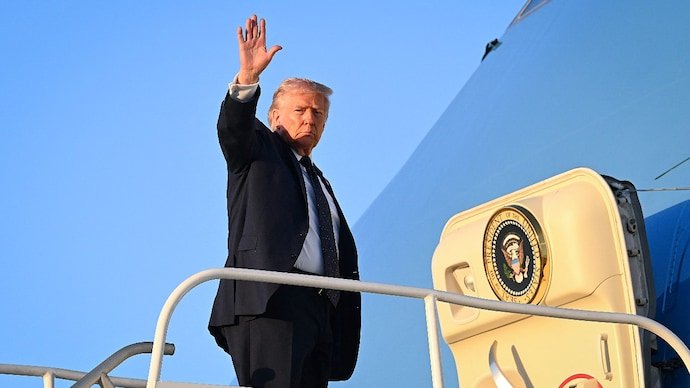
In a striking and controversial statement, US President Donald Trump revealed that Iran had allegedly proposed appointing him as the Supreme Leader of the Islamic Republic — an offer he claims to have firmly rejected. The remarks come during a period of heightened geopolitical tension and ongoing conflict in the Middle East.
Speaking at a high-profile Republican fundraiser, Trump stated, “I said, ‘No, thank you,’ when Iran proposed to make me Supreme Leader.” His comments have sparked widespread debate globally, especially as Iranian officials strongly deny that any such discussions or negotiations have taken place.
Despite Tehran’s rejection of these claims, Trump reiterated on Thursday that communication channels between the United States and Iran remain open. According to him, discussions aimed at resolving the nearly month-long conflict are actively progressing behind the scenes.
During the annual NRCC (National Republican Congressional Committee) dinner, Trump elaborated on his remarks with a mix of humor and assertiveness. He stated, “There’s never been a head of a country that wanted that job less than being the head of Iran. They said, ‘We want to make you Supreme Leader.’ I told them, ‘Thank you, but no. I’m not interested.'”
Leadership Uncertainty in Iran Raises Global Concerns
Trump’s statements come at a time when Iran is reportedly facing internal instability following a series of attacks that resulted in the deaths of several high-ranking officials. The situation has intensified speculation about leadership continuity within the country.
After the assassination of Ayatollah Ali Khamenei last month, his son Mojtaba Khamenei was reportedly elevated to the position of Supreme Leader. However, since the escalation of the conflict, Mojtaba has not made any public appearances, fueling rumors about his health and safety. Some reports suggest he may have been injured during recent attacks, though no official confirmation has been provided.
This leadership vacuum has added another layer of complexity to the already volatile situation in the Middle East, raising concerns among global observers and policymakers.
Trump Declares Victory and Highlights Ongoing Negotiations
Trump also took the opportunity to emphasize what he described as a decisive victory for the United States. Referring to the recent military actions against Iran, he labeled the operation as a “military decimation” and claimed that the US is dominating the situation.
He further asserted that Iran is eager to reach a ceasefire agreement but is hesitant to openly admit it due to internal political pressures. According to Trump, Iranian leadership fears backlash from both domestic factions and international scrutiny.
“We are winning in ways nobody has ever seen before,” Trump said. “They want to negotiate, they want a deal, but they’re afraid to say it publicly. They fear consequences not just from us, but from their own people.”
Ceasefire Proposal and Strategic Demands
As tensions continue to impact regional stability and Global energy markets, reports suggest that Washington has presented Tehran with a detailed ceasefire proposal through diplomatic intermediaries, including Pakistan.
The proposal reportedly outlines several key conditions aimed at restoring stability and limiting Iran’s influence in the region.
| Ceasefire Proposal Points | Description |
|---|---|
| Reopening Strait of Hormuz | Ensure uninterrupted global oil supply by restoring access to the critical maritime route. |
| End Support for Proxy Groups | Cease backing organizations like Hezbollah in Lebanon and other regional militias. |
| Terminate Nuclear Program | Completely halt Iran’s nuclear development activities under international supervision. |
| Regional De-escalation | Reduce military presence and aggressive actions in neighboring regions. |
| Diplomatic Engagement | Commit to structured, transparent negotiations with global powers. |
However, Iranian authorities have categorically rejected both the ceasefire proposal and claims of any ongoing negotiations. Officials in Tehran maintain that they are not engaged in talks with the United States under current conditions.
Iran Responds Strongly to Trump’s Claims
Iran’s joint military command spokesperson, Ebrahim Zolfaqari, dismissed Trump’s statements during a televised address. Questioning the credibility of the claims, he remarked, “Has your internal conflict reached a point where you are negotiating with yourself?”
He further added, “As we have always made clear, we will never enter into an agreement with you — not now, not ever.”
In response to reports of a US-backed ceasefire plan, Iran’s semi-official Fars News Agency indicated that Tehran has instead developed its own five-point counter-proposal. The report emphasized that any resolution to the conflict would be based strictly on Iran’s terms and strategic interests.
Global Implications and Future Outlook
The ongoing standoff between the United States and Iran continues to have far-reaching implications for global politics, energy markets, and regional security. With both sides presenting conflicting narratives and refusing to concede publicly, the path toward resolution remains uncertain.
While Trump projects confidence in the US position and claims progress in negotiations, Iran’s firm denials suggest a widening gap between perception and reality. As diplomatic tensions persist, the international community closely watches for any signs of de-escalation or further escalation in the coming weeks.
For breaking news and live news updates, like us on Facebook or follow us on Twitter and Instagram. Read more on Latest World on thefoxdaily.com.





COMMENTS 0