- From Energy to Eerie Quiet: A City Transforms
- Border Checks and Heightened Vigilance
- Empty Roads and Quiet Landmarks
- Missile Alerts Without Panic
- Strict Monitoring and Media Restrictions
- Rising Incidents and Visible Impact
- Daily Life Continues—With Caution
- Economic Concerns Begin to Surface
- The Challenge of Reporting in a Controlled Environment
- A City Between Stability and Uncertainty
As tensions between the United States, Israel, and Iran intensify across West Asia, even cities known for stability are beginning to feel the strain. Dubai—often regarded as one of the safest and most vibrant global hubs—is now experiencing a subtle but noticeable shift. Beneath its polished exterior, an uneasy calm is taking hold.
Over the course of a week on the ground, India Today correspondent Ashutosh Mishra documented how everyday life in Dubai continues, but with an undercurrent of uncertainty that is difficult to ignore.
From Energy to Eerie Quiet: A City Transforms
Known for its constant movement and bustling lifestyle, Dubai has always thrived on energy—both literal and social. However, as the conflict expanded following US and Israeli strikes on Iran, the region entered a volatile phase. Iran’s retaliatory actions, including targeting Gulf nations hosting US military bases, began to ripple across neighboring countries.
The effects were not limited to military developments. Economic concerns, disrupted airspace, and growing uncertainty started to reshape daily life across the United Arab Emirates, including Dubai, Sharjah, and Abu Dhabi.
Reaching Dubai itself became a challenge. With direct flights disrupted, travel routes had to be altered. The journey involved flying from Delhi to Muscat in Oman, followed by a long road trip of over 400 kilometers into the UAE.
Even at immigration in Muscat, the atmosphere reflected heightened caution. With many residents leaving the Gulf amid rising tensions, the arrival of a journalist raised questions and scrutiny.
Border Checks and Heightened Vigilance
At the Oman-UAE border in Hatta, the contrast was evident. While local citizens crossed with relative ease, migrant travelers faced lengthy checks. Reports of an Indian journalist being denied entry just days earlier added to the tension.
After hours of travel and verification, entry was granted, and the journey continued toward Dubai. Arrival near Downtown Dubai in the early hours revealed a city unusually still—something initially attributed to the time of night, but later understood as part of a larger shift.
Empty Roads and Quiet Landmarks
The next morning painted a clearer picture. Roads that are typically packed with vehicles appeared unusually empty. The drive to the Burj Khalifa—normally a crowded and lively area—took just minutes due to the absence of traffic.
Even iconic locations like the Dubai Mall showed signs of reduced activity. Visitors were sparse, and many of those present were tourists rather than residents. The usual vibrancy had been replaced with a subdued, watchful calm.
Attempts to report from high-profile locations were met with restrictions. Security personnel intervened, limiting on-ground reporting despite valid permissions, reflecting tighter control over public communication during sensitive times.
Missile Alerts Without Panic
Soon after, mobile alerts warning of potential missile or drone threats began appearing. Unlike conflict zones such as Israel or Ukraine, there were no visible air raid sirens or designated public bunkers in Dubai.
Interestingly, public reactions remained composed. There was no visible panic, but conversations with residents revealed a different reality—concern existed, but it was often expressed cautiously and off camera.
Many individuals were hesitant to speak openly, citing fear of repercussions in a country where media and public expression are tightly regulated.
Strict Monitoring and Media Restrictions
By the afternoon, reports began circulating about strict action against those sharing misleading content or sensitive visuals online. Authorities appeared determined to maintain order and control the narrative.
During a live broadcast, law enforcement officials intervened, temporarily halting reporting activities. Devices were checked, credentials verified, and permissions scrutinized. After nearly two hours of inspection, the reporting team was allowed to continue.
The incident highlighted the challenges of ground reporting in regions where security concerns intersect with strict information control.
Rising Incidents and Visible Impact
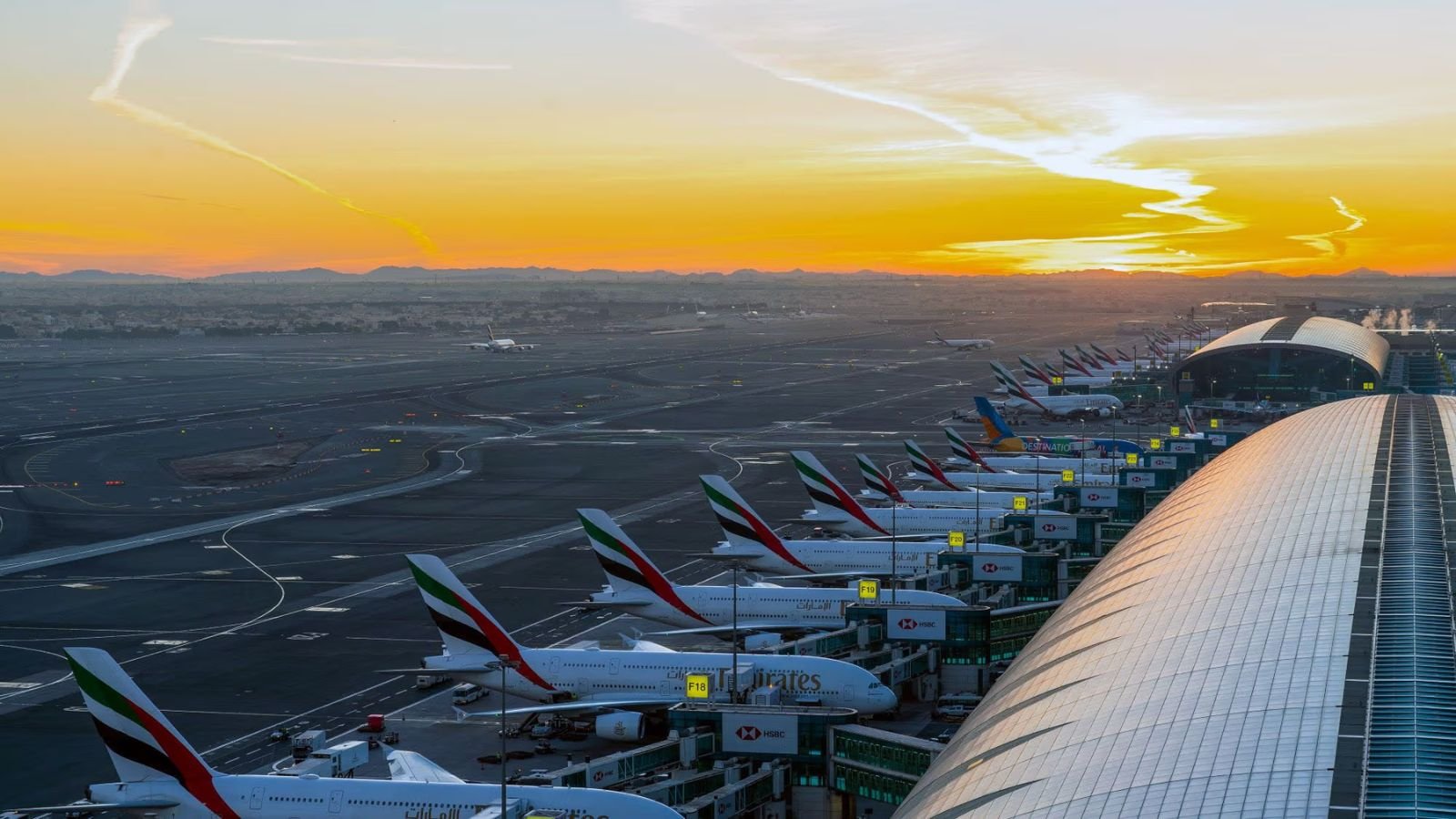
As days passed, reports of drone and missile activity near critical locations such as Dubai International Airport and areas in Abu Dhabi began to surface. While not always directly visible, the impact was felt across the city.
Hotels began to see declining occupancy, restaurants experienced reduced footfall, and popular public spaces remained quieter than usual. Security presence increased significantly, particularly near strategic locations.
Filming near sensitive areas such as airports or exhibition centers became nearly impossible without immediate intervention from authorities.
Daily Life Continues—With Caution
Despite the tension, life in parts of Dubai continued. Areas like Bur Dubai still saw gatherings, especially after iftar, where people came together to share meals and conversations.
However, the broader picture told a different story. Tourism declined, markets slowed, and overall movement across the city reduced noticeably.
Social Media campaigns promoting safety and responsible behavior gained traction, even as restrictions on sharing real-time ground visuals tightened.
Economic Concerns Begin to Surface
Business owners expressed growing concerns about long-term impacts. The UAE’s reliance on imports means that disruptions in maritime routes—particularly around the Strait of Hormuz—could lead to supply chain issues.
While authorities reassured the public about adequate supplies, discussions around shortages and the need to avoid panic buying began circulating widely.
The conflict also affected critical infrastructure, including aviation and oil operations. Reports confirmed casualties among UAE defense personnel during drone interception missions, underlining the seriousness of the situation.
| Aspect | Before Conflict | During Conflict |
|---|---|---|
| Traffic & Mobility | Heavy, fast-paced | Reduced, quieter roads |
| Tourism & Crowds | High footfall at malls and landmarks | Noticeably lower activity |
| Security Presence | Routine checks | Increased monitoring and restrictions |
| Public Sentiment | Confident and relaxed | Calm but cautious and uncertain |
| Media Freedom | Moderately controlled | Highly restricted during conflict |
The Challenge of Reporting in a Controlled Environment
Reporting from Gulf countries during times of conflict presents unique challenges. Restrictions on filming, limitations on public statements, and strict monitoring of information flow make it difficult to present a complete picture.
Despite the presence of international media, on-ground reporting remained limited. Over the course of seven days, efforts were made to travel across cities, engage with residents, and document the evolving situation as accurately as possible.
A City Between Stability and Uncertainty
After a week of covering the developments, the return journey followed the same route through Oman back to India. What lingered was not just the memory of a conflict, but the transformation of a city.
Dubai remains operational, resilient, and outwardly calm. Yet beneath that calm lies a growing awareness that stability can no longer be taken for granted.
In a place known for its noise, speed, and ambition, the silence now speaks volumes.
For breaking news and live news updates, like us on Facebook or follow us on Twitter and Instagram. Read more on Latest World on thefoxdaily.com.






COMMENTS 0