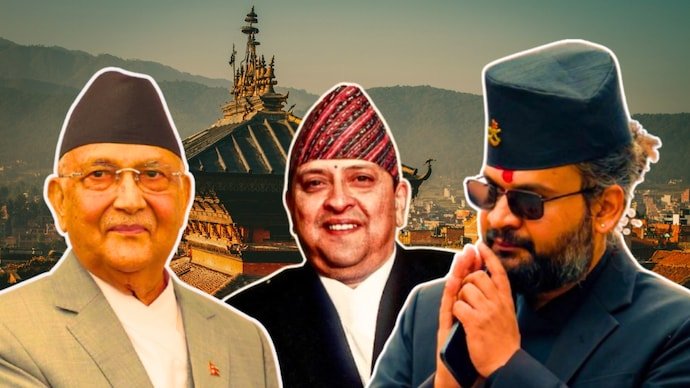
- Pro-Monarchy Supporters Welcome Gyanendra Amid Political Uncertainty
- Background: How Nepal’s September 2025 Gen Z Protests Toppled the Oli Government
- Nepal Election 2026: Key Facts and Electoral Data
- Balen Shah vs KP Sharma Oli: A Generational Showdown in Jhapa
- The Role of Nepal’s Monarchy in the 2026 Election Debate
- What Did Former King Gyanendra Say?
- What Is at Stake in Nepal’s March 5 Election?
Nepal is heading toward one of the most consequential elections in its modern political history. After the dramatic Gen Z-led protests of September 2025 that forced Prime Minister KP Sharma Oli out of office, the Himalayan republic will vote on March 5, 2026. At the center of this high-stakes contest is a generational battle — between entrenched political heavyweights and a resurgent youth movement led by Kathmandu Mayor Balen Shah.
Adding further intrigue to Nepal’s 2026 general election is the unexpected re-emergence of former Hindu monarch Gyanendra Shah, whose recent public address has reignited debate over the monarchy’s place in Nepal’s fragile democracy.
Pro-Monarchy Supporters Welcome Gyanendra Amid Political Uncertainty
On February 14, Valentine’s Day, thousands gathered outside Tribhuvan International Airport in Kathmandu — not to greet loved ones, but to welcome Nepal’s former king, Gyanendra Shah. Despite prohibitory orders, the turnout signaled renewed pro-monarchy mobilization in a country still grappling with the political aftershocks of last year’s unrest.
Just days later, on February 18, the 78-year-old former monarch released an eight-minute video message. Invoking Lord Pashupatinath on the eve of Nepal’s Democracy Day, he questioned whether elections should proceed before resolving the nation’s deepening crises. He described Nepal as being caught in an “unusual whirlwind of distress” and suggested that pressing national problems be addressed before heading to the polls.
His remarks have sparked intense political debate — are they a moral appeal for stability or a strategic political signal amid a fractured electoral field?
Background: How Nepal’s September 2025 Gen Z Protests Toppled the Oli Government
The roots of Nepal’s 2026 election lie in the dramatic events of September 2025. On September 4, the Oli government imposed a ban on 26 social media platforms, citing concerns over misinformation and unregistered digital services. The move immediately triggered outrage among Nepal’s youth, many of whom relied on digital platforms for activism, employment, and free expression.
What began as opposition to the ban quickly evolved into a broader anti-government movement fueled by anger over corruption, nepotism, unemployment, and economic stagnation. Viral Social Media reels exposed the lavish lifestyles of politicians’ families abroad while ordinary citizens struggled at home.
By September 8, protests in Kathmandu and other major cities had intensified. Demonstrators breached barricades near Parliament, clashed with security forces, and faced tear gas and live ammunition. Reports indicated that over 70 people were killed and more than 300 injured. Curfews were imposed, and the Army was deployed to secure critical infrastructure, including the airport.
Although the government lifted the social media ban under mounting pressure, protests continued. Demonstrators set fire to parts of the Supreme Court and Parliament complex and physically confronted several political figures. The unrest subsided only after KP Sharma Oli resigned.
On September 14, an interim administration led by Prime Minister Sila Khaki assumed power, promising accountability, reform, and a smooth transition to elections. A commission was established to investigate alleged abuses during the crackdown, though Oli questioned its legitimacy and declined to appear.
Nepal Election 2026: Key Facts and Electoral Data
| Category | Details |
|---|---|
| Election Date | March 5, 2026 |
| Total Registered Voters | Approximately 1.9 crore |
| First-Time Voters | Over 8 lakh |
| Parliamentary Constituencies | 165 |
| Total Candidates | Approximately 3,500 |
| Seats Reserved for Women | 33% |
| Interim Prime Minister | Sila Khaki |
The Election Commission has stated that polls are being conducted under “special conditions,” reflecting the extraordinary political climate following last year’s upheaval.
Balen Shah vs KP Sharma Oli: A Generational Showdown in Jhapa
The most closely watched contest in Nepal’s 2026 election is unfolding in Jhapa 5. Balen Shah, a 35-year-old former rapper turned mayor of Kathmandu, has resigned from his mayoral post to challenge former Prime Minister KP Sharma Oli directly.
Shah has emerged as the face of Nepal’s youth-led reform movement. At rallies, he energizes supporters by ringing a ghanti (bell) and speaking passionately about clean governance, institutional accountability, and dismantling entrenched political cartels. His campaign frames the election as a decisive break from the old guard.
Oli, leader of the Communist Party of Nepal (Unified Marxist–Leninist), enters the race weakened. Unlike previous elections where he campaigned nationwide, the four-time prime minister is largely confined to his home turf in Jhapa due to the political fallout from the 2025 protests.
Meanwhile, the Nepali congress remains divided between reformist leader Gagan Thapa and veteran Sher Bahadur Deuba, reflecting broader fragmentation within traditional political forces.
The Role of Nepal’s Monarchy in the 2026 Election Debate
Nepal was officially a Hindu kingdom under the Shah dynasty until 2008. Following the 2006 People’s Movement and a decade-long Maoist insurgency, the monarchy was abolished and Nepal became a secular federal democratic republic.
Gyanendra Shah, who became king after the 2001 royal palace massacre, was the last monarch. Although the monarchy was formally dissolved, pockets of support remain, especially during periods of political instability.
Monarchist groups such as the Rastriya Prajatantra Party and activist networks led by figures like Durga Prasai continue to advocate for restoration, portraying the crown as a symbol of unity and stability amid revolving-door governments and corruption scandals.
During the September 2025 protests, calls for reinstating the monarchy resurfaced among some demonstrators who saw the former king as a stabilizing force. His recent public intervention has again brought the monarchy question into mainstream electoral discourse.
What Did Former King Gyanendra Say?
In his February 18 address, Gyanendra paid tribute to King Tribhuvan and democratic martyrs before turning to the present political crisis. He acknowledged that periodic elections are natural in a democratic system but argued that many citizens feel Nepal’s urgent problems should be resolved first.
He called for forging a broad national consensus before proceeding to the polls. Though he did not explicitly reject elections, his “consensus first, elections next” formulation has triggered constitutional debate, especially since Nepal’s 2015 Constitution clearly outlines electoral timelines.
Critics argue that prioritizing outcomes over established procedures risks undermining democratic legitimacy. In a constitutional democracy, process is not merely procedural — it safeguards sovereignty and institutional continuity.
What Is at Stake in Nepal’s March 5 Election?
Nepal’s 2026 general election is more than a routine democratic exercise. It is a referendum on generational change, governance reform, and the durability of republican institutions.
With a youthful electorate, fractured traditional parties, and a resurgent pro-monarchy narrative, the ballot will test three critical questions:
- Can KP Sharma Oli retain his political relevance in Jhapa?
- Will Balen Shah successfully convert youth anger into electoral victory?
- Does Gyanendra Shah’s intervention meaningfully shift public sentiment?
As Nepal prepares to vote on March 5, the outcome could redefine its political trajectory for years to come. Whether the country doubles down on its republican framework or sees a renewed push for systemic restructuring, the 2026 election marks a pivotal moment in Nepal’s democratic journey.
For breaking news and live news updates, like us on Facebook or follow us on Twitter and Instagram. Read more on Latest World on thefoxdaily.com.

COMMENTS 0