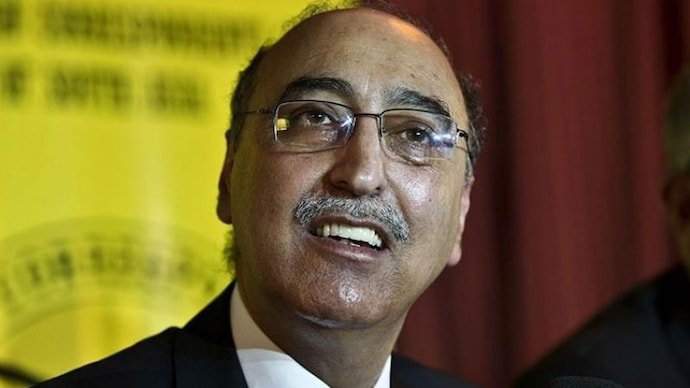
An unexpected and controversial statement by former Pakistani diplomat Abdul Basit has sparked widespread concern and debate across international circles. His remarks, which referenced potential military action involving India, have drawn strong reactions at a time when geopolitical tensions in the region are already heightened.
Basit, who previously served as Pakistan’s High Commissioner to India, made the statement during a discussion centered around a hypothetical conflict scenario. Despite the speculative nature of the conversation, the explicit mention of targeting major Indian cities like New Delhi and Mumbai has raised alarms among observers and policy analysts.
During the conversation, Basit stated, “If America attacks Pakistan, we have to attack India, Mumbai, New Delhi, without a second thought.” Although he framed this as a theoretical “worst-case scenario,” the direct reference to India’s key cities quickly gained traction online and drew criticism from multiple quarters.
The former envoy further elaborated on his viewpoint, suggesting that Pakistan might feel compelled to respond aggressively if it perceives an existential threat. “Pakistan will have no choice but to attack India wherever it wants if someone sees us with a bad eye,” he said, while also acknowledging that such a situation is unlikely and undesirable for both nations.
Despite describing the scenario as improbable, Basit’s repeated emphasis on potential retaliation involving India has intensified scrutiny of his comments. Critics argue that even hypothetical statements of this nature can have serious implications, particularly in a region marked by historical tensions and nuclear capabilities.
The remarks quickly went viral on Social Media platforms, amplifying their reach and impact. The explicit naming of New Delhi and Mumbai—two of India’s most prominent cities—has been a focal point of concern, prompting discussions about diplomatic responsibility and the influence of former officials on public discourse.
Abdul Basit is no stranger to India. He served as Pakistan’s top diplomat in New Delhi from 2014 to 2017, a period characterized by complex and often strained relations between the two countries. His tenure involved direct engagement with Indian leadership and policymakers, which adds weight to his recent statements in the eyes of many analysts.
Given his diplomatic background and firsthand experience in India, Basit’s remarks are being interpreted not merely as casual speculation but as commentary informed by his past role. This has further fueled debate about the appropriateness of such statements from former high-ranking officials.
The controversy comes against the backdrop of broader regional instability. Pakistan’s relations with neighboring Afghanistan have also been under strain, with allegations of cross-border military actions adding to the tension.
Afghan officials have accused Pakistani forces of carrying out Airstrikes in regions such as Paktika, Kandahar, and even areas near Kabul. According to Zabihullah Mujahid, a spokesperson for the Taliban, some of these strikes reportedly targeted civilian infrastructure, including a rehabilitation center.
While reports indicate significant damage and casualties, independent verification of these claims remains limited. Nevertheless, such developments contribute to an already fragile security environment in the region.
What began as a hypothetical discussion has now evolved into a broader conversation about regional security, diplomatic rhetoric, and the potential consequences of inflammatory statements. Experts emphasize that even speculative remarks can influence public perception and escalate tensions, especially in politically sensitive contexts.
At a time when South Asia remains a focal point of global strategic interest, the language used by current and former officials carries considerable weight. Statements like Basit’s, even when framed as unlikely scenarios, can inadvertently add to existing anxieties.
So far, there has been no official response from Indian authorities regarding the remarks. However, the statement has already generated significant discussion across media platforms and among geopolitical analysts.
| Key Aspect | Details |
|---|---|
| Person Involved | Abdul Basit (Former Pakistan High Commissioner to India) |
| Statement Context | Hypothetical discussion on response to a US attack on Pakistan |
| Controversial Claim | Suggested potential targeting of New Delhi and Mumbai |
| Time Period of Service | 2014–2017 in New Delhi |
| Public Reaction | Viral on social media, sparked debate and criticism |
| Regional Context | Rising tensions involving Pakistan, India, and Afghanistan |
| Afghanistan Situation | Alleged Pakistani airstrikes in Paktika, Kandahar, and Kabul |
| Official Indian Response | No formal statement released yet |
In conclusion, Abdul Basit’s remarks have highlighted the delicate nature of geopolitical discourse in South Asia. Even when framed as hypothetical, statements involving military action and nuclear-armed nations can have far-reaching implications. As tensions persist in the region, such comments underscore the importance of responsible communication, particularly from individuals with diplomatic experience.
For breaking news and live news updates, like us on Facebook or follow us on Twitter and Instagram. Read more on Latest World on thefoxdaily.com.





COMMENTS 0