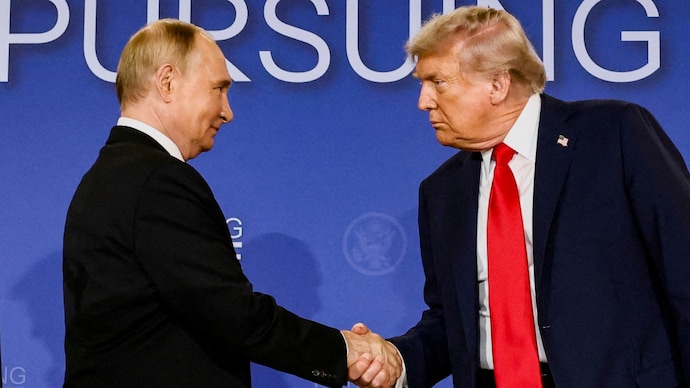
Moscow: The Kremlin has reaffirmed that President Vladimir putin has not ordered any nuclear weapons testing and remains committed to the long-standing global moratorium. However, Moscow cautioned that if the United States resumes nuclear testing, Russia will be forced to respond in kind to maintain strategic parity.
The statement followed U.S. President Donald Trump’s directive to the Pentagon to restart nuclear weapons testing “on an equal basis” with other nations. This announcement has reignited tensions between the world’s top nuclear powers and raised global concerns over the stability of nuclear arms control agreements.
Russia’s Firm Commitment to the Nuclear Test Ban
Kremlin spokesperson Dmitry Peskov reiterated Moscow’s commitment to the nuclear test moratorium while emphasizing the importance of maintaining strategic balance and global security. Peskov warned that Russia would be “compelled to respond” if Washington breaches the three-decade-long ban.
“Russia will maintain its moratorium on nuclear weapons testing,” Peskov stated. “But if the United States breaks this long-standing international pause, we will be forced to act to preserve strategic parity with other nuclear powers.”
He further added, “If Washington resumes nuclear testing, Russia will have no choice but to follow suit. The preservation of nuclear parity is the cornerstone of today’s global security architecture.”
Trump’s Directive and U.S. Nuclear Ambitions
President Trump, in a post on Truth Social, declared that the U.S. holds “more nuclear weapons than any other country.” He highlighted that during his first term, a massive refurbishment and modernization of the existing arsenal had been completed.
“I hated having to do it because of the destructive power involved, but I had no choice,” Trump wrote. “Russia is second, and china is third, but it will catch up in five years.”
Moscow Awaits U.S. Response on Nuclear Freeze – Lavrov
Russian Foreign Minister Sergei Lavrov stated in an interview with RIA Novosti that Moscow is still waiting for Washington’s response to President Putin’s proposal to extend the quantitative freeze on strategic nuclear weapons after the New START Treaty expires in February next year.
“We are informed that the issue is being considered through diplomatic channels,” Lavrov said. “We are not trying to persuade anyone, but we believe this proposal benefits both sides and the entire international community. We are ready for any outcome but hope for a positive resolution.”
New START Treaty and Its Future
The New Strategic Arms Reduction Treaty (New START), signed in 2010 and implemented in 2011, obliges both the United States and Russia to limit their deployed strategic warheads to 1,550 and strategic launchers (missiles and bombers) to 700. The treaty was extended in 2018 for five years, but after the Ukraine conflict and ensuing sanctions, verification activities were suspended.
Later, both nations agreed to voluntarily adhere to the treaty’s limits for an additional year. In September 2024, Putin proposed extending the voluntary moratorium again through February 2026.
| Aspect | United States | Russia |
|---|---|---|
| Last Nuclear Test | 1992 | 1990 |
| Strategic Warhead Limit (New START) | 1,550 | 1,550 |
| Strategic Launchers Limit | 700 | 700 |
| Verification Status | Suspended post-Ukraine war | Suspended post-Ukraine war |
Russia’s Recent Weapons Testing and Strategic Capabilities
Despite adhering to the nuclear testing moratorium, Russia has continued to advance its strategic defense technology. In recent months, it has successfully tested the Burevestnik nuclear-powered cruise missile and the Poseidon underwater drone-both boasting an “almost unlimited range.”
These developments underscore Moscow’s commitment to preserving its deterrent capabilities even without active nuclear testing. The Kremlin insists that any U.S. deviation from the global testing ban will force it to act decisively to ensure national and international security balance.
Global Security Implications
Experts warn that renewed nuclear testing by any major power could undermine decades of arms control progress, destabilize global security, and trigger an international arms race. The world now watches closely as Washington and Moscow navigate this high-stakes nuclear standoff.
For breaking news and live news updates, like us on Facebook or follow us on Twitter and Instagram. Read more on Latest World on thefoxdaily.com.






COMMENTS 0