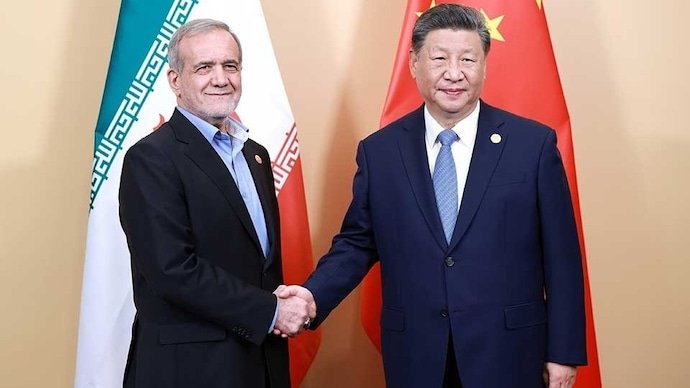
At first glance, China may appear to be standing on the sidelines as tensions escalate between Iran, the United States, and Israel. However, behind the scenes, Beijing remains one of the most important players in the broader geopolitical landscape surrounding the conflict. Iran is central to China’s energy security, regional influence in the Middle East, and even its long-term strategic calculations regarding Taiwan.
Last Monday, Iran’s Foreign Minister Abbas Araghchi stated in an interview with NBC News that both China and Russia were supporting Tehran “politically and otherwise.” While Araghchi did not reveal exactly how the two global powers are assisting Iran during the ongoing conflict, security analysts believe that China may be sharing intelligence or real-time strategic information that could help Tehran respond to attacks.
Although there has been no official confirmation that China is providing intelligence or military support, experts agree that Beijing cannot afford to remain a passive observer. With billions of dollars tied to Iranian energy supplies and infrastructure investments, China has far too much at stake to ignore the unfolding war in the Middle East.
The conflict escalated dramatically on February 28 when the United States and Israel launched coordinated strikes against Iran. The attacks reportedly killed Iran’s Supreme Leader Ayatollah Ali Khamenei and targeted several strategic military facilities. Washington and Tel Aviv claimed the operation was necessary because Tehran was allegedly developing nuclear weapons that could threaten the region.
Iran responded with heavy missile and drone strikes against both Israeli and American targets, rapidly expanding the conflict across the Middle East. As fighting spreads across multiple countries, experts believe the war could continue for weeks or even months.
For China, the conflict is not simply a distant geopolitical event. Iran represents one of Beijing’s most important strategic partners in the region, particularly when it comes to energy supply chains, trade routes, and long-term geopolitical balancing against the United States.
American security analyst and former US Principal Deputy National Security Advisor Jon Finer told news agency ANI that while direct support from China has not been publicly confirmed, the possibility cannot be ruled out.
“It’s not like China or other nations that have good relations with Iran have done much to support them openly in this war, but it is possible that they have passed them information,” Finer said.
Several geopolitical experts believe that China and Russia may be providing financial, technological, and intelligence support to Iran as it faces pressure from the United States and Israel. However, both Beijing and Moscow have avoided publicly confirming such claims.
What China Has at Stake in the Iran War
China’s relationship with Iran goes far beyond diplomacy. Both countries share a mutual opposition to Western dominance in global politics and have steadily expanded their economic and strategic cooperation over the past two decades.
One of the most critical aspects of this partnership is energy security. China imports a significant portion of its oil from the Middle East, and Iran plays a crucial role in that supply chain.
| Energy Supply Factor | Details |
|---|---|
| Middle East Share of China’s Oil Imports | Over 55% of China’s crude oil imports come from the Middle East |
| Iran’s Contribution | Approximately 13% of China’s total crude oil imports |
| Discounted Oil Supply | China reportedly buys up to 80% of Iran’s oil exports at discounted prices |
| LNG Imports from Middle East | About 31% of China’s LNG imports originate from the region |
| Major LNG Supplier | Qatar provides around 28% of China’s LNG imports |
This energy partnership gives China access to a stable supply of crude oil at lower prices while helping Iran maintain revenue despite heavy Western sanctions.
Another critical element in this relationship is the Strait of Hormuz, one of the most strategically important maritime trade routes in the world. A large portion of global oil shipments pass through this narrow waterway, which lies between Iran and Oman.
For China, maintaining friendly relations with Tehran ensures that its energy shipments can continue to move through the strait without disruption. Some analysts even suggest that in a conflict scenario, Iran might allow Chinese oil shipments to pass while restricting exports to Western-aligned countries.
China has also used its relationship with Iran to strengthen its influence in the Gulf region. Many Arab countries in the Middle East maintain strong alliances with the United States and host American military bases. By maintaining close ties with Tehran, Beijing can balance American influence in the region and expand its diplomatic reach.
How China Helped Iran Survive Western Sanctions
Iran has faced severe economic sanctions from the United States and the European Union for years, primarily due to its nuclear program and its alleged involvement in regional conflicts. Despite these restrictions, Iran’s economy has managed to survive largely because of its economic ties with China.
Since 2021 alone, China has reportedly purchased more than $140 billion worth of Iranian crude oil. These purchases have provided Tehran with a crucial financial lifeline at a time when most Western markets remain closed to Iranian exports.
In 2021, China and Iran also signed a massive 25-year strategic cooperation agreement worth an estimated $400 billion. The deal covers multiple sectors including energy, infrastructure, banking, telecommunications, and transportation.
Chinese technology companies have also played a significant role in building Iran’s digital and telecommunications infrastructure.
For example, Chinese telecom giant Huawei has become one of the largest suppliers of telecommunications equipment in Iran. Another company, ZTE, signed a $130 million deal in 2010 to build monitoring systems for Iran’s state-run telephone and internet networks.
Chinese firms have even contributed to Iran’s surveillance and Artificial Intelligence infrastructure. Companies such as Tiandy and Hikvision have supplied facial-recognition cameras and AI-powered monitoring systems.
Iran’s government-controlled National Information Network — a domestic internet system designed to limit access to the global web — was reportedly inspired by China’s own “Great Firewall” and developed with technological assistance from Chinese companies.
Chinese Influence in Iran’s Missile and Drone Capabilities
Iran’s large arsenal of drones and missiles has been on full display since the conflict escalated in late February. Many analysts believe that Chinese technology has played a role in helping Iran develop these systems.
For decades, Beijing has reportedly supplied Tehran with dual-use components — parts that can be used for both civilian and military purposes. These components can be integrated into missile guidance systems, drone technology, and radar systems.
Just days before the United States and Israel launched their attacks on Iran, Tehran was reportedly negotiating the purchase of a Chinese-made supersonic anti-ship cruise missile.
An Iranian foreign ministry official told Reuters that the timing of such agreements was significant.
“Iran has military and security agreements with its allies, and now is an appropriate time to make use of these agreements,” the official said.
Reports from Middle East Eye also suggested that China has supplied Iran with both offensive and defensive military equipment in recent years.
Defense analyst Sandeep Unnithan told India Today Digital that Iran’s advanced drone and missile programs likely benefited from substantial Chinese technological support over time.
Why Iran Matters to China’s Taiwan Strategy
Beyond energy and regional influence, Iran also plays an indirect role in China’s long-term strategy regarding Taiwan.
China considers Taiwan a breakaway province and has repeatedly stated its goal of reunifying the island with mainland China under its “One China Policy.” Taiwan, however, maintains its own government and relies heavily on support from the United States for defense.
The United States has spent billions of dollars supporting its allies in the Middle East. Following the Hamas attacks on Israel on October 7, 2023, Washington alone spent nearly $17.9 billion in military assistance to Israel, according to the Associated Press.
Research by Brown University estimates that the United States spends between $31 billion and $33 billion annually on security operations and military commitments across the Middle East.
For China, this represents a strategic advantage. Every dollar the United States spends defending its Middle Eastern allies is money that cannot be used to strengthen Taiwan’s military defenses.
Since Washington also supplies Taiwan with advanced military equipment and weapons systems, prolonged conflicts in the Middle East could stretch American military resources and budgets thinner.
This dynamic indirectly benefits China’s long-term strategy toward Taiwan.
For all these reasons — energy security, geopolitical influence, economic partnerships, and strategic rivalry with the United States — Iran holds enormous importance for Beijing. Even if China maintains a relatively low public profile in the conflict, its interests remain deeply tied to the outcome of the war.
In many ways, China may be the biggest silent player in the ongoing Iran conflict.
For breaking news and live news updates, like us on Facebook or follow us on Twitter and Instagram. Read more on Latest World on thefoxdaily.com.



COMMENTS 0