- Modern Tensions and Historical Disputes
- Historical Control Before Saudi Arabia
- The Rise of Ibn Saud and the Saudi State
- Conquest of Mecca and Medina (1924–1925)
- Formation of Saudi Arabia in 1932
- Religious Importance of Mecca and Medina
- Ongoing Debate Over Custodianship
- Conclusion: History Shapes Modern Geopolitics
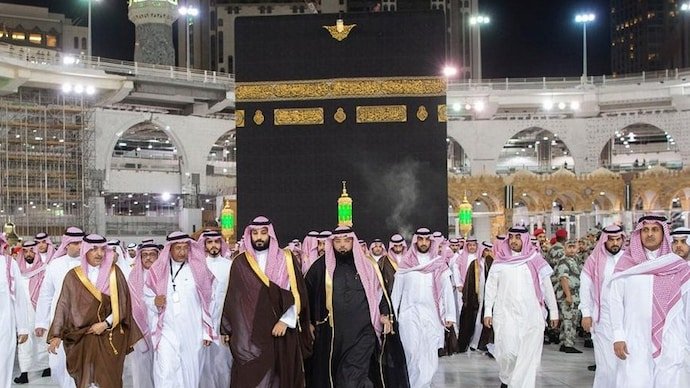
The question of how Mecca and Medina — Islam’s holiest cities — came under Saudi Arabian control remains deeply tied to history, religion, and modern Geopolitics. As tensions rise in the Middle East, especially between Iran and Saudi Arabia, debates over the legitimacy of Saudi custodianship of these sacred sites have resurfaced.
Modern Tensions and Historical Disputes
The rivalry between Iran and Saudi Arabia has long shaped political narratives in the region. Iran, a Shia-majority nation, has frequently questioned the authority of the Sunni-led Saudi monarchy over Mecca and Medina. This tension intensified after events like the 1987 Hajj tragedy, where clashes between Iranian pilgrims and Saudi security forces in Mecca led to the deaths of over 400 people.
For Tehran, such incidents have been cited as evidence that the Saudi rulers are not suitable custodians of Islam’s holiest sites. Saudi Arabia, however, maintains that managing Mecca and Medina is a matter of national sovereignty and religious responsibility.
Historical Control Before Saudi Arabia
Mecca and Medina have existed for centuries before the modern Kingdom of Saudi Arabia was established in 1932. Over time, these cities were governed by several powerful empires and local rulers.
| Time Period | Ruling Authority | Key Details |
|---|---|---|
| Early Islamic Period | Islamic Caliphates | Mecca and Medina became central to Islamic faith and governance |
| Ottoman Era (16th–20th century) | Ottoman Empire | Indirect rule through local Hashemite Sharifs |
| Post World War I | Hashemite Kingdom of Hejaz | Sharif Hussein bin Ali declared independence with British support |
| 1924–1925 | Conquest by Ibn Saud | Saudi forces captured Mecca and Medina |
| 1932–Present | Kingdom of Saudi Arabia | Unified state controlling the holy cities |
The Rise of Ibn Saud and the Saudi State
Abdulaziz Ibn Saud, the founder of modern Saudi Arabia, began his rise to power not in Hejaz, but in the central Arabian region of Najd. In 1902, he captured Riyadh, marking the beginning of a long campaign to unify the Arabian Peninsula under his rule.
From this base, Ibn Saud gradually expanded his control across central and eastern Arabia. His success was supported by alliances with religious leaders, particularly the Wahhabi clergy, which helped legitimize his rule on religious grounds.
Conquest of Mecca and Medina (1924–1925)
The turning point came in the mid-1920s. Between 1924 and 1925, Ibn Saud’s forces, including the Ikhwan militia, launched a successful campaign to capture the Hejaz region from the Hashemite rulers.
Mecca fell in 1924, followed by Medina and Jeddah by 1925. These victories ended Hashemite control and brought Islam’s holiest cities under Ibn Saud’s authority.
In 1926, Ibn Saud was proclaimed King of Hejaz in Mecca, further solidifying his religious and political standing in the Muslim world. Control over these cities elevated his status beyond that of a regional leader to a figure of global Islamic importance.
Formation of Saudi Arabia in 1932
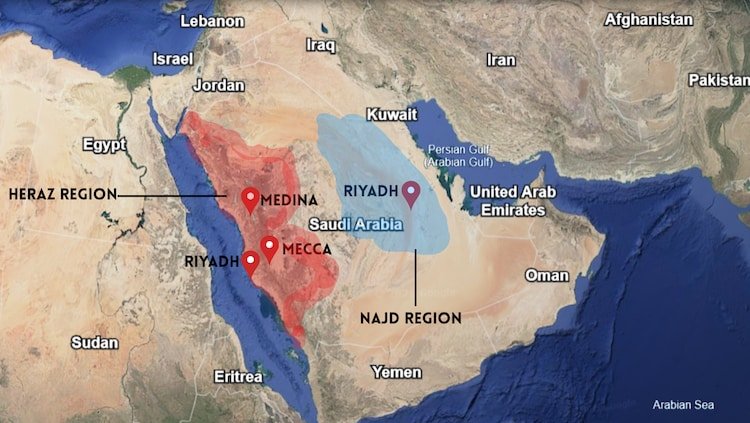
After consolidating multiple regions, including Najd and Hejaz, Ibn Saud officially established the Kingdom of Saudi Arabia in 1932. This unification brought together diverse territories under a single centralized authority ruled by the House of Saud.
By the time the kingdom was formally created, Mecca and Medina had already been under Saudi control for several years. Their inclusion in the new nation gave Saudi Arabia immense religious significance in addition to its political power.
Religious Importance of Mecca and Medina
Mecca and Medina hold unmatched importance in Islam. Mecca is the birthplace of Prophet Muhammad and the site of the Kaaba, toward which Muslims worldwide pray. Medina, on the other hand, became significant after the Prophet’s migration (Hijra) in 622 CE and is home to his mosque and burial site.
These cities have been central to Islamic faith for over a millennium, making their control highly symbolic and politically sensitive.
Ongoing Debate Over Custodianship
Today, the Saudi king holds the title “Custodian of the Two Holy Mosques,” reflecting the kingdom’s responsibility for Mecca and Medina. However, this role has not been free from criticism.
Iran and other critics have often accused Saudi Arabia of monopolizing control over the holy sites and mishandling major religious events, such as the 2015 Mina stampede. Saudi Arabia continues to reject these claims, asserting its capability and right to manage the pilgrimage and maintain the sanctity of the cities.
Conclusion: History Shapes Modern Geopolitics
The inclusion of Mecca and Medina within Saudi Arabia is the result of early 20th-century military conquest, religious alliances, and political consolidation. While the modern Saudi state was established in 1932, its control over the holy cities dates back to the 1920s.
Today, this historical legacy continues to influence geopolitical tensions, especially in the context of the Saudi-Iran rivalry. The question of who holds moral and political authority over Islam’s holiest sites remains a sensitive and enduring issue in global politics.
For breaking news and live news updates, like us on Facebook or follow us on Twitter and Instagram. Read more on Latest World on thefoxdaily.com.



COMMENTS 0