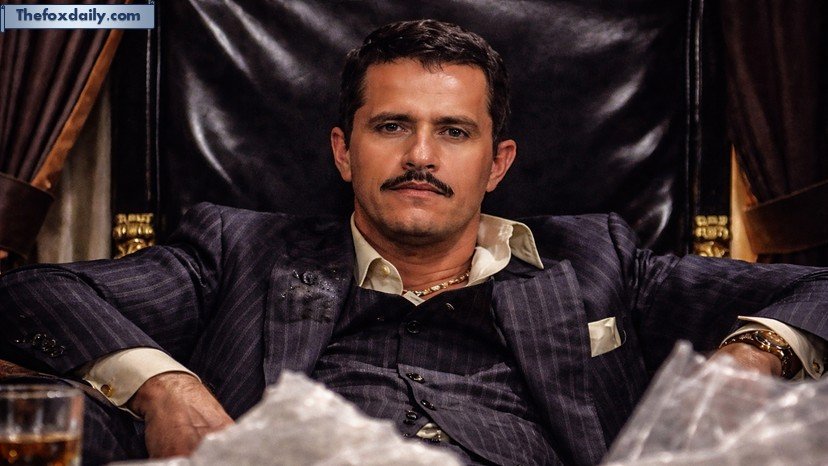
The recent killing of Nemesio Oseguera Cervantes, better known as “El Mencho”, leader of the powerful Jalisco New Generation Cartel (CJNG), has once again plunged western Mexico into violence. His death has highlighted the immense influence that organized crime continues to wield across the country.
Mexico’s drug cartels operate with such power that they often resemble parallel administrations. When a cartel boss falls, chaos frequently follows. This was true in the aftermath of El Mencho’s reported killing, just as it was during the dramatic capture and trial of Joaquín “El Chapo” Guzmán — the Sinaloa Cartel kingpin who once appeared on Forbes magazine’s list of the world’s richest and most powerful individuals.
But how did a man born into poverty in rural Mexico become a billionaire narcotics trafficker? And how did Mexico evolve into one of the world’s most entrenched cartel strongholds? The answers lie in geography, history, political shifts, and even a long-forgotten connection to china.
How the Death of El Mencho Sparked Fresh Unrest in Mexico
Nemesio Oseguera Cervantes, 59, was reportedly wounded during a fierce gunfight between Mexican Army forces and CJNG gunmen in Tapalpa, Jalisco. According to Mexico’s Defense Department, he died while being airlifted to Mexico City for treatment. Oseguera carried a $15 million U.S. bounty and was among the most wanted criminals in North America.
Following his death, cartel members torched vehicles, blocked highways, and clashed with security forces in Jalisco and neighboring Michoacán. Videos circulating on Social Media showed military helicopters flying low over Puerto Vallarta, a major tourist hub. Authorities urged residents to remain indoors as violence spread.
During the raid, two gunmen were arrested, six cartel suspects were killed, and three soldiers were injured. Authorities also seized heavy weaponry, including rocket launchers capable of downing aircraft — a stark reminder of the military-grade firepower at the cartels’ disposal.
The episode echoes earlier crackdowns on notorious figures such as El Chapo, whose downfall became one of the most dramatic law enforcement sagas in modern criminal history.
Why Is Mexico a Global Drug Cartel Hub?
Mexico’s geography is central to understanding the rise of powerful drug cartels. The country shares a 3,145-kilometer porous border with the United States — the world’s largest illegal drug market — making it an ideal transshipment point.
Cartels exploit desert terrain, remote border crossings, highways, and legal ports of entry to move cocaine, heroin, methamphetamine, and fentanyl into the U.S. Additionally, Mexico’s access to both the Pacific and Atlantic oceans enables maritime trafficking and the import of chemical precursors used in synthetic drug production.
| Factor | Impact on Cartel Growth |
|---|---|
| Shared US Border | Direct access to largest consumer market for drugs |
| Pacific & Atlantic Coasts | Facilitates maritime smuggling and precursor imports |
| Colombian Cocaine Supply | Mexico became main transit route after Caribbean crackdowns |
| Weak Rural Enforcement | Allowed cartels to establish safe zones and labs |
| Political Corruption | Enabled protection networks and parallel governance |
By the late 1980s and early 2000s, Mexican cartels had evolved from transporters for Colombian cocaine syndicates into dominant wholesalers, controlling up to 90% of cocaine entering the United States by 2007.
El Mencho vs El Chapo: How Powerful Were They?
El Mencho rose from modest beginnings in Michoacán to lead the CJNG, a Sinaloa Cartel splinter group formed in 2009. Under his command, CJNG became one of Mexico’s most violent and sophisticated criminal organizations, employing drones, armored vehicles, land mines, and even shooting down a military helicopter in 2015.
Yet even El Mencho’s feared reputation was often compared to that of El Chapo — the elusive Sinaloa Cartel boss who dominated global headlines for decades.
How El Chapo Made It to the Forbes List
Joaquín “El Chapo” Guzmán began as a low-level marijuana cultivator and logistics operative in Sinaloa under Miguel Ángel Félix Gallardo in the 1980s. After Gallardo’s arrest in 1989, Guzmán co-founded the Sinaloa Cartel and revolutionized Drug Trafficking methods.
He pioneered cross-border tunnels, decentralized distribution cells, and strategic alliances to control the flow of cocaine, marijuana, heroin, and methamphetamine into the United States. At the height of his empire, it was estimated that his organization controlled up to 25% of drugs entering the U.S.
The cartel generated billions of dollars annually, enabling El Chapo to build an extravagant lifestyle that included luxury mansions, a private zoo, diamond-encrusted firearms, and a yacht bearing his name.
Between 2009 and 2013, Forbes included him in its list of billionaires and named him among the “Most Powerful People” in the world — a shocking acknowledgment of the economic scale of the narcotics trade.
His Dramatic Prison Escapes
El Chapo’s notoriety was cemented by two spectacular prison breaks. In 2001, he escaped from Puente Grande prison by allegedly bribing guards and hiding in a laundry cart. In 2015, he fled the Altiplano Federal Penitentiary through a mile-long tunnel dug beneath his shower, complete with lighting, ventilation, and a motorcycle mounted on rails.
Eventually recaptured and extradited, Guzmán was convicted in a U.S. federal court and sentenced to life in prison. Today, he remains incarcerated in the United States.
The China Connection: Origins of Mexico’s Drug Trade
Mexico’s role in narcotics production dates back to the late 19th century. According to research such as “A History of Opium Commodity Chains in Mexico, 1900–1950,” Chinese immigrants introduced opium poppy cultivation to North America.
After U.S. Immigration restrictions in the 1880s targeted Chinese migrants, many settled in northern Mexico, bringing poppy seeds with them. By the early 20th century, regions like Sinaloa had become significant producers of marijuana and opium.
In the 1970s, Sinaloan families shifted from marijuana cultivation to trafficking Colombian cocaine. Leaders such as Pedro Avilés and Miguel Ángel Félix Gallardo built smuggling routes that transformed Mexico into the primary corridor for narcotics entering the United States.
Violence, Fragmentation, and the Modern Cartel Era
For decades under the Institutional Revolutionary Party (PRI), corruption allowed cartels to operate with relative protection. After the PRI lost power in 2000, fragmentation intensified turf wars.
President Felipe Calderón’s 2006 military offensive against cartels escalated violence nationwide. Since then, more than 400,000 people have reportedly been killed, and over 100,000 have disappeared. New groups such as Los Zetas, Knights Templar, and CJNG diversified into extortion, fuel theft, and synthetic drugs like fentanyl.
Even with the reported death of El Mencho, experts warn of potential power vacuums and renewed conflict. Cartels that have thrived for more than five decades have shown an extraordinary ability to adapt.
The rise of El Chapo to the Forbes billionaire list symbolized the staggering financial power of organized crime in Mexico. His story — and that of El Mencho — underscores how geography, global demand, political dynamics, and historical trade routes combined to turn Mexico into one of the world’s most formidable narcotics hubs.
For breaking news and live news updates, like us on Facebook or follow us on Twitter and Instagram. Read more on Latest World on thefoxdaily.com.




COMMENTS 0