The recently concluded India–European Union Free trade Agreement appears to tilt decisively in New Delhi’s favour, according to the United States’ chief trade negotiator. The deal, described as one of the most ambitious trade accords ever signed by the EU, is expected to significantly expand India’s access to European markets and may also improve mobility opportunities for Indian professionals.
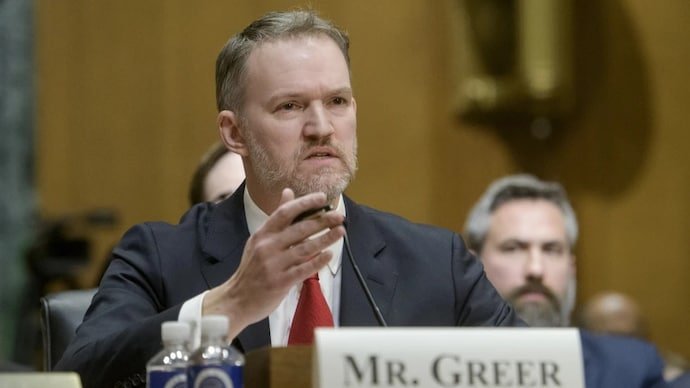
Speaking in an interview with Fox Business, US Trade Representative Jamieson Greer said India is likely to “come out on top” if the agreement is fully implemented. Greer noted that the structure of the deal strongly benefits Indian exporters and businesses looking to expand their footprint in Europe.
“So far, I’ve looked at some of the details of the agreement,” Greer said. “And honestly, I think India wins this. They get more market access into Europe.” His comments underline growing recognition in Washington that the pact could shift trade dynamics in favour of Indian manufacturing, services, and exports.
Greer also pointed to another potentially significant element of the agreement—labour mobility. While noting that details are still emerging, he suggested that the deal could include provisions that make it easier for Indian workers to access opportunities in Europe.
“It sounds like there may be some additional immigration or mobility rights,” he said, referring to statements previously made by European Commission President Ursula von der Leyen about facilitating the movement of Indian professionals into EU member states. “If that’s the case, I think India is really going to have a heyday with this deal.”
The agreement, often described by officials as the “mother of all trade deals,” was signed earlier this week and is set to create a combined economic bloc of nearly two billion people. Together, India and the EU represent close to 25% of global GDP, making the pact one of the most consequential trade arrangements in recent history.
Under the terms of the agreement, the European Union will eliminate tariffs on nearly 99% of Indian exports, while India will significantly reduce duties on more than 97% of EU exports. The deal also outlines a five-year roadmap aimed at strengthening cooperation in areas such as trade, defence, technology, and supply chain resilience.
Despite acknowledging the scale of the agreement, Greer appeared to downplay its broader geopolitical impact, arguing that the EU has been pushed toward India by shifting global trade conditions—particularly the United States’ renewed emphasis on domestic manufacturing.
“Strategically, it’s important to understand that many countries are now looking for alternative markets for their excess production,” Greer said. “President Trump has made domestic production a priority and has effectively started charging a premium for access to the US market. The EU is extremely trade-dependent, and so it’s turning to India as a key alternative.”
Greer added that the European Union appears to be “doubling down on globalization” at a time when the US is adopting a more protectionist stance. In that context, India’s large workforce and competitive labour costs make it an attractive partner for Europe.
“This deal gives India greater access to European markets, largely because of its cost advantages,” he said, reinforcing the view that New Delhi is positioned to gain disproportionately from the agreement.
As the India–EU trade pact moves toward implementation, analysts expect it to reshape trade flows, boost Indian exports, and strengthen India’s role as a key global economic partner—an outcome even US trade officials now openly acknowledge.
For breaking news and live news updates, like us on Facebook or follow us on Twitter and Instagram. Read more on Latest World on thefoxdaily.com.




COMMENTS 0