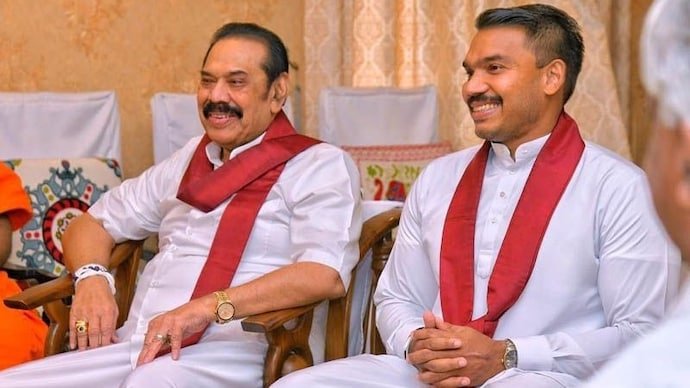
At a time when India’s relations with several of its neighbours—particularly Bangladesh and Pakistan—have faced renewed strain, New Delhi has received strong diplomatic backing from Sri Lanka. Senior Sri Lankan parliamentarian Namal Rajapaksa has stressed that India is indispensable to maintaining peace and stability across South Asia, a region currently marked by political uncertainty, public unrest, and emerging security challenges.
Rajapaksa’s remarks carry added significance as they come ahead of elections in Bangladesh and Nepal, two countries that have witnessed episodes of violence, mass protests, and political upheaval in recent years.
Namal Rajapaksa, the eldest son of former Sri Lankan president Mahinda Rajapaksa, called for enhanced regional cooperation in a detailed post on social media platform X. He highlighted the turbulence experienced by South Asian nations such as Bangladesh, Nepal, and Sri Lanka, all of which have undergone political transitions following widespread public agitation.
“Amid a series of recent global security developments, there is a growing and urgent need for stronger regional cooperation in South Asia, in which India can play a central role,” Rajapaksa wrote.
He further noted, “In recent years, Bangladesh, Nepal and Sri Lanka have experienced periods of political turmoil, marked by public unrest and changes in government.”
South Asia’s Shared Pattern of Turmoil
Rajapaksa’s assessment points to a strikingly similar pattern of unrest across the region. In Sri Lanka, the crisis erupted in 2022 when widespread anti-corruption protests—fuelled by severe economic distress and governance failures—forced then-President Gotabaya Rajapaksa to step down and flee the country.
Bangladesh witnessed a comparable trajectory in 2024. What began as a large-scale student movement against a controversial government job quota system soon escalated into violent protests, shaking the foundations of the Awami League government led by Prime Minister Sheikh Hasina. The unrest eventually compelled Hasina to leave the country and seek refuge in India, paving the way for an interim administration headed by Muhammad Yunus.
A similar storyline unfolded in Nepal the following year. Protests initially driven by Gen Z opposition to a proposed social media ban rapidly evolved into broader demonstrations against corruption and political mismanagement. The movement culminated in the resignation of both the president and then-prime minister KP Sharma Oli.
Why India’s Role Matters
Rajapaksa argued that some of these upheavals may have been aggravated by extremist elements and external destabilising forces, making a coordinated regional response imperative.
“To overcome these obstacles, we must all work together to combat extremism, prevent political violence, and safeguard the rights of minorities,” he said, underlining the need for collective action.
Emphasising the strategic importance of unity, Rajapaksa added, “South Asia needs greater regional cohesion to withstand future crises and address shared challenges as a collective.”
In this broader geopolitical context, he concluded, “India’s leadership is central to maintaining long-term peace and stability in the region.”
Rajapaksa’s remarks reinforce a growing regional consensus that India’s economic weight, diplomatic influence, and security capabilities make it a pivotal stabilising force in South Asia—especially as neighbouring countries navigate periods of transition and uncertainty.
For breaking news and live news updates, like us on Facebook or follow us on Twitter and Instagram. Read more on Latest World on thefoxdaily.com.



COMMENTS 0