- What Triggered the Latest Exchange?
- Khawaja Asif’s Response: Strong Words, Strategic Messaging
- Background: The 2025 Pahalgam Attack and Operation Sindoor
- Aftermath: Ceasefire and Continuing Friction
- Analysis: Rhetoric vs Reality
- Regional Context: A Volatile Environment
- Comparison of Positions
- Insight: The Anniversary Effect
- Conclusion: A Fragile Balance
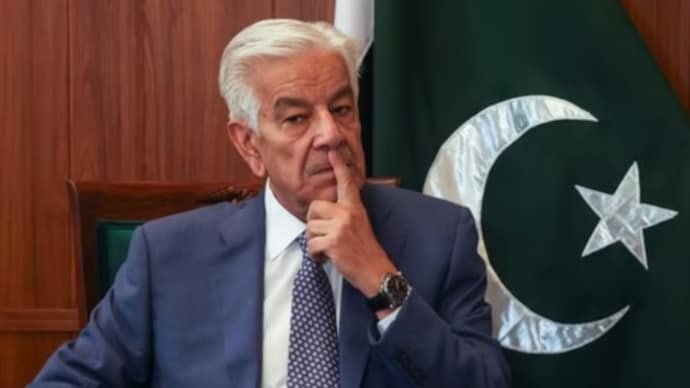
Pakistan’s Deputy Prime Minister and Defence Minister Khawaja Asif has issued a strong warning to India, stating that any future confrontation would be met with a response that is “swift, calibrated, and decisive.” His remarks come at a sensitive time, just days before the first anniversary of the 2025 Pahalgam terror attack and India’s subsequent military response, Operation Sindoor.
The escalation in rhetoric follows comments by India’s Defence Minister Rajnath Singh, who cautioned Pakistan against attempting any “misadventure,” particularly in the context of ongoing geopolitical tensions in the region. Singh emphasized that India’s response to any provocation would be “unprecedented and decisive,” signaling that the strategic posture adopted after the Pahalgam attack remains firmly in place.
What Triggered the Latest Exchange?
The latest round of statements was triggered by Rajnath Singh’s remarks at a public event in Kerala, where he warned of potential actions by Pakistan amid the current international environment. Referring to Operation Sindoor, Singh underscored that India’s response to terrorism remains ongoing and uncompromising.
He also highlighted the speed and intensity of India’s military action following the Pahalgam attack, stating that the Indian Army had effectively neutralized key threats within minutes during the operation.
This assertion drew a sharp response from Khawaja Asif, who took to social media platform X to criticize what he described as a pattern of aggressive rhetoric from New Delhi.
Khawaja Asif’s Response: Strong Words, Strategic Messaging
In his response, Khawaja Asif accused India of using inflammatory language to mask internal challenges and escalate tensions for political purposes. He described the statements as part of a “predictable pattern” aimed at provoking confrontation.
“Repeated rhetoric reflects not strength, but visible strategic anxiety as the anniversary of the Pahalgam attack approaches,” Asif said.
He further warned that Pakistan would respond more forcefully to any future escalation, emphasizing the country’s readiness and resolve.
“Let there be no ambiguity: Pakistan remains committed to peace and regional stability, but its resolve to defend sovereignty is absolute, its preparedness complete, and its response will be swift, calibrated, and decisive,” he stated.
While maintaining a combative tone, Asif also reiterated Pakistan’s stated commitment to regional stability, reflecting a dual messaging approach—deterrence paired with diplomatic positioning.
Background: The 2025 Pahalgam Attack and Operation Sindoor
The current tensions are rooted in the April 22, 2025 Pahalgam terror attack, in which 25 tourists were killed in one of the deadliest civilian attacks in recent years. The incident triggered widespread outrage in India and led to a rapid military response.
India launched Operation Sindoor shortly after the attack, targeting multiple terror camps across the border. According to official statements, nine such camps were destroyed, along with strikes on key military infrastructure in Pakistan.
The operation marked one of the most intense military confrontations between the two nuclear-armed neighbors in recent history, lasting four days and involving air, land, and precision strikes.
Aftermath: Ceasefire and Continuing Friction
The hostilities eventually de-escalated after Pakistan sought a ceasefire on May 10, bringing an end to active military exchanges. However, the fallout from the conflict continues to shape bilateral relations.
Both countries undertook a series of retaliatory measures, including:
- Diplomatic downgrades
- Suspension of bilateral agreements
- Increased military deployments along the border
Despite the ceasefire, trust between the two nations remains low, with periodic flare-ups in rhetoric and military posturing.
Analysis: Rhetoric vs Reality
The latest exchange between Khawaja Asif and Rajnath Singh reflects a broader pattern in India-Pakistan relations, where public statements often serve both domestic and strategic purposes.
For India, strong messaging reinforces its zero-tolerance stance on terrorism and signals readiness to act decisively. For Pakistan, counter-statements aim to project strength, maintain deterrence, and counter international narratives.
However, such rhetoric also carries risks. In a region where both countries possess nuclear capabilities, even verbal escalations can contribute to heightened tensions and miscalculations.
In simple terms, words matter—especially when backed by armies.
Regional Context: A Volatile Environment
The timing of these developments is particularly significant given the broader geopolitical landscape. The ongoing conflict involving Iran has already increased instability in the region, raising concerns about potential spillover effects.
India’s warning about possible “misadventure” suggests heightened vigilance, while Pakistan’s response indicates a readiness to counter any perceived threat.
This creates a complex security environment where multiple flashpoints could intersect, increasing the stakes for both sides.
Comparison of Positions
| Aspect | India’s Position | Pakistan’s Position |
|---|---|---|
| Military Strategy | Preemptive and decisive response | Calibrated but forceful retaliation |
| Public Messaging | Strong deterrence language | Counter-rhetoric with defensive framing |
| Stated Goal | Eliminate terror threats | Maintain sovereignty and stability |
| Current Approach | High alert and readiness | Preparedness with warning signals |
Insight: The Anniversary Effect
Anniversaries of major incidents often act as triggers for renewed tensions. They bring past grievances back into focus, influence public sentiment, and can lead to heightened political and military activity.
In this case, the first anniversary of the Pahalgam attack serves as a reminder of unresolved issues and lingering distrust. Both sides appear to be using this moment to reinforce their respective narratives and strategic positions.
It’s a bit like reopening an old file—except the consequences are far more serious.
Conclusion: A Fragile Balance
The latest exchange between Khawaja Asif and Rajnath Singh underscores the fragile nature of India-Pakistan relations. While both countries have avoided direct conflict since the May 2025 ceasefire, the underlying tensions remain unresolved.
As the anniversary of the Pahalgam attack approaches, the risk of escalation—whether through rhetoric or action—cannot be ignored. At the same time, both sides continue to emphasize their commitment to stability, highlighting the delicate balance between deterrence and diplomacy.
In a region where history, politics, and security are deeply intertwined, maintaining that balance will be critical in the days ahead.
For breaking news and live news updates, like us on Facebook or follow us on Twitter and Instagram. Read more on Latest World on thefoxdaily.com.






COMMENTS 0