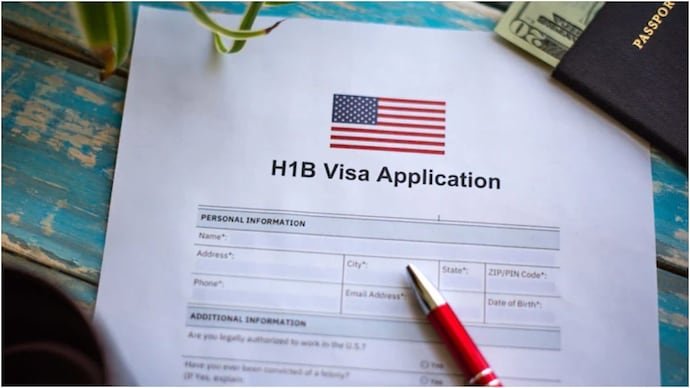
Indian information technology companies operating in the United States are undergoing a significant shift in their employment models as a direct response to the Trump administration’s increasingly strict immigration policies. According to a recent Bloomberg report, these firms are now prioritizing the hiring of US nationals, expanding offshore delivery capabilities, and accelerating automation instead of relying heavily on Indian professionals working on H-1B visas.
The report highlights a clear departure from a long-standing practice in which Indian IT firms routinely sponsored thousands of skilled Indian workers to staff their US operations. Today, that model is being recalibrated to align with tighter visa regulations, rising compliance costs, and growing uncertainty surrounding the future of employment-based immigration.
Major Indian IT players with deep roots in the US market include Infosys, Tata Consultancy Services (TCS), Wipro, Cognizant, and Tech Mahindra. For decades, these companies leveraged the H-1B visa program to deploy Indian engineers and consultants to serve American clients. However, this dependency is now steadily declining.
As the Bloomberg analysis notes, the shift is largely driven by the Trump administration’s hardline stance on immigration. While India has not been explicitly targeted, the broader tightening of rules has made the sponsorship of foreign workers increasingly complex and less predictable.
How Indian IT Companies Traditionally Used the H-1B Visa Program
Until recently, the H-1B visa program served as a cornerstone of Indian IT companies’ US expansion strategies. Before 2025, these firms used the program extensively to bring in highly skilled foreign professionals—primarily from India—to manage projects, provide onsite client support, and lead technology initiatives.
Data from the US Citizenship and Immigration Services (USCIS) shows that 130,000 H-1B visas were issued in fiscal year 2024. Of these, approximately 24,766 visas—nearly 20%—were sponsored by Indian IT companies, according to an analysis by India Today Digital.
- Infosys led the list with 8,140 H-1B visas.
- Tata Consultancy Services (TCS) followed with 5,274 visas.
- Cognizant Technology Solutions accounted for 6,321 visas.
- HCL America received 2,953 visas.
- Wipro was granted 1,634 visas.
- Tech Mahindra obtained 1,199 visas.
However, by FY2025, the number of new H-1B approvals for Indian IT companies dropped sharply. Only 4,573 petitions were approved for new roles among the top seven Indian IT firms—marking a 10-year low and underscoring the depth of the policy impact.
Why Indian IT Firms Are Hiring Fewer Indians for US Roles
The trend toward local hiring began during Trump’s first term and has intensified under the current immigration crackdown. In 2017, Infosys announced plans to hire 10,000 American workers after the US Department of Justice warned employers against misusing the H-1B program to disadvantage American employees.
A similar shift has been observed across the industry. Tata Technologies stated last year that it would expand its American workforce and reduce dependence on foreign labor. Other firms quickly followed suit, reshaping their staffing strategies to reduce regulatory risk.
According to multiple media reports, more than 80% of HCLTech’s US workforce now consists of American citizens. Infosys and TCS have reported that roughly 60% of their US-based employees are Americans. Wipro and Tech Mahindra, meanwhile, have indicated that less than half of their US workforce is employed on H-1B visas.
This shift is not driven by a lack of Indian talent, but rather by the growing difficulty of employing foreign nationals in the US. Companies reliant on H-1B workers have faced coordinated criticism on social media, while new visa rules have increased scrutiny, delays, and compliance expenses.
As Bloomberg points out, even though India was excluded from the list of 75 countries facing immigration bans, Indian professionals are encountering slower processing times, stricter enforcement, and higher costs associated with visa applications.
H-1B Program Under Pressure: Delays, Fees, and Policy Changes
The challenges became particularly evident last year following several changes to the H-1B program. These included a proposed $100,000 fee hike for new applications, the elimination of visa renewals in third countries, and expanded social media vetting requirements.
As a result, H-1B visa processing experienced global delays. In India, US consulates reportedly rescheduled interviews from December 2025 to as late as October 2026. Many Indian professionals who traveled home for visa renewals found themselves stranded, separated from their jobs and families for extended periods.
To mitigate such disruptions, Indian IT companies are increasingly investing in local US talent, automation technologies, and offshore delivery centers in countries with more predictable immigration environments.
For India’s largest IT exporters, the message is unmistakable. As the Bloomberg report concludes, firms must strengthen local hiring, accelerate automation, and brace for a future defined by tighter US immigration rules and reduced reliance on the H-1B visa program.
For breaking news and live news updates, like us on Facebook or follow us on Twitter and Instagram. Read more on Latest World on thefoxdaily.com.






COMMENTS 0