- Ceasefire Announcement: A Strategic Pause, Not a Peace Deal
- Diplomatic Messaging and Conflicting Narratives
- What Is Iran’s 10-Point Proposal?
- Strait of Hormuz: The Strategic Epicenter
- Uranium Enrichment: A Long-Standing Flashpoint
- Sanctions Relief and Economic Stakes
- Conditional Ceasefire: Fragile and Reversible
- Analysis: Strategic Gains or Negotiation Tactics?
- Conclusion: A High-Stakes Pause with Global Implications
Iran and the United States entered a fragile two-week ceasefire in early April 2026, following escalating tensions and threats of military strikes by US President Donald Trump. The truce, announced after weeks of conflict, places Iran’s ambitious 10-point proposal at the center of negotiations. Iranian officials claim that Washington has accepted the “general framework” of this plan, which includes key demands such as control over the Strait of Hormuz, recognition of uranium enrichment rights, lifting of Sanctions, and withdrawal of US forces from the region. However, conflicting statements and lack of full confirmation from Washington suggest that the situation remains complex and evolving.
Ceasefire Announcement: A Strategic Pause, Not a Peace Deal
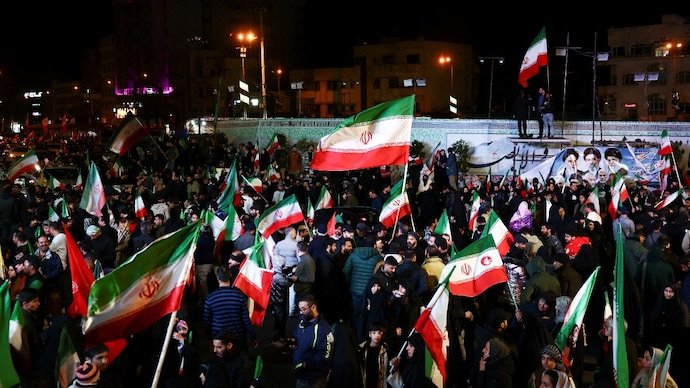
The ceasefire was announced after intense military and political pressure between the two nations. According to Iran’s leadership, the United States agreed to halt its “bombing and attack” campaign, resulting in what Tehran described as a “double-sided” ceasefire.
Iran’s Supreme National Security Council framed the development as a major victory, stating that the US was compelled to accept its conditions after weeks of resistance. However, the tone from Washington has been more cautious, with no detailed public confirmation of all Iranian claims.
“This does not mean an end to the war… Our hands remain upon the trigger.”
The message is clear: this is a pause, not a conclusion. Negotiations during this period will determine whether tensions ease—or escalate again.
Diplomatic Messaging and Conflicting Narratives
One of the most notable aspects of the situation is the presence of multiple and sometimes conflicting narratives. Statements from Iranian officials have varied across languages and platforms, with some outlining detailed policy demands and others focusing on broader political messaging.
Iran’s Foreign Minister Abbas Araghchi indicated that Tehran would suspend defensive operations if attacks ceased. He also confirmed that Iran would ensure safe passage through the Strait of Hormuz during the ceasefire—a crucial point given the route’s importance to Global energy supply.
At the same time, Araghchi noted that Iran was reviewing a separate 15-point proposal from Washington, suggesting that negotiations are more complex than a single framework.
Key Takeaways from Official Statements
- Iran claims US acceptance: “General framework” of the 10-point plan
- US position unclear: No full public endorsement of all terms
- Parallel proposals: Both sides appear to have competing frameworks
- Conditional ceasefire: Dependent on progress in negotiations
This layered communication highlights the diplomatic balancing act underway, where both sides aim to project strength while keeping negotiations alive.
What Is Iran’s 10-Point Proposal?
At the heart of the ceasefire talks lies Iran’s comprehensive 10-point proposal, which outlines its conditions for a longer-term resolution. The plan reflects Tehran’s strategic priorities—security, sovereignty, and economic recovery.
Full Breakdown of Iran’s 10-Point Plan
| # | Demand | Strategic Impact |
|---|---|---|
| 1 | US commitment to no further aggression | Security guarantee for Iran |
| 2 | Continued Iranian control over Strait of Hormuz | Influence over global oil trade |
| 3 | Recognition of uranium enrichment rights | Legitimization of nuclear program |
| 4 | Lifting of primary sanctions | Economic relief |
| 5 | Lifting of secondary sanctions | Restoration of global trade access |
| 6 | Termination of UN Security Council resolutions | Diplomatic normalization |
| 7 | End of IAEA Board resolutions | Reduced international oversight |
| 8 | Payment of war damages | Financial compensation |
| 9 | Withdrawal of US forces from region | Shift in regional power balance |
| 10 | Cessation of hostilities across all fronts | Broad regional de-escalation |
Taken together, these demands represent a sweeping transformation of the current geopolitical framework in the Middle East.
Strait of Hormuz: The Strategic Epicenter
Among all the demands, control over the Strait of Hormuz stands out as one of the most significant. This narrow waterway is one of the world’s most critical oil transit routes, handling a substantial portion of global energy shipments.
Iran’s insistence on maintaining control over the Strait signals its intention to strengthen its leverage in global energy markets.
Why the Strait Matters
- Global oil flow: Key route for energy exports
- Economic leverage: Control influences global prices
- Geopolitical importance: Strategic chokepoint
During the ceasefire, Iran has committed to ensuring safe passage, a move that may help stabilize markets—at least temporarily.
Uranium Enrichment: A Long-Standing Flashpoint
Another central issue in the proposal is the recognition of Iran’s uranium enrichment rights. This has been a longstanding point of contention between Tehran and Western powers.
While Iran maintains that its nuclear program is for peaceful purposes, critics argue that enrichment capabilities could potentially be diverted toward weapons development.
President Trump, in a brief statement, suggested that Iran’s uranium would be “perfectly taken care of” under the deal, though he did not elaborate on how this would be achieved.
Implications of Enrichment Recognition
- Diplomatic shift: Acknowledges Iran’s nuclear autonomy
- Security concerns: Raises questions about oversight
- Negotiation leverage: Key bargaining chip for Tehran
The lack of clarity around enforcement mechanisms remains a major uncertainty in the negotiations.
Sanctions Relief and Economic Stakes
Iran’s demand for the removal of both primary and secondary sanctions reflects the significant economic toll of prolonged restrictions.
Sanctions have limited Iran’s ability to trade internationally, access financial systems, and attract investment. Lifting these measures would mark a major economic turning point.
However, such a move would require substantial policy shifts from the United States and coordination with international partners.
Economic Impact of Sanctions Removal
- Increased oil exports
- Improved currency stability
- Renewed foreign investment
In short, sanctions relief is not just an economic issue—it is central to Iran’s broader strategic goals.
Conditional Ceasefire: Fragile and Reversible
Despite the announcement of a ceasefire, Iranian officials have made it clear that the pause in hostilities is conditional. The continuation of peace depends on progress in negotiations and adherence to agreed terms.
Tehran has warned that any violation could result in an immediate return to conflict.
“Our hands remain upon the trigger… should the slightest error be committed, it shall be met with full force.”
This underscores the fragile nature of the current situation, where even minor missteps could derail the process.
Analysis: Strategic Gains or Negotiation Tactics?
Iran’s framing of the ceasefire as a “historic victory” reflects a broader strategy of projecting strength. By presenting its demands as already accepted, Tehran may be attempting to shape the narrative and gain leverage in ongoing talks.
At the same time, the absence of full confirmation from Washington suggests that negotiations are still in flux.
This dual-track communication—assertive messaging combined with ongoing dialogue—is a common feature in high-stakes Diplomacy.
Possible Scenarios Ahead
- Agreement reached: Gradual easing of tensions
- Partial deal: Continued negotiations with intermittent friction
- Breakdown: Return to military escalation
Each outcome carries significant implications for regional stability and global markets.
Conclusion: A High-Stakes Pause with Global Implications
Iran’s 10-point proposal has emerged as a central framework in the current ceasefire negotiations with the United States. Covering everything from nuclear policy to regional military presence, the plan represents an ambitious attempt to reshape the geopolitical landscape.
While Tehran portrays the ceasefire as a victory, the reality is more nuanced. Conflicting statements, unresolved details, and conditional commitments indicate that the path forward remains uncertain.
As negotiations continue, the world will be watching closely. The outcome will not only determine the future of US-Iran Relations but also influence global energy markets, regional security, and international diplomacy.
For now, the ceasefire offers a brief window of calm—but whether it leads to lasting peace or renewed conflict will depend on what happens next behind the negotiating table.
For breaking news and live news updates, like us on Facebook or follow us on Twitter and Instagram. Read more on Latest World on thefoxdaily.com.





COMMENTS 0