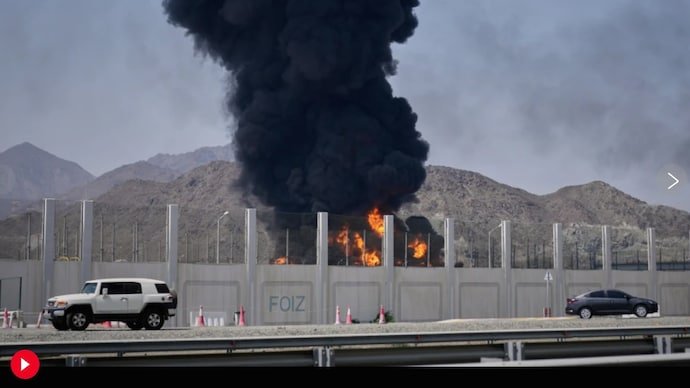
One month into the ongoing conflict, the United States and Israel are facing a complex and persistent challenge as Iran continues to retaliate despite sustained military pressure. The situation has evolved beyond a conventional war, with Tehran adopting tactics that resemble an insurgency rather than a traditional military response.
According to reports, Iran has managed to maintain its offensive capabilities by using limited resources strategically, launching missiles and drones while avoiding direct large-scale confrontations. This approach has kept tensions high and prolonged uncertainty in the region.
Shift to Survival Strategy Over Direct Military Victory
Analysts suggest that Iran has shifted its focus from outright military victory to endurance. Instead of attempting to defeat superior forces directly, Tehran appears to be aiming to prolong the conflict and sustain pressure over time.
This survival-based strategy is designed to exhaust adversaries politically and economically, allowing Iran to claim strategic success simply by outlasting its opponents.
Such tactics mirror those used by allied groups in the region, where long-term disruption, adaptability, and resilience often take precedence over decisive battlefield wins.
Strait of Hormuz Emerges as Iran’s Strongest Leverage
Iran’s most powerful tool in the conflict remains its influence over the Strait of Hormuz, a crucial maritime route responsible for transporting a significant share of the world’s oil supply. By restricting or threatening shipping through this narrow passage, Tehran has been able to exert pressure far beyond the battlefield.
The disruption has led to rising oil prices and increased volatility in global markets, affecting economies across Asia, Europe, and the United States. The economic impact has added another layer of pressure on policymakers already dealing with geopolitical instability.
| Strategic Element | Details |
|---|---|
| Military Approach | Insurgent-style tactics and indirect confrontation |
| Primary Objective | Endurance and long-term pressure |
| Key Weapon | Missiles and drone attacks |
| Economic Leverage | Control over Strait of Hormuz |
| Global Impact | Rising oil prices and market instability |
Use of Guerrilla Tactics Complicates Military Response
Iran continues to rely on mobile missile launchers, underground facilities, and “shoot-and-scoot” tactics to evade detection and counter Airstrikes. These methods, commonly associated with insurgent groups, make it significantly harder for opposing forces to neutralise threats effectively.
The country’s rugged and mountainous terrain further complicates military operations, providing natural cover and enabling rapid movement of assets across difficult landscapes.
Diplomatic Efforts Face Uncertainty
Efforts to resolve the conflict through Diplomacy remain uncertain. While US officials have indicated that negotiations are progressing, Iran has denied that any meaningful talks are currently underway.
This disconnect has raised doubts about the prospects of a near-term resolution, leaving open the possibility of further escalation if diplomatic channels fail.
The United States and Israel may soon face a critical decision: accept limited strategic gains or intensify military operations in an attempt to force a decisive outcome.
Internal Pressures Mount Within Iran
On the domestic front, Iran is dealing with growing internal challenges as the conflict continues. While there have been no widespread uprisings, many citizens are focused on coping with the immediate impacts of airstrikes and economic disruption.
Reports indicate that recruitment into paramilitary forces has increased, suggesting efforts by the government to reinforce its defensive and offensive capabilities. However, concerns remain about leadership coordination and command structures.
Uncertain Endgame as Conflict Drags On
Experts caution that overwhelming military force alone may not be enough to bring Iran to the negotiating table. The current strategy adopted by Tehran indicates a willingness to absorb losses while continuing to exert pressure.
This approach challenges the assumption that sustained military action will automatically lead to diplomatic concessions, highlighting the complexity of the conflict.
As global markets react to ongoing disruptions and geopolitical risks, the broader international community remains concerned about the long-term implications of the crisis.
For now, Iran’s strategy appears clear: endure the conflict, maintain pressure on adversaries, and leverage economic chokepoints to influence outcomes over time.
For breaking news and live news updates, like us on Facebook or follow us on Twitter and Instagram. Read more on Latest World on thefoxdaily.com.




COMMENTS 0