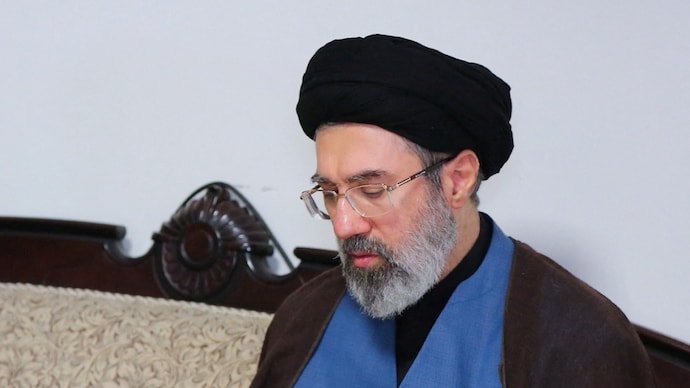
Iran has officially appointed Mojtaba Khamenei as the new Supreme Leader of the Islamic Republic, succeeding his father Ayatollah Ali Khamenei who was recently killed during joint US–Israeli strikes that triggered the ongoing Middle East conflict. The announcement was made by Iran’s powerful Assembly of Experts, the clerical body responsible for selecting the country’s top leader.
According to Iranian state media reports cited by Reuters, the decision was confirmed early Sunday after a closed-door vote by members of the Assembly of Experts. Mojtaba Khamenei, who has long been viewed as a possible successor to his father, now assumes the most powerful position in Iran’s political and religious system.
The official announcement came several days after Iran International, a media outlet critical of the Tehran government, reported that Mojtaba had already been chosen for the role. The 56-year-old cleric has strong connections with the Islamic Revolutionary Guard Corps (IRGC), which plays a central role in Iran’s military and political structure.
With this appointment, Mojtaba Khamenei becomes the third Supreme Leader in the history of the Islamic Republic of Iran and gains ultimate authority over the country’s military, judiciary, and political institutions.
| Key Detail | Information |
|---|---|
| New Supreme Leader | Mojtaba Khamenei |
| Previous Leader | Ayatollah Ali Khamenei |
| Appointing Body | Assembly of Experts |
| Age | 56 Years |
| Major Influence | Close ties with Islamic Revolutionary Guard Corps |
Assembly of Experts Confirms Leadership Appointment
In a statement released shortly after midnight Tehran time, the Assembly of Experts confirmed Mojtaba Khamenei’s appointment as Iran’s new Supreme Leader.
“By a decisive vote, the Assembly of Experts has appointed Ayatollah Seyyed Mojtaba Hosseini Khamenei as the third Leader of the sacred system of the Islamic Republic of Iran,” the official statement said.
Hours before the formal declaration, Ayatollah Mohsen Heidari Alekasir, a member of the council, hinted that a candidate had already been chosen. He stated that the selection followed guidance previously given by Ali Khamenei, who reportedly believed that Iran’s supreme leader should be someone strongly opposed by foreign adversaries.
Heidari Alekasir also referenced criticism from the United States, stating that even Washington had mentioned the chosen leader’s name before the official announcement.
International Reaction and Donald Trump’s Warning
The appointment of Mojtaba Khamenei is expected to intensify tensions between Iran and Western powers. US President Donald Trump had earlier warned that Iran’s next supreme leader might not remain in power without Washington’s approval.
Speaking to ABC news before the official announcement, Trump said, “He’s not going to last long if he doesn’t get approval from us.” His remarks reflected the growing geopolitical conflict between Iran and the US-led alliance in the Middle East.
Israel had also reportedly threatened to target Iran’s next supreme leader as part of its ongoing military campaign against Iranian leadership and infrastructure.
These developments have further escalated an already volatile regional situation, as the war between Iran and the US–Israel alliance continues to expand across the Middle East.
Debate Over Hereditary Leadership in Iran
Although Iran’s revolutionary ideology officially rejects hereditary succession in political leadership, Mojtaba Khamenei’s rise has fueled debate among analysts and political observers. Critics argue that his appointment effectively keeps power within the Khamenei family, a move that some believe contradicts the original principles of the Islamic Republic.
Despite such concerns, Mojtaba has maintained a strong network of supporters within Iran’s conservative political establishment and the Revolutionary Guards, which has played a key role in shaping the country’s leadership decisions.
His close relationship with influential military and political figures likely strengthened his candidacy during the selection process conducted by the Assembly of Experts.
Who Is Mojtaba Khamenei?
Mojtaba Khamenei was born in 1969 in Mashhad, one of Iran’s most important religious cities and a major center of Shiite Islam. He grew up during the period leading up to the Iranian Revolution, when his father was actively involved in movements opposing the rule of the Shah.
As a young man, Mojtaba participated in the Iran–Iraq War, which took place during the 1980s and shaped much of the country’s modern political landscape.
He later pursued religious studies in the city of Qom, which serves as the central hub for Shia theological education in Iran. His teachers and mentors in the seminaries were known for their conservative religious views.
Despite his strong influence within Iran’s political system, Mojtaba Khamenei has never held an official government position. He has also maintained a relatively low public profile, rarely giving speeches or appearing in public events.
However, according to the US Treasury Department, Mojtaba has worked closely within his father’s office and has represented Ayatollah Ali Khamenei in an unofficial yet influential capacity. In 2019, the United States imposed Sanctions on him, citing his role in representing the supreme leader and exercising political influence without holding an elected position.
Controversies and Political Influence
Mojtaba Khamenei has previously faced criticism from protesters during periods of political unrest in Iran. Demonstrators frequently accused him of exerting significant behind-the-scenes influence within the country’s leadership structure.
He was particularly criticized during the nationwide protests that erupted after the death of a young woman in police custody for allegedly violating Iran’s strict dress code regulations.
Political analysts have also linked Mojtaba to the rise of former Iranian President Mahmoud Ahmadinejad, who unexpectedly won the presidency in 2005. Some observers believe Mojtaba played a role in supporting Ahmadinejad’s political ascent within conservative circles.
What Mojtaba Khamenei’s Leadership Could Mean for Iran
With Mojtaba Khamenei now assuming the role of Supreme Leader, Iran enters a new phase of leadership during one of the most turbulent periods in the region’s recent history.
The new leader inherits control over Iran’s armed forces, security agencies, judiciary, and key political institutions. His decisions will likely shape the country’s domestic policies as well as its approach to international relations.
As tensions remain high in the Middle East and the conflict involving Iran continues to escalate, global attention will remain focused on how Mojtaba Khamenei navigates both internal political challenges and external geopolitical pressures.
For breaking news and live news updates, like us on Facebook or follow us on Twitter and Instagram. Read more on Latest World on thefoxdaily.com.

COMMENTS 0