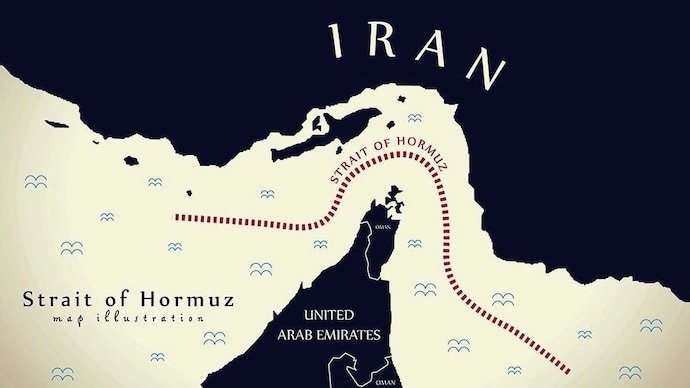
Amid escalating tensions in West Asia, Iran has introduced a significant new policy aimed at tightening its control over the strategically vital Strait of Hormuz. According to reports, Iran’s Parliamentary Security Committee has approved a comprehensive management plan that includes banning ships from the United States and Israel, along with introducing a toll system for vessels passing through the crucial waterway.
The proposal, formally presented by a member of Iran’s National Security Commission, outlines a multi-layered approach that combines geopolitical strategy with economic and environmental considerations. The plan not only targets specific nations but also seeks to reshape how global shipping operates through the strait.
Under the new framework, ships belonging to countries that have imposed unilateral Sanctions on Iran could also face restrictions, significantly broadening the scope of the ban beyond just US and Israeli vessels. This move signals Tehran’s intent to respond firmly to international pressure while asserting its regional authority.
In addition to restrictions, the plan introduces a structured toll mechanism for commercial vessels using the Strait of Hormuz. The toll system is expected to generate revenue while simultaneously giving Iran greater oversight of maritime traffic through the region.
The strategy also emphasizes enhanced maritime security protocols, improved ship safety standards, and stronger environmental protection measures. Officials have indicated that these steps are designed not only to strengthen Iran’s control but also to present the policy as a responsible governance model for one of the world’s busiest shipping lanes.
Furthermore, the plan reinforces Iran’s sovereign claims over the Strait of Hormuz and includes efforts to establish a formal legal framework in coordination with Oman, which shares control over the waterway. This legal dimension could play a crucial role in legitimizing Iran’s actions on the international stage.
| Key Element | Details |
|---|---|
| Ship Ban | US and Israeli vessels prohibited; potential expansion to sanction-imposing nations |
| Toll System | Charges imposed on commercial ships passing through the strait |
| Security Measures | Enhanced monitoring and defense preparedness in the region |
| Environmental Focus | Implementation of stricter environmental protection standards |
| Legal Framework | Proposed cooperation with Oman to formalize maritime governance |
What Happened in the Strait of Hormuz?
The developments come shortly after a major escalation in the region. A senior official from Iran’s Islamic Revolutionary Guard Corps (IRGC) announced a partial blockage of the Strait of Hormuz following joint military strikes by the United States and Israel on Iranian targets.
The disruption of this critical chokepoint quickly triggered global concerns, as the Strait of Hormuz handles nearly 20% of the world’s oil and liquefied natural gas shipments. Any restriction in movement through this corridor has immediate and far-reaching consequences for Global energy markets.
As expected, the partial closure led to a sharp increase in international oil and gas prices, impacting economies worldwide. Several countries experienced supply chain disruptions, highlighting the strait’s unmatched importance in global trade.
India, in particular, faced significant challenges due to the situation. The country relies on the Strait of Hormuz for approximately 90% of its liquefied petroleum gas (LPG) imports. The temporary disruption caused widespread shortages, affecting households, restaurants, and small businesses alike.
The crisis, however, began to ease after Iran allowed certain vessels carrying essential supplies to pass through the strait. Ships such as Nanda Devi and Shivalik, which were transporting LPG to India, were eventually cleared to continue their journey.
These vessels reached Indian ports a few weeks later, helping stabilize supply and reduce the immediate impact of the shortage. Despite this relief, the broader geopolitical uncertainty surrounding the Strait of Hormuz continues to pose risks to global Energy Security.
With Iran’s newly proposed strategy now in focus, the future of maritime operations in the region remains uncertain. The combination of restrictions, tolls, and legal restructuring could redefine how international shipping navigates one of the world’s most critical trade routes.
For breaking news and live news updates, like us on Facebook or follow us on Twitter and Instagram. Read more on Latest World on thefoxdaily.com.





COMMENTS 0