- Second Claim in Weeks: A Pattern Emerging?
- The F-35: Why This Aircraft Matters
- Verification Problem: Fog of War or Strategic Messaging?
- Air Defence vs Stealth: A Technological Contest
- Conflicting Narratives: What Each Side Gains
- Timeline of Key Events
- Video Evidence: Real or Misleading?
- Strategic Implications for the Region
- Insight: The Real Battle May Be Information, Not Aircraft
- Conclusion: Waiting for Clarity in an Unclear Situation
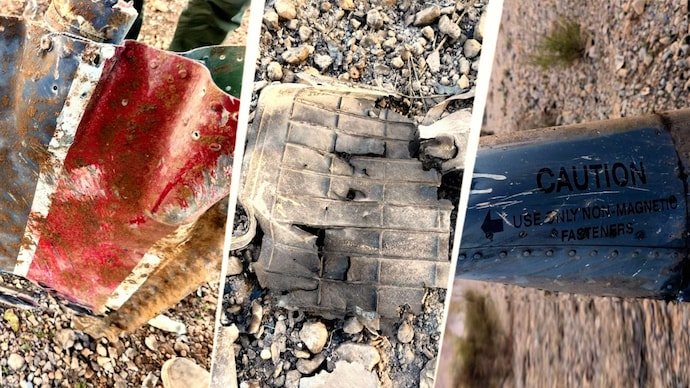
Iran on Friday claimed that its air defence systems successfully shot down a US-made F-35 fighter jet, marking the second such assertion since the conflict began on February 28. According to Iranian military officials, the aircraft was targeted over central Iran and reportedly exploded upon impact, with speculation that the pilot may have been killed. However, there has been no independent confirmation of the claim, and US authorities have not verified any such loss.
The announcement was broadcast by Iran’s state-run media, citing the Khatam al-Anbiya Central Headquarters. The statement suggested that the aircraft belonged to a squadron linked to RAF Lakenheath in the United Kingdom. This development comes amid escalating tensions and increasing use of advanced Military Technology by both sides, especially the deployment of fifth-generation fighter jets like the F-35.
Second Claim in Weeks: A Pattern Emerging?
This is not the first time Iran has claimed success against an F-35 during the ongoing conflict. On March 19, Iranian authorities said their air defence systems struck another F-35 during a combat mission, forcing it into an emergency landing at a military base in the Middle East. At the time, the Islamic Revolutionary Guard Corps (IRGC) stated that the aircraft was “seriously damaged” and had a “high possibility” of crashing.
However, the US Central Command offered a sharply different version of events. According to US officials, the aircraft landed safely, and the pilot was in stable condition. This discrepancy highlights a recurring issue in modern warfare: conflicting narratives and the absence of real-time, independent verification.
“The aircraft landed safely, and the pilot is in stable condition,” said US Central Command spokesperson Captain Tim Hawkins in a statement following the March 19 incident.
The F-35: Why This Aircraft Matters
The F-35 Lightning II is not just another fighter jet—it is widely considered one of the most advanced combat aircraft in the world. With stealth capabilities, advanced sensors, and network-centric warfare systems, the F-35 plays a crucial role in modern military operations. Each unit costs over $100 million, making it both a strategic asset and a significant investment.
Because of its stealth design, detecting and targeting an F-35 is extremely challenging. This is why Iran’s claim, if proven true, would represent a significant shift in the balance of air defence capabilities in the region. It would suggest that Iranian systems are capable of detecting and engaging stealth aircraft—something that has long been debated among defence experts.
Verification Problem: Fog of War or Strategic Messaging?
One of the biggest challenges in assessing such claims is the lack of independent verification. In modern conflicts, especially those involving advanced technologies, both sides often use information as a tool of warfare. Claims of success—whether exaggerated or accurate—can influence public perception, morale, and even international Diplomacy.
So far, no credible third-party source, satellite imagery, or independent military analyst has confirmed the downing of an F-35 by Iranian forces. This absence of evidence does not automatically disprove the claim, but it does place it in a category of unverified assertions.
In fact, analysts often caution against taking initial wartime claims at face value. Early reports are frequently incomplete, and in some cases, deliberately misleading.
Air Defence vs Stealth: A Technological Contest
The broader context of this claim lies in the ongoing technological competition between stealth aircraft and air defence systems. While stealth technology is designed to evade radar detection, modern air defence systems have evolved to counter these capabilities using multi-frequency radars, infrared tracking, and networked sensor systems.
Iran has invested heavily in indigenous air defence technologies, often showcasing systems that it claims can detect stealth aircraft. However, the real-world effectiveness of these systems against platforms like the F-35 remains largely untested in publicly verified scenarios.
In simple terms, this is a high-stakes game of cat and mouse—except the cat costs $100 million and the mouse might have a radar.
Conflicting Narratives: What Each Side Gains
From Iran’s perspective, claiming to have shot down an F-35 serves multiple purposes. It demonstrates military capability, boosts domestic morale, and sends a message to adversaries about its defensive strength. It also positions Iran as a technologically capable force in the global military landscape.
On the other hand, the United States has strong incentives to downplay or deny such losses. A confirmed downing of an F-35 could raise concerns among allies, impact defence contracts, and shift strategic calculations.
This creates a situation where truth becomes difficult to establish quickly, as both sides carefully control the flow of information.
Timeline of Key Events
| Date | Event | Details |
|---|---|---|
| February 28, 2026 | Conflict Begins | Escalation leads to increased deployment of advanced aircraft |
| March 19, 2026 | First F-35 Incident | Iran claims strike; US says aircraft landed safely |
| April 2026 | Second Claim | Iran claims F-35 shot down over central Iran; no confirmation |
Video Evidence: Real or Misleading?
A video shared by Tehran Times allegedly shows the moment an F-35 was hit during a combat mission. The footage depicts smoke trailing from a jet after explosions, followed by a sharp deviation from its flight path. While such visuals can be compelling, they are not definitive proof.
Experts often point out that videos in conflict zones can be misattributed, edited, or taken out of context. Without metadata, geolocation verification, or corroborating evidence, it is difficult to confirm authenticity.
In the age of digital warfare, a video can be as powerful as a missile—especially when it shapes global perception.
Strategic Implications for the Region
If Iran’s claim were to be confirmed, it could have far-reaching implications. It would challenge the perceived invincibility of stealth aircraft and potentially alter military strategies across the region. Countries relying on F-35 fleets might reconsider their deployment tactics or invest more in countermeasures.
Additionally, it could accelerate the development of advanced air defence systems globally, as nations seek to counter stealth capabilities more effectively.
However, until such claims are independently verified, most military planners are likely to treat them with caution rather than immediate concern.
Insight: The Real Battle May Be Information, Not Aircraft
Beyond the technical and strategic aspects, this situation highlights a deeper reality: modern warfare is as much about information as it is about firepower. Claims, counterclaims, and narratives shape how conflicts are perceived both domestically and internationally.
In many ways, the question is not just whether an F-35 was shot down, but who controls the story—and how that story influences decisions on the ground.
Conclusion: Waiting for Clarity in an Unclear Situation
Iran’s claim of shooting down an F-35 fighter jet is significant, but remains unverified. While it underscores the intensity of the ongoing conflict and the increasing role of advanced military technology, it also highlights the challenges of separating fact from narrative in wartime.
For now, the incident sits in a grey zone—neither confirmed nor fully dismissed. As more information emerges, analysts and observers will continue to scrutinize the evidence, looking for clarity in a situation defined by uncertainty.
Until then, one thing is certain: in modern conflicts, the battle for the skies is closely matched by the battle for credibility.
For breaking news and live news updates, like us on Facebook or follow us on Twitter and Instagram. Read more on Latest World on thefoxdaily.com.






COMMENTS 0