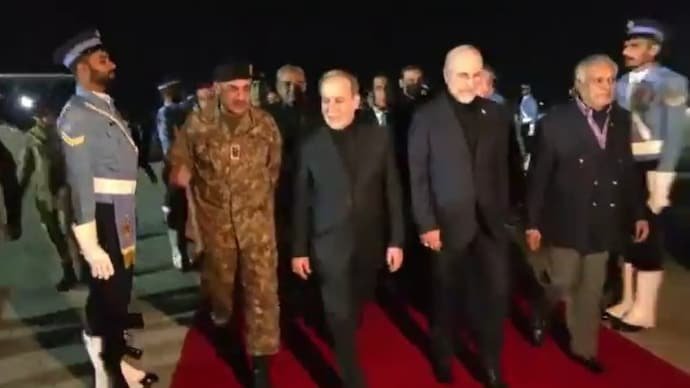
- Iran Sets Clear Preconditions Ahead of Talks
- Key Members of the Iranian Delegation
- Pakistan Hosts High-Stakes Diplomacy
- US Delegation Arrives with Measured Expectations
- Major Issues on the Negotiation Agenda
- Ceasefire Linked to Broader Regional Conflicts
- The Strategic Importance of the Strait of Hormuz
- Historical Context: Decades of Tension
- Significant Gaps Between US and Iran Positions
- Outlook: Can Diplomacy Deliver Results?
- Conclusion: A Defining Moment in US-Iran Relations
An Iranian delegation led by Parliament Speaker Mohammad Baqer Qalibaf arrived in Islamabad on Friday to participate in high-stakes peace talks with the United States. The discussions, hosted by Pakistan, come at a critical moment marked by fragile ceasefire conditions, ongoing regional conflicts, and decades of mistrust between the two nations. Iran has made it clear that negotiations will only begin if Washington agrees to specific preconditions, including sanctions relief and regional security considerations. With senior officials from political, military, and economic sectors present, the talks aim to address some of the most complex issues in modern diplomacy.
Iran Sets Clear Preconditions Ahead of Talks
Iran has entered the negotiations with a firm and calculated approach. Officials have emphasized that talks with the United States will proceed only if Washington accepts Tehran’s preconditions. These include lifting economic sanctions, releasing frozen Iranian assets, and addressing broader regional security concerns.
This strategy reflects Iran’s intent to establish leverage before formal discussions begin. By setting clear expectations, Tehran signals that it is open to dialogue, but only under terms that protect its national interests.
“Negotiations will proceed only if Washington accepts Tehran’s preconditions,” Iranian officials stated, highlighting their firm stance.
Such positioning is not uncommon in international diplomacy, but it significantly raises the stakes for both sides.
Key Members of the Iranian Delegation
The Iranian delegation includes a mix of senior leaders from across government institutions, indicating that the talks will cover a wide range of issues—from economic recovery to military strategy.
| Official | Position | Role in Talks |
|---|---|---|
| Mohammad Baqer Qalibaf | Parliament Speaker | Head of Delegation |
| Abbas Araghchi | Foreign Minister | Diplomatic Negotiations |
| Ali Akbar Ahmadian | Defense Council Secretary | Security Strategy |
| Abdolnaser Hemmati | Central Bank Governor | Economic Discussions |
| Mohammad Bagher Zolghadr | Former IRGC Commander | Military Perspective |
The presence of top economic and defense officials highlights the comprehensive nature of the discussions, suggesting that both immediate concerns and long-term strategies will be addressed.
Pakistan Hosts High-Stakes Diplomacy
Pakistan’s role as host adds an important dimension to the talks. By providing a neutral platform, Islamabad aims to facilitate dialogue between two nations with a long history of strained relations.
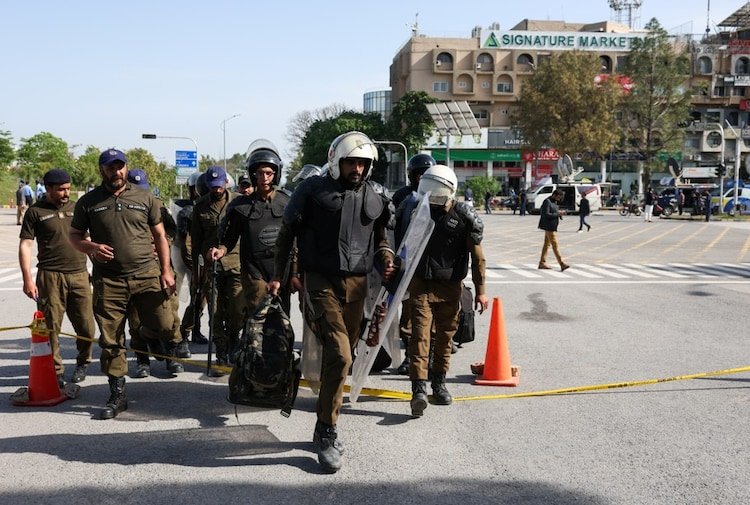
The Pakistani government has expressed hope that all parties will engage constructively. Security measures in the capital have been heightened, reflecting the importance and sensitivity of the meeting.
Hosting such negotiations also enhances Pakistan’s diplomatic standing, positioning it as a key player in international conflict resolution.
US Delegation Arrives with Measured Expectations
The United States delegation, led by Vice President JD Vance, includes senior advisors such as Steve Witkoff and Jared Kushner. Despite the high-level representation, expectations for a breakthrough remain cautious.
Officials in Washington have indicated that while the US is willing to engage in dialogue, it remains skeptical about immediate progress. Years of unsuccessful negotiations have shaped a more pragmatic approach.
“We are extending an open hand, but remain realistic about the challenges ahead,” Vice President JD Vance said before departure.
This cautious tone underscores the complexity of the issues at hand and the difficulty of achieving quick results.
Major Issues on the Negotiation Agenda
The talks are expected to address several critical issues that have long defined US-Iran Relations. Each topic carries significant political and strategic implications.
- Sanctions Relief: Iran is seeking the removal of economic sanctions that have severely impacted its economy.
- Frozen Assets: Tehran wants access to financial assets held abroad under sanctions.
- Nuclear Program: The US is pushing for strict limits on Iran’s uranium enrichment activities.
- Missile Development: Washington aims to curb Iran’s missile capabilities.
- Regional Influence: Iran’s support for regional allies remains a key concern for the US.
- Detained Citizens: The release of US citizens held in Iran is also expected to be discussed.
These issues are deeply interconnected, making negotiations complex and requiring careful balancing of interests on both sides.
Ceasefire Linked to Broader Regional Conflicts
Iran has emphasized that any ceasefire agreement must extend beyond its direct conflict with the United States. Specifically, Tehran insists that the agreement should also address Israel’s military actions in Lebanon, particularly against Hezbollah.
This demand broadens the scope of the negotiations, introducing additional stakeholders and increasing the complexity of reaching an agreement.
Recent escalations in Lebanon have further complicated the situation, making it more difficult to align ceasefire terms across multiple conflict zones.
The Strategic Importance of the Strait of Hormuz
The Strait of Hormuz remains a central issue in the discussions. As one of the world’s most important oil transit routes, its stability is crucial for global energy markets.
Iran has proposed regulating access to the strait and potentially introducing transit fees. Such a move would significantly alter regional power dynamics and is likely to face strong opposition from the United States.
US officials have expressed doubts about quickly resolving this issue, even if other areas of the talks show progress.
Historical Context: Decades of Tension
The current negotiations are shaped by a long history of strained relations between the United States and Iran. Since the 1979 Islamic Revolution, the two countries have experienced decades of political hostility, economic sanctions, and intermittent conflict.
This history continues to influence both sides’ approaches, making trust-building a major challenge in the مذاکرات process.
Understanding this background is essential to appreciating the сложности of the current discussions.
Significant Gaps Between US and Iran Positions
One of the biggest challenges facing the talks is the gap between the proposals put forward by both sides. Iran’s 10-point plan and the US’s 15-point framework show limited overlap.
Iran is focused on economic relief and regional influence, while the United States prioritizes nuclear restrictions and security concerns. These differing priorities make it difficult to find common ground.
Bridging these gaps will require compromise, patience, and sustained diplomatic effort.
Outlook: Can Diplomacy Deliver Results?
While expectations for an immediate breakthrough remain low, the talks still represent an important step forward. Even limited progress—such as agreeing on a framework for future negotiations—could be seen as a positive outcome.
Diplomacy often advances in small increments, and these discussions may serve as a foundation for more substantive agreements in the future.
In many ways, the success of the talks will depend not just on what is agreed upon, but on whether both sides are willing to continue engaging despite differences.
Conclusion: A Defining Moment in US-Iran Relations
The arrival of Iran’s delegation in Islamabad marks a significant moment in international diplomacy. With major issues on the table and high-level officials involved, the talks have the potential to influence the future of US-Iran relations and broader regional stability.
However, the challenges are considerable. Iran’s firm preconditions, the United States’ cautious approach, and the complex geopolitical environment all contribute to the difficulty of reaching an agreement.
Looking ahead, the outcome of these talks will likely shape the next phase of diplomatic engagement between the two nations. Even if immediate results are limited, continued dialogue could pave the way for meaningful progress over time.
In the world of diplomacy, breakthroughs rarely happen overnight—but every serious conversation brings the possibility of change a little closer.
For breaking news and live news updates, like us on Facebook or follow us on Twitter and Instagram. Read more on Latest World on thefoxdaily.com.




COMMENTS 0