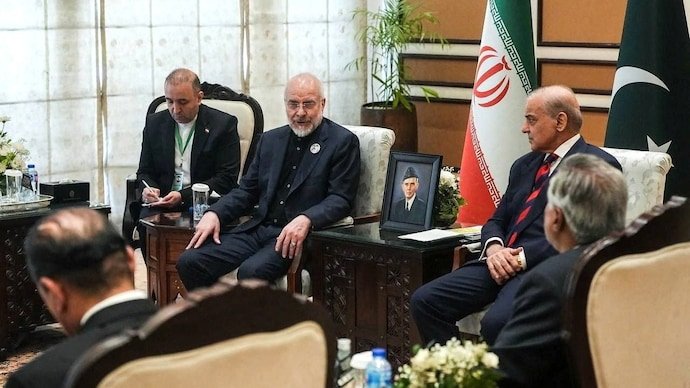
High-stakes Peace Talks between the United States and Iran in Islamabad have officially collapsed after nearly 21 hours of intense negotiations, with Tehran accusing Washington of making unrealistic demands. The discussions, held in Pakistan over the weekend, were aimed at converting a temporary two-week ceasefire into a lasting agreement. However, deep mistrust, conflicting expectations, and unresolved core issues ultimately derailed the process, leaving the fragile ceasefire hanging in uncertainty.
Talks Collapse After Marathon Negotiations
The much-anticipated negotiations brought together senior officials from both sides, led by US Vice President JD Vance and top Iranian leadership, including Foreign Ministry representatives. The talks marked one of the most significant diplomatic engagements between Washington and Tehran in decades.
Despite early signs of engagement, the discussions stretched for nearly a full day without producing a breakthrough. Shortly after the US delegation departed Islamabad, Iran publicly declared the talks a failure, delivering a sharp and unambiguous message.
“The US demanded everything it could not achieve through war. Iran said a BIG NO,” an Iranian diplomatic statement said, reflecting Tehran’s firm stance.
The blunt response underscores the widening gap between the two nations, even as both sides had entered talks under international pressure to de-escalate tensions in the region.
Key Issues That Led to the Deadlock
While both sides reportedly found limited common ground on certain points, two major issues proved impossible to resolve:
1. Strait of Hormuz Dispute
The strategic Strait of Hormuz remains one of the most critical sticking points. Iran has insisted that the waterway will remain closed until a “reliable and comprehensive” ceasefire agreement is reached.
This position directly clashes with US demands to immediately reopen the passage, which is vital for global oil shipments. The continued closure has already disrupted Energy Markets and raised concerns worldwide.
2. Iran’s Nuclear Programme
Washington pushed for strict limitations on Iran’s nuclear activities, including curbs on uranium enrichment. However, Tehran showed no willingness to compromise on what it considers its sovereign nuclear rights.
Iranian officials made it clear that any deal requiring unilateral concessions without reciprocal guarantees would not be acceptable.
| Issue | US Position | Iran Position |
|---|---|---|
| Strait of Hormuz | Immediate reopening | Closed until strong ceasefire deal |
| Nuclear Programme | End enrichment, strict controls | Maintain nuclear rights |
| Sanctions & Assets | Limited flexibility | Demand full relief, asset release |
Atmosphere of Deep Mistrust
From the outset, the talks were overshadowed by a profound lack of trust. Iranian officials repeatedly emphasized that they entered the negotiations cautiously, with what one spokesperson described as “an atmosphere of mistrust.”
This skepticism was not without reason. The recent conflict, which lasted nearly 40 days before the ceasefire, has left both sides wary of each other’s intentions. Even during the negotiations, disagreements over facts—such as developments in the Strait of Hormuz—highlighted the communication gap.
Put simply, both sides came to the table—but not necessarily on the same page.
JD Vance Leaves Without a Deal
US Vice President JD Vance, who led the American delegation, confirmed that the talks ended without agreement. Speaking before departing Islamabad, he acknowledged the failure but maintained a firm tone.
“We have not reached an agreement. We’ve made very clear what our red lines are,” Vance said.
He added that the outcome was “more negative for Iran,” signaling Washington’s belief that pressure on Tehran would continue.
However, from Iran’s perspective, the refusal to concede was framed as a strategic victory rather than a setback.
Strait of Hormuz Remains Closed
One of the most immediate consequences of the failed talks is the continued closure of the Strait of Hormuz—a critical chokepoint through which a significant portion of the world’s Oil Supply passes.
Iran has made it clear that the strait will not reopen without a credible agreement. This has serious implications for global energy markets, as prolonged disruption could drive up oil prices and impact economies worldwide.
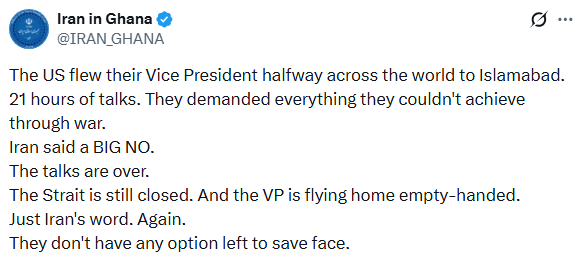
In simple terms: no deal, no oil flow. And that’s a situation few countries are comfortable with.
Pakistan’s Mediation Efforts Fall Short
Pakistan, which hosted and facilitated the talks, had positioned itself as a key diplomatic intermediary. The Islamabad meeting was seen as an opportunity for the country to demonstrate its relevance on the global stage.
However, the failure to secure even a preliminary agreement has raised questions about Islamabad’s ability to broker complex international deals.
Despite this, Pakistani officials have urged both sides to maintain the ceasefire and continue dialogue, emphasizing that Diplomacy remains the only viable path forward.
What This Means for the Region
The collapse of the talks has significant geopolitical implications:
- Ceasefire at Risk: Without progress, the temporary truce could unravel.
- Rising Regional Tensions: Ongoing conflicts, particularly in Lebanon, continue to complicate the situation.
- Economic Impact: Energy supply disruptions may affect global markets.
- Diplomatic Uncertainty: Future negotiations remain unclear.
The broader concern is that the failure of diplomacy could push both sides back toward confrontation—a scenario that would have far-reaching consequences beyond the immediate region.
Conclusion: A Fragile Pause, Not a Peace
The collapse of the Islamabad talks highlights just how difficult it is to bridge the divide between the United States and Iran. Despite nearly a full day of negotiations, fundamental disagreements over nuclear policy, regional security, and economic conditions proved too significant to overcome.
For now, the ceasefire holds—but only just. With the Strait of Hormuz still closed and both sides hardening their positions, the situation remains volatile.
Looking ahead, any future talks will require more than just willingness to engage—they will demand compromise, trust-building, and realistic expectations on both sides. Until then, the world watches closely, hoping that this fragile pause does not turn into another prolonged conflict.
For breaking news and live news updates, like us on Facebook or follow us on Twitter and Instagram. Read more on Latest World on thefoxdaily.com.






COMMENTS 0