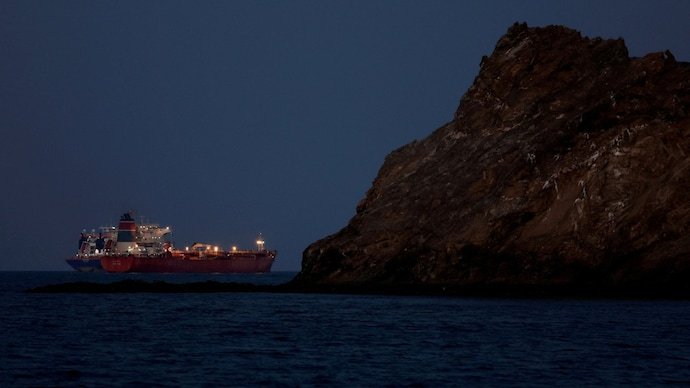
Amid escalating tensions in West Asia, Iran has clarified its position on the strategic Strait of Hormuz, announcing that it will permit maritime transit for select “friendly nations” despite maintaining restrictions in the conflict zone.
According to Iranian officials, countries such as India, china, Russia, Pakistan, and Iraq are being allowed to move their vessels through the critical oil chokepoint without disruption.
Iran’s Position: Partial Blockade, Not Full Closure
Iran’s Foreign Minister Abbas Araghchi, in an interview with state television, emphasized that the Strait of Hormuz remains operational for certain countries and is not entirely shut down.
He explained that multiple nations and shipping operators had reached out to Tehran seeking safe passage, and Iran’s armed forces had facilitated transit for those it considers friendly or strategically aligned.
This selective access signals a controlled maritime strategy rather than a blanket blockade, allowing Iran to maintain leverage while avoiding a complete shutdown of Global energy flows.
| Category | Details |
|---|---|
| Strait Status | Partially open |
| Allowed Countries | India, China, Russia, Pakistan, Iraq |
| Restricted Countries | US, Israel, select Gulf nations |
| Authority | Iranian Armed Forces oversight |
Who Is Restricted and Why?
While access is being granted to friendly nations, Iran has made it clear that ships linked to the United States, Israel, and certain Gulf countries involved in the ongoing conflict will not be permitted to pass.
Araghchi justified this stance by stating that the region is effectively a war zone, and allowing adversarial nations unrestricted access would be strategically unsound.
The move highlights how maritime routes are increasingly being used as geopolitical tools in the broader conflict.
Strategic Importance of the Strait of Hormuz
The Strait of Hormuz is one of the most critical energy corridors in the world, serving as a gateway for a substantial portion of global oil and gas shipments.
| Key Metric | Significance |
|---|---|
| Global Oil Flow | ~20% passes through the strait |
| LNG Transport | Major route for liquefied natural gas |
| Geopolitical Value | Critical chokepoint in global trade |
| Economic Impact | Direct influence on oil & gas prices |
Any disruption in this narrow waterway has immediate global consequences, including spikes in oil prices, supply shortages, and increased geopolitical risk.
Impact on India and Other Economies
India, which relies heavily on energy imports routed through the Strait of Hormuz, was significantly affected during the initial disruption.
With nearly 90% of its LPG imports passing through this corridor, even a temporary blockage led to supply concerns impacting industries, households, and small businesses.
However, the situation improved when Indian vessels — including LPG carriers such as Nanda Devi and Shivalik — were granted safe passage and successfully reached Indian ports.
How the Situation Escalated
The partial blockade was reportedly initiated by a senior member of Iran’s Islamic Revolutionary Guard Corps (IRGC) following joint US-Israel military strikes on Iranian targets.
The move was widely seen as a strategic response aimed at exerting pressure on global energy markets while maintaining selective diplomatic engagement.
Iran’s Message to the World
Iranian officials have framed the selective opening of the Strait as proof of their control and strategic capability.
Araghchi suggested that initial global skepticism about Iran’s ability to enforce a blockade had been proven wrong, emphasizing that Tehran has successfully demonstrated authority over the vital maritime route.
He also indicated that cooperation with friendly nations would continue even beyond the current conflict, hinting at long-term geopolitical alignment.
Conclusion
Iran’s decision to allow select nations – including India – to navigate the Strait of Hormuz reflects a calculated geopolitical strategy rather than a total shutdown.
By balancing restriction with selective access, Tehran is leveraging one of the world’s most important energy corridors to strengthen its position while avoiding complete global disruption.
As tensions persist, the Strait of Hormuz will remain at the center of both economic and strategic calculations, with global markets closely watching every development.
For breaking news and live news updates, like us on Facebook or follow us on Twitter and Instagram. Read more on Latest World on thefoxdaily.com.





COMMENTS 0