Iran’s Islamic Revolutionary Guard Corps (IRGC) issued a strong response to comments made by U.S. President Donald Trump, declaring that Tehran—not Washington—will determine how and when the current conflict ends.
The statement came shortly after Trump made a series of remarks about the war with Iran, at times suggesting the conflict was nearly over while later indicating that the fighting would continue until Iran was completely defeated.
In its response, the IRGC dismissed Trump’s statements as “nonsense” and warned that if attacks by the United States and Israel continue, Iran could take actions that would affect oil exports across the region.
According to the IRGC, Iran would not allow “one litre of oil” to be exported from the Gulf if the military campaign against the country continues, highlighting the potential for serious economic consequences for Global energy markets.
Trump Sends Mixed Signals on Status of the Conflict
The tensions escalated after Trump delivered conflicting statements about the status of the war with Iran on Monday.
During a conversation with American reporters earlier in the day, Trump suggested that the conflict was almost finished, claiming the situation was “pretty much” resolved and ahead of schedule.
According to CBS News White House correspondent Weijia Jiang, Trump told her in a phone call that the conflict was “very far ahead of schedule” and appeared close to completion.
He also claimed that Iran’s military capabilities had been severely weakened during the fighting.
“They have no Air Force, no Navy, and no communications,” Trump reportedly said while describing the impact of the military campaign.
However, just hours later, Trump delivered a different message while speaking at the Republican Members Issues Conference.
In that speech, he said that although the United States had achieved significant progress, the war was far from over.
“We’ve already won in many ways, but we haven’t won enough,” Trump said, adding that the conflict would continue until Iran was “totally and decisively defeated.”
IRGC Responds with Warning Over Oil Exports
The IRGC responded sharply to Trump’s statements, emphasizing that Iran—not the United States—would ultimately decide the outcome of the conflict.
In comments reported by Iranian state media, an IRGC spokesperson said Tehran would not tolerate continued attacks on its territory and warned that further escalation could affect oil shipments across the Persian Gulf.
“If attacks continue, not a single litre of oil will be allowed to leave the region,” the spokesperson said.
The statement suggests that Iran could attempt to disrupt energy supplies through key maritime routes, a development that could have serious implications for global oil markets.
The IRGC also warned that regional security would either exist “for everyone or for no one,” implying that any continued military pressure could trigger broader instability across the Middle East.
| Key Developments in the Iran Conflict | Details |
|---|---|
| Trump’s Initial Statement | Suggested the war was nearly over and ahead of schedule |
| Later Trump Comments | Said the conflict would continue until Iran is decisively defeated |
| IRGC Response | Iran says it will decide when the war ends |
| Oil Export Warning | Iran threatened to halt oil shipments from the region if attacks continue |
| Global Impact | Potential disruption to energy markets and shipping routes |
Strikes Hit Iranian Oil Infrastructure
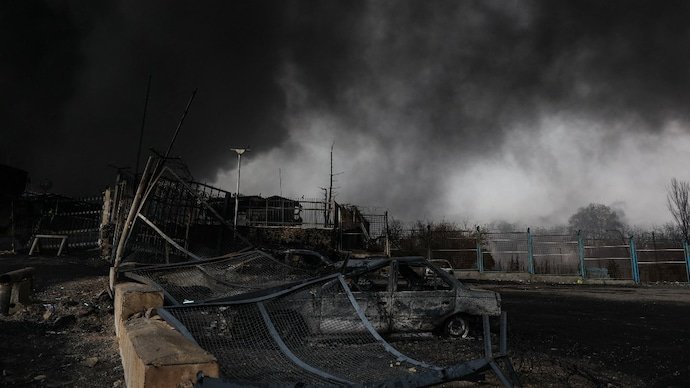
The exchange of threats comes after a series of U.S. and Israeli strikes reportedly targeted Iranian energy infrastructure over the weekend.
Iranian authorities said that at least five oil facilities in Tehran and the nearby Alborz region were hit late on Saturday night.
The strikes reportedly caused large fires and thick plumes of smoke that remained visible over the capital until Sunday.
Officials said that fuel distribution across Tehran province was temporarily disrupted following the attacks.
However, authorities indicated that normal supply operations could resume within two to three days once emergency repairs are completed.
Iran Signals Readiness for Prolonged Conflict
Iranian officials have also suggested that the country is preparing for a long-term military confrontation if tensions continue to escalate.
An IRGC spokesperson stated that Iran has stockpiled a significant number of ballistic missiles, cruise missiles, drones, and attack vessels in preparation for sustained combat operations.
According to the official, Iran has the capability to continue high-intensity fighting for at least six months if necessary.
He also indicated that Iranian forces could introduce new battlefield strategies and deploy more advanced long-range missiles as the conflict evolves.
Rising Humanitarian and Infrastructure Costs
The ongoing conflict has already caused substantial damage inside Iran.
The Iranian Red Crescent Society reported that since the beginning of the war, approximately 1,332 people have been killed in U.S. and Israeli strikes.
In addition to the casualties, nearly 9,669 civilian facilities have reportedly been damaged, including thousands of residential homes and commercial buildings.
As tensions continue to rise, the possibility of further escalation raises concerns about the stability of the Middle East, global oil supplies, and the broader international economy.
For breaking news and live news updates, like us on Facebook or follow us on Twitter and Instagram. Read more on Latest World on thefoxdaily.com.






COMMENTS 0