- Iran’s Perception of JD Vance Shapes Diplomatic Expectations
- US Decision-Making and Vance’s Role in the Delegation
- Why Tehran Views Vance as a Potentially Constructive Figure
- High Stakes for Both Washington and Tehran
- Key Participants and Negotiation Teams
- Deep Policy Divisions Remain a Major Barrier
- Political and Strategic Implications for JD Vance
- Outlook: Diplomatic Opportunity or Strategic Gamble?
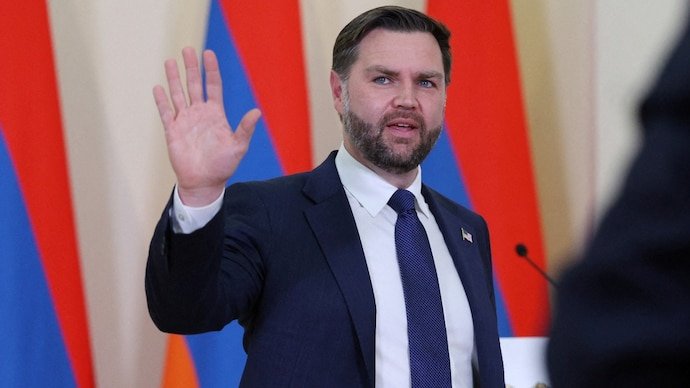
When US Vice President JD Vance arrives in Islamabad for talks with Iranian officials, it reflects a notable and somewhat unexpected dynamic shaping the negotiations. According to multiple reports, including Reuters, elements within Tehran’s leadership had quietly viewed Vance as a preferred interlocutor for engaging the United States in discussions aimed at de-escalating tensions. The talks come at a sensitive moment, with both Washington and Tehran under pressure to manage a prolonged and politically costly Conflict.
Iran’s Perception of JD Vance Shapes Diplomatic Expectations
Iranian officials reportedly view JD Vance as one of the more anti-war voices within President Donald Trump’s political circle. This perception has contributed to expectations in Tehran that he may be more open to negotiations compared to other senior US figures involved in foreign policy decision-making.
While this belief has influenced internal discussions in Iran, there is no indication that the US delegation will adopt a softer negotiating position. Washington’s approach remains aligned with its broader strategic objectives, regardless of individual perceptions surrounding specific officials.
Iranian officials reportedly believe Vance is more likely to pursue a negotiated settlement in good faith, though this assessment remains unconfirmed in terms of policy impact.
US Decision-Making and Vance’s Role in the Delegation
According to a White House official, the decision to send JD Vance to Pakistan was made by President Donald Trump. The administration has emphasized that final authority over any agreement rests with the president, underscoring that Vance’s role, while prominent, is part of a broader coordinated US strategy.
Before departing for Islamabad, Vance reiterated a cautious willingness to engage in dialogue while stressing the importance of mutual responsibility in negotiations.
“We’re certainly willing to extend the open hand, but progress depends on good-faith negotiations,” JD Vance said ahead of the talks.
This statement reflects a balance between diplomatic openness and strategic caution, a tone that has defined the US approach entering the Islamabad discussions.
Why Tehran Views Vance as a Potentially Constructive Figure
Iran’s reported preference for JD Vance appears to be rooted in his perceived political positioning within the US establishment. Analysts suggest that Tehran may interpret his past commentary and political reputation as indicative of a more restrained approach to foreign intervention.
However, diplomatic experts caution that such perceptions do not necessarily translate into policy flexibility. US negotiating positions are shaped by institutional frameworks, not individual preferences, limiting the influence any single official can exert independently.
Still, perception plays an important role in diplomacy, particularly in early-stage negotiations where trust is limited and signaling often matters as much as substance.
High Stakes for Both Washington and Tehran
The Islamabad talks carry significant implications for both countries. For the United States, the negotiations represent an opportunity to explore diplomatic pathways toward reducing regional tensions and managing long-standing security concerns.
For Iran, the discussions offer a potential route toward easing economic pressure, particularly sanctions that have had a sustained impact on its financial stability and international trade relations.
Despite these incentives, both sides enter the talks with deeply entrenched positions and limited expectations for immediate breakthroughs.
Key Participants and Negotiation Teams
The US delegation includes Vice President JD Vance, along with senior figures such as Jared Kushner and special envoy Steve Witkoff. These officials bring prior experience in diplomatic engagement, though past negotiations have not resulted in lasting agreements.
On the Iranian side, the delegation is led by Foreign Minister Abbas Araghchi and Parliament Speaker Mohammad Baqer Qalibaf. Their presence signals Tehran’s intent to approach the talks with both political authority and institutional weight.
Deep Policy Divisions Remain a Major Barrier
Despite the diplomatic opening, fundamental disagreements remain unresolved. One of the most significant divides concerns Iran’s nuclear program. Washington has maintained its position against further uranium enrichment, while Tehran continues to assert its right to pursue nuclear development for civilian purposes.
These opposing positions represent one of the central obstacles to any potential agreement and highlight the structural difficulty of the negotiations.
Additional areas of disagreement include regional influence, sanctions relief, and broader security arrangements across the Middle East.
Political and Strategic Implications for JD Vance
Beyond the immediate diplomatic context, JD Vance’s role in the talks carries potential political implications within the United States. As a prominent figure in national Politics and a possible future presidential contender, his involvement in high-level negotiations may influence public and political perceptions of his leadership capabilities.
A successful diplomatic outcome could strengthen his standing, while a breakdown in talks could tie his political identity to an unresolved international conflict.
Outlook: Diplomatic Opportunity or Strategic Gamble?
The Islamabad negotiations represent both an opportunity and a test for US-Iran Relations. Iran’s reported preference for JD Vance introduces an unusual dynamic into the discussions, reflecting how perception and political signaling can influence diplomatic strategy.
However, the success of the talks will ultimately depend on substantive compromise rather than individual personalities. With major policy gaps still in place, expectations remain cautious.
As both sides engage in their first direct face-to-face discussions in this phase of the conflict, the outcome remains uncertain. The talks may mark the beginning of a new diplomatic channel or simply another chapter in a long History of stalled negotiations.
For breaking news and live news updates, like us on Facebook or follow us on Twitter and Instagram. Read more on Latest World on thefoxdaily.com.





COMMENTS 0