- Iran’s Warning: “Blockade Is Doomed to Fail”
- What Triggered the Escalation?
- Why the Strait of Hormuz Is Critical
- Immediate Market Reaction
- Israel Prepares for Possible Escalation
- What Is Iran’s “Untapped Leverage”?
- A Fragile Ceasefire on the Brink
- Global Implications: More Than a Regional Crisis
- Conclusion: A High-Stakes Standoff with Global Consequences
Iran has issued a sharp warning to the United States, claiming it possesses “untapped leverage” to counter a proposed naval blockade in the Strait of Hormuz. The statement comes amid rapidly escalating tensions following US President Donald Trump’s announcement of a sweeping maritime crackdown after failed ceasefire talks.
The remarks highlight a growing risk of confrontation in one of the world’s most strategically important waterways, with implications stretching far beyond the Middle East.
Iran’s Warning: “Blockade Is Doomed to Fail”
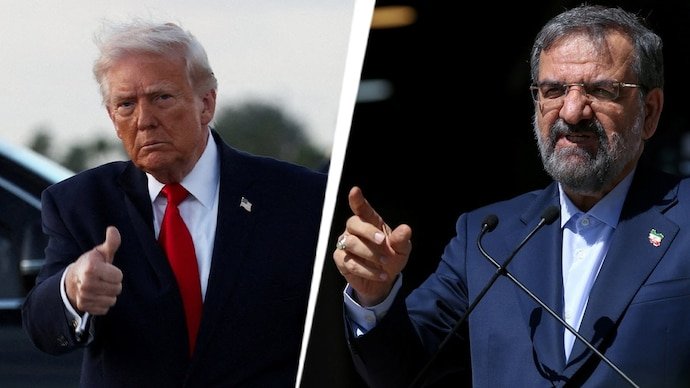
Mohsen Rezaee, a senior Iranian official and member of the Expediency Council, dismissed the US plan as unrealistic and warned of a firm response.
“Just as America suffered a historic defeat against Iran in opening the Strait of Hormuz, it is also doomed to defeat in a naval blockade,” he said.
Rezaee further emphasised that Iran’s military would actively resist any attempt to control the waterway.
“Iran’s armed forces will not allow America to do so. We have great untapped leverage to counter it,” he added.
The statement signals Tehran’s intent to challenge the blockade not just diplomatically, but potentially through strategic and military means.
What Triggered the Escalation?
The warning follows the collapse of high-level US-Iran negotiations held in Islamabad, which failed to produce an agreement on key issues, particularly Iran’s nuclear programme.
In response, President Trump announced that the US Navy would begin blockading ships entering or exiting the Strait of Hormuz, marking a major escalation in the conflict.
According to US Central Command:
- The blockade is set to begin at a specified time with immediate enforcement
- It will apply to vessels linked to Iranian ports
- Ships traveling between non-Iranian ports may still be allowed passage
Washington has framed the move as necessary to counter what it calls Iranian “extortion” in the region.
Why the Strait of Hormuz Is Critical
The Strait of Hormuz is one of the most vital energy corridors in the world, making any disruption a global concern.
| Key Indicator | Details |
|---|---|
| Global Oil Flow | ~20% passes through Hormuz |
| Daily Oil at Risk | Up to 2 million barrels (blockade impact estimate) |
| Existing Disruptions | ~10 million barrels/day already affected by conflict |
Even minor disruptions in this narrow waterway can send shockwaves through global Energy Markets.
Immediate Market Reaction
The announcement of the blockade has already had a visible impact on shipping and oil markets.
Shipping Disruptions
- Vessel traffic briefly halted in the Strait of Hormuz
- At least two ships reportedly reversed course
- Shipping uncertainty has increased insurance and operational risks
Oil Price Volatility
Energy markets reacted sharply to the escalation:
- Brent crude surged above $119 per barrel during peak tensions
- Prices later stabilised near $95 per barrel
- Volatility remains high due to ongoing uncertainty
This fluctuation reflects how sensitive global markets are to developments in the region.
Israel Prepares for Possible Escalation
Adding to the tension, reports indicate that Israel’s defence forces are preparing for a potential escalation with Iran.
Military readiness has reportedly increased following the breakdown of ceasefire talks, suggesting that the conflict could expand beyond maritime confrontation.
This development raises concerns about a multi-front escalation involving regional and global powers.
What Is Iran’s “Untapped Leverage”?
While Iranian officials have not detailed their full strategy, analysts point to several potential tools Tehran could deploy:
- Maritime disruption: Targeting or restricting shipping lanes
- Proxy networks: Expanding conflict through allied groups in the region
- Energy pressure: Influencing oil supply and regional exports
- Cyber operations: Disrupting infrastructure or communication systems
These options fall short of full-scale war but can significantly raise the cost of confrontation for the US and its allies.
A Fragile Ceasefire on the Brink
The developments come just days after a Pakistan-brokered ceasefire was established to create space for negotiations.
However, the failure of talks in Islamabad has left the truce in doubt. With both sides hardening their positions, the chances of de-escalation appear increasingly slim.
The conflict, now entering its seventh week, has already resulted in thousands of casualties and widespread economic disruption.
Global Implications: More Than a Regional Crisis
The Hormuz blockade is not just a US-Iran issue—it is a global crisis in the making.
Key risks include:
- Disruption of global energy supply chains
- Rising fuel prices and inflation worldwide
- Increased military presence in critical sea lanes
- Potential involvement of major powers like China and European nations
As tensions rise, the risk of miscalculation increases, making the situation highly volatile.
Conclusion: A High-Stakes Standoff with Global Consequences
Iran’s warning of “untapped leverage” underscores the seriousness of the current standoff. With the US pushing forward with a naval blockade and Tehran signalling resistance, the Strait of Hormuz is fast becoming the focal point of a potentially wider conflict.
The coming days will be critical in determining whether the crisis escalates further or returns to the negotiating table. For now, the situation remains tense, unpredictable, and deeply consequential for global stability.
Forward-looking insight: If diplomatic channels are not quickly revived, the Hormuz standoff could evolve into a prolonged confrontation, reshaping global energy dynamics and redefining geopolitical alliances in the process.
For breaking news and live news updates, like us on Facebook or follow us on Twitter and Instagram. Read more on Latest World on thefoxdaily.com.






COMMENTS 0