- The Rise of Narrative Warfare
- Memes as a Tool of Statecraft
- Public Displays of Unity and Strength
- Cultural Resistance: Music, Art, and Symbolism
- The Role of Children and Symbolism
- Rebranding Iran: Tourism and Modern Imagery
- The Information War: Strategy and Execution
- The Reality Behind the Narrative
- Why the World Is Paying Attention
- Conclusion: A New Kind of Warfare
In today’s hyper-connected world, wars are no longer fought only with missiles, drones, and boots on the ground. They are also fought on Social Media timelines, through viral content, and in the battle for global perception. Amid ongoing tensions involving the United States, Israel, and Iran, a striking trend has emerged: while the battlefield remains contested, Iran appears to be gaining ground in the information and propaganda war.
From memes and political cartoons to public rallies and cultural performances, Iran is projecting an image of strength, resilience, and defiance. But beneath this carefully curated narrative lies a more complex and sobering reality.
The Rise of Narrative Warfare
— Iran News 24 (@IRanMediaco) April 8, 2026
Modern conflicts are increasingly shaped by who controls the story. Governments now invest heavily in digital influence, knowing that perception can shape public opinion, diplomatic pressure, and even policy decisions.
Iran’s strategy reflects this shift. Instead of focusing solely on Military responses, it has built a parallel communication campaign aimed at global audiences.
Interestingly, much of this content is not even intended for domestic consumption. With reported Internet Restrictions inside the country, the messaging is largely directed outward—toward international viewers, analysts, and social media users.
Memes as a Tool of Statecraft
From Diplomacy to Digital Trolling
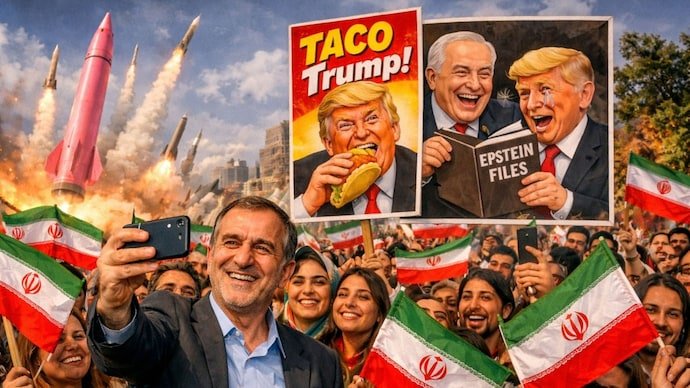
Iranian embassies and government-aligned accounts have transformed into highly active digital platforms, sharing memes, satirical posts, and AI-generated content targeting US leadership.
These posts are often sharp, humorous, and designed for virality. They reference global controversies, political figures, and cultural trends—blending geopolitics with internet Culture.
In one instance, official accounts responded to social media queries about hiring with witty replies, further boosting engagement and relatability.
This approach represents a shift from traditional Diplomacy to what could be described as “meme diplomacy”—where humor becomes a strategic weapon.
Why Memes Work
- They are easily shareable and cross language barriers
- They simplify complex geopolitical narratives
- They engage younger, digital-first audiences
In short, memes travel faster than official statements—and often stick longer.
https://t.co/yCY9bejRr6 pic.twitter.com/2VXB6h2DWg
— محمدباقر قالیباف | MB Ghalibaf (@mb_ghalibaf) March 26, 2026
Public Displays of Unity and Strength
Rallies, Demonstrations, and Human Chains
On the ground, Iran has showcased large-scale public participation through rallies and demonstrations. Supporters gather in significant numbers, waving flags, chanting slogans, and reinforcing the image of national unity.
Reports suggest hundreds of demonstrations have taken place since the Conflict began, indicating a coordinated effort to maintain visibility and morale.
In response to potential threats on Infrastructure, citizens have even formed human chains around key sites such as power plants and bridges. These actions serve both symbolic and strategic purposes—projecting resilience while complicating potential targeting.
Leadership Optics Matter
Iran’s leadership has also played a visible role in this narrative. Officials frequently appear in public settings—smiling, engaging with crowds, and projecting calm confidence.
Analysts note that such appearances are carefully calculated. They aim to:
- Reassure domestic supporters
- Signal stability to international observers
- Strengthen the perception of control
In a conflict where perception is critical, even a selfie can carry strategic weight.
Cultural Resistance: Music, Art, and Symbolism
Beyond politics and protests, Iran has incorporated cultural expression into its messaging.
Music as Defiance
Musicians have performed at symbolic locations, including near infrastructure sites reportedly under threat. These performances blend art with messaging, presenting resilience in a uniquely human way.
In one instance, a musician performed at a power plant while expressing hope for peace—turning a potential target into a stage for cultural resistance.
Art Over Destruction
Artists have also returned to damaged spaces, choosing to create rather than rebuild immediately. The message is clear: even in destruction, identity and culture endure.
This approach adds emotional depth to Iran’s narrative, making it more relatable and impactful.
The Role of Children and Symbolism
One of the more controversial aspects of Iran’s messaging is the use of children in symbolic narratives.
Viral videos and images depict children expressing bold, often defiant sentiments. These moments are widely shared, generating both attention and debate.
Such content serves multiple purposes:
- Humanizing the national narrative
- Amplifying emotional engagement
- Reinforcing themes of courage and resistance
However, it also raises ethical questions about representation and messaging during conflict.
Rebranding Iran: Tourism and Modern Imagery
Another surprising element of Iran’s strategy is its focus on showcasing infrastructure, architecture, and urban life.
Official accounts have shared images of:
- Modern metro systems
- Urban landmarks and bridges
- Shopping complexes and public spaces
This content contrasts sharply with typical war imagery. Instead of destruction, it highlights development and normalcy.
The goal appears to be clear: reshape global perception and counter negative stereotypes.
The Information War: Strategy and Execution
Coordinated Digital Networks
Experts suggest that Iran’s online presence is not spontaneous. It is part of a broader, coordinated strategy involving:
- English-speaking content creators
- Rapid-response social media teams
- AI-generated visuals and animations
These elements work together to produce high-volume, high-impact content designed for global audiences.
Targeting Global Narratives
Iran’s messaging often connects its situation to broader themes such as anti-imperialism, historical conflicts, and global inequalities. This helps it resonate with diverse audiences across different regions.
By aligning its narrative with existing global sentiments, Iran increases the reach and effectiveness of its messaging.
The Reality Behind the Narrative
While Iran’s digital strategy is effective in shaping perception, it does not fully reflect the ground reality.
Reports indicate significant casualties, infrastructure damage, and economic strain resulting from ongoing conflict. These aspects receive comparatively less visibility in official messaging.
This contrast highlights a key feature of modern propaganda: selective storytelling. By emphasizing strength and minimizing vulnerability, narratives can influence perception—even if they are incomplete.
Why the World Is Paying Attention
The success of Iran’s narrative strategy lies in its ability to engage global audiences. Social media users interact with the content, share it, and contribute to its spread.
In many cases, the focus shifts from verifying facts to reacting to content—allowing narratives to travel faster than context.
As one analyst noted, if audiences rely primarily on such content, they may perceive a very different version of reality—one where military actions appear ineffective and Iran seems unshaken.
Conclusion: A New Kind of Warfare
The ongoing tensions involving Iran highlight a critical evolution in modern conflict: the rise of information warfare. While traditional military outcomes remain uncertain, the battle for perception is already underway—and highly influential.
Iran’s use of memes, cultural expression, and coordinated digital messaging demonstrates how nations can shape narratives in real time. However, it also underscores the importance of critical thinking and balanced information consumption.
Looking ahead, conflicts will likely continue to be fought on two fronts—physical and digital. And in this new landscape, winning the story can be almost as powerful as winning the war itself.
For breaking news and live news updates, like us on Facebook or follow us on Twitter and Instagram. Read more on Latest World on thefoxdaily.com.






COMMENTS 0