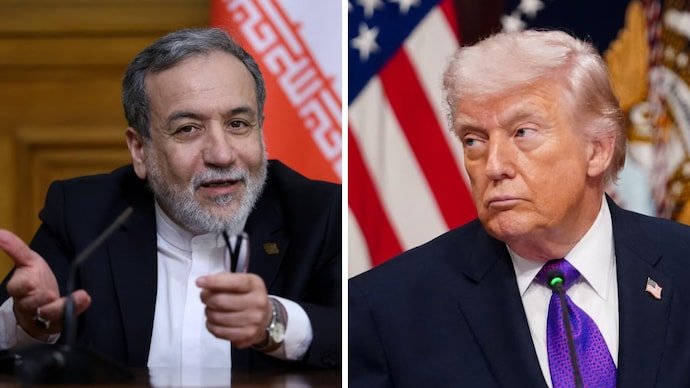
- Iran Accuses the United States of Hypocrisy on Russian Oil Imports
- Iran Also Criticizes Europe Over Support for U.S. Policy
- Global Oil Markets Under Pressure Due to Middle East Conflict
- U.S. Treasury Says Waiver Is Temporary
- Iran Allows Indian Ships to Pass Through Strait of Hormuz
- Iran Emphasizes Strong Diplomatic Ties With India
iran’s Foreign Minister Abbas Araghchi has sharply criticized the United States over what he describes as a contradictory approach toward Russian Oil. According to Araghchi, Washington previously pressured countries such as india to reduce or halt their imports of Russian crude oil, but is now encouraging the same countries to purchase Russian petroleum in order to stabilize global energy markets.
Iran Accuses the United States of Hypocrisy on Russian Oil Imports
Speaking on Saturday through a post on the social media platform X, Iran’s top diplomat argued that the latest shift in U.S. oil policy highlights a major contradiction in international energy diplomacy. Araghchi claimed that Washington spent months urging India and other countries to limit their Russian oil imports, yet is now requesting those same nations to buy Russian crude.
Araghchi suggested that the shift in tone reflects mounting pressure on global energy supplies following escalating tensions and military conflict in the Middle East, particularly the ongoing war involving Iran.
In his post, Araghchi wrote that the United States had spent months attempting to intimidate India into stopping its purchases of Russian oil. However, after two weeks of war involving Iran, the White House is now asking countries around the world — including India — to purchase Russian crude in order to stabilize energy supplies.
The Iranian foreign minister described this reversal as an example of irony in oil diplomacy and criticized what he sees as inconsistent Western policy toward global energy markets.
Iran Also Criticizes Europe Over Support for U.S. Policy
In addition to targeting the United States, Araghchi also criticized European governments. He claimed that some European countries had supported what he described as an “illegal war” against Iran in hopes that Washington would provide them with protection against Russia.
According to Araghchi, European leaders believed that supporting U.S. actions against Iran would guarantee stronger American security commitments against Moscow. He dismissed this assumption as misguided and labeled the situation as “pathetic.”
The Iranian foreign minister shared these remarks alongside a report from the Financial Times that suggested Russia was benefiting financially from rising oil prices during the current geopolitical crisis.
Global Oil Markets Under Pressure Due to Middle East Conflict
Araghchi’s comments came shortly after the U.S. administration announced a temporary waiver that allows countries to purchase sanctioned Russian oil cargoes currently stranded at sea. The decision was made in an attempt to stabilize global oil markets after crude prices surged dramatically due to escalating conflict in the Middle East.
The waiver, which lasts for 30 days, allows the purchase and transportation of Russian crude oil and petroleum products that had already been loaded onto ships before March 12. According to the U.S. Treasury Department, the authorization will remain valid until midnight Washington time on April 11.
The temporary measure was introduced as oil prices crossed the $100 per barrel mark, largely driven by supply disruptions linked to regional conflict and the strategic closure of the Strait of Hormuz — one of the world’s most critical oil shipping routes.
| Key Event | Description | Date/Impact |
|---|---|---|
| U.S. Pressure on Russian Oil Imports | Washington previously urged countries including India to reduce Russian oil purchases. | Several months prior to the current conflict |
| Conflict in the Middle East | Escalating tensions involving Iran disrupted global energy supply routes. | Recent weeks |
| Oil Prices Surge | Global benchmark crude prices climbed above $100 per barrel. | Following supply disruptions |
| Temporary U.S. Waiver | Countries allowed to buy Russian oil already loaded on ships. | Valid until April 11 |
U.S. Treasury Says Waiver Is Temporary
U.S. Treasury Secretary Scott Bessent emphasized that the waiver is a limited and temporary measure designed specifically to prevent a major shock to global energy markets. He noted that the policy adjustment was “narrowly tailored” and would not provide significant long-term financial benefits to Russia.
Officials in Washington argue that the measure simply allows cargoes already in transit to be delivered, preventing further disruption to oil supply chains during a volatile geopolitical situation.
Iran Allows Indian Ships to Pass Through Strait of Hormuz
Amid the ongoing conflict, Iran has also signaled that it will continue allowing Indian vessels to pass safely through the strategically important Strait of Hormuz. According to a Reuters report citing multiple sources familiar with the situation, at least two Indian-flagged liquefied petroleum gas (LPG) tankers were permitted to cross the waterway despite regional tensions.
The Strait of Hormuz is one of the most vital maritime chokepoints in the world, through which a significant portion of global oil supply passes every day. Any disruption in this route can have immediate consequences for global energy markets.
Iran Emphasizes Strong Diplomatic Ties With India
Iran’s ambassador to India, Mohammad Fathali, confirmed that ships traveling to India would be granted safe passage through the strait. When asked whether Indian vessels would be allowed to transit safely, Fathali responded positively, highlighting the friendly relationship between the two countries.
According to the ambassador, Iran and India share long-standing diplomatic, economic, and strategic ties. He emphasized that the two nations have common interests and a shared future, even during periods of regional instability.
Fathali further stated that ships heading toward India could safely cross the Strait of Hormuz within two to three hours. His remarks were intended to reassure Indian energy importers and shipping operators that their cargo routes would remain secure despite the broader geopolitical tensions affecting the region.
The comments from Iranian officials highlight the complex balance between geopolitics, energy markets, and international diplomacy as countries attempt to manage the global consequences of ongoing conflicts in the Middle East.
For breaking news and live news updates, like us on Facebook or follow us on Twitter and Instagram. Read more on Latest World on thefoxdaily.com.





COMMENTS 0